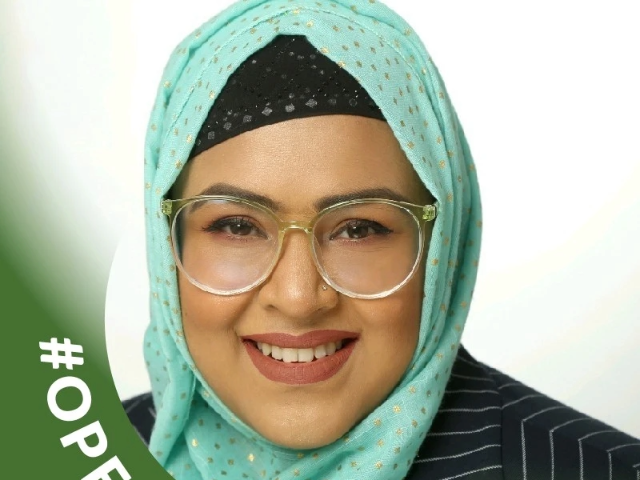
In our interview series with the new generation, this time we spoke with Sadia Fatema Moula. She is currently engaged in thesis research in the master’s program at THM University. Her major is Robotics and Automotive Cybersecurity. Read her interview:
First, we’d like to know about you?
I am currently conducting thesis research in the master’s program at THM University. My major is Robotics and Automotive Cybersecurity.
After my master’s, I intend to pursue a PhD in the field of AI Automotive Cybersecurity. At present, I am working here at the university as a research assistant and TA.
What is the topic of your research?
The main topic is that in the automatic and AI sectors, everything is now digitally connected. From cars to homes, factories, offices—smart technology is being integrated everywhere.
For example, you can now, just by sitting in your office with your phone, turn on the air conditioner at home, water your plants, activate the water filter, clean your house, or even use smart car autodriving features. Just as you can use these things digitally, digital criminals or thieves can use the same technology to take control of your car, home, or factory’s valuable assets, information, and data. Your own electronic devices may not listen to you. From business to health security, economics, social aspects—losses worth millions can occur.
The security of the country or the confidential information of organizations can fall into the hands of competitors.
To prevent this type of hacking or digital theft—just like real-life police—there are digital or cyber police, who design algorithms or digital systems so that no digital thief or hacker can easily gain control of your system.
And even if someone manages to take control, like real-life police, the digital police can recover the system from the intruders.
This area has many branches. In short, this is what is known as cybersecurity.
I am working in a branch of cybersecurity where predictive maintenance of any automotive system—if it’s hardware, using various sensors to collect data, processed through machine learning or AI to calculate and inform the user about the probability of when a part might need replacing; and if it’s software, providing regular updates and alerts to the user through monitoring.
Since these sensors and monitors are digital, being digital means digital thieves have the opportunity to hack them. And I am the cyber police, designing such digital system architecture and monitoring it so that no digital thief can easily hack it.
Simply put, this is my job. The technical term is “Cybersecurity in Automotive Vehicle Maintenance Predictive Alert.”
This technology can be used not just in cars, but in airplanes, ships, factories, and any smart system.
How are your research projects benefiting us, or will benefit us?
Most importantly, this work will protect you, your organization, your assets, and your research from the biggest threat of our time—cyber vulnerability. The rest has already been described in my explanation.
Recently, major companies from Fiat and Tesla to Volkswagen, as well as banks, have fallen victim to hacking. Even from Bangladesh, billions have been lost in several incidents through hacking. Cyberattacks are now the major fear for the tech world. To prevent these attacks, we work as active cyber police—ethical hackers and cybersecurity experts.
Would you like to share any special experiences from your research work?
I am working on AI-based machine learning and cybersecurity in automotive maintenance predictive alerts. The research is still ongoing. Since it started with funding from a German company, it wouldn’t be appropriate to disclose more details now. But once the paper is published, I definitely will. The most important thing is, I will have the freedom to apply this technology in our country as well. That’s because factories in Bangladesh are gradually becoming digitalized.
What qualities do you think a scientist should have?
A great hunger for knowledge, no desire for fame, a love for nature, and a sense of human values.
Do you have any message for young students in Bangladesh who want to work in science?
There are plenty of opportunities. The current world is globalized. It’s easy to work from anywhere in the country connected via the internet.
If anyone is interested in a specific field, feel free to contact us, and I will definitely provide proper guidance.
Your Email: [email protected]
Your LinkedIn: https://www.linkedin.com/in/sadia-fatema-moula?utm_source=share&utm_campaign=share_via&utm_content=profile&utm_medium=android_app
On behalf of Biggani.org, we wish Sadia Fatema Moula continued success. She is a remarkable role model for our next generation of researchers.