Author – Azizul Haque
Assistant Professor, Yeungnam University.
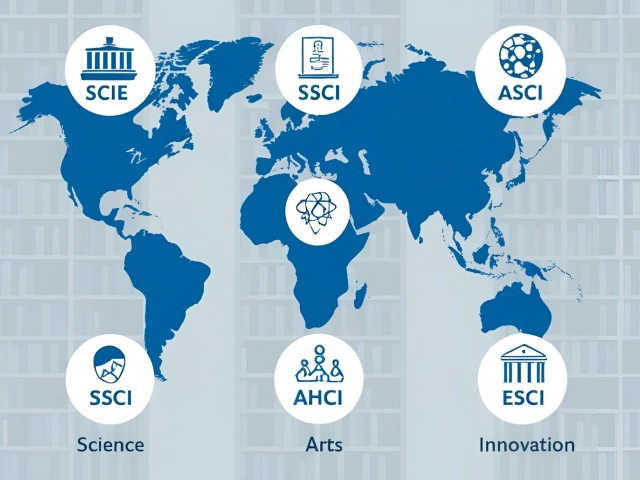
In global research and publishing, the Science Citation Index Expanded (SCIE), Social Sciences Citation Index (SSCI), Arts & Humanities Citation Index (AHCI), and Emerging Sources Citation Index (ESCI) are all highly significant indicators. These indexes are used to assess the quality and acceptance of research articles.
Science Citation Index Expanded (SCIE)
Eugene Garfield introduced the Science Citation Index (SCI) in 1964. Initially created to assess the quality and significance of research papers in various fields of science, this index later gained recognition as the Science Citation Index Expanded (SCIE) in 1997. The SCIE indexing database includes more than 9,200 prominent and important journals in 178 disciplines, covering works from 1900 to today. These journals are considered among the world’s leading scientific and technological sources. Research featured in SCIE journals spans key fields such as science, technology, medicine, engineering, physics, chemistry, and the life sciences.
Social Sciences Citation Index (SSCI)
The Social Sciences Citation Index (SSCI) was established in 1972 to evaluate the importance of research papers in various social science disciplines based on citation data. SSCI is a commercial citation index maintained by Clarivate Analytics and was originally developed by the Institute for Scientific Information. This indexed database covers more than 3,400 journals across 58 social science fields from 1985 to the present. Included disciplines feature sociology, economics, law, political science, psychology, education, public health, and other social sciences.
Arts & Humanities Citation Index (AHCI)
The Arts & Humanities Citation Index (AHCI), published by the Institute for Scientific Information (ISI), was introduced in 1975. This index primarily evaluates research papers across various branches of the arts and humanities. AHCI covers more than 1,800 journals including literature, history, philosophy, the arts, linguistics, music, and other humanities disciplines. The database can be accessed online through Web of Science.
Emerging Sources Citation Index (ESCI)
The Emerging Sources Citation Index (ESCI) has been a citation index produced by Thomson Reuters since 2015 and is now operated by Clarivate. This index includes peer-reviewed publications that are representative and regionally significant, reflecting emerging fields in science. Along with other Clarivate indexes, journals included in ESCI are accessible via Web of Science. Since June 2021, all journals listed in ESCI have been included in the Journal Citation Reports (JCR). While these journals did not have an impact factor up to that time, they still contributed citations towards the calculation of other journals’ impact factors. In July 2022, Clarivate announced that journals included in ESCI would begin receiving an impact factor from JCR Year 2022, with the initial release in June 2023.
Note: Collected from Facebook:——–
https://www.facebook.com/share/p/1PJMzziHgF/