


The beginning of a new year always brings a chance to reflect and review everything anew. In the same spirit, I’ve attempted to compile a list of technologies that will be discussed and play a vital role this year. Due to COVID-19, several technologies played a major role last year. As always, fasten your seat belt at the start of this new year—let’s take a drive through the world of technology.
1. Edge Computing

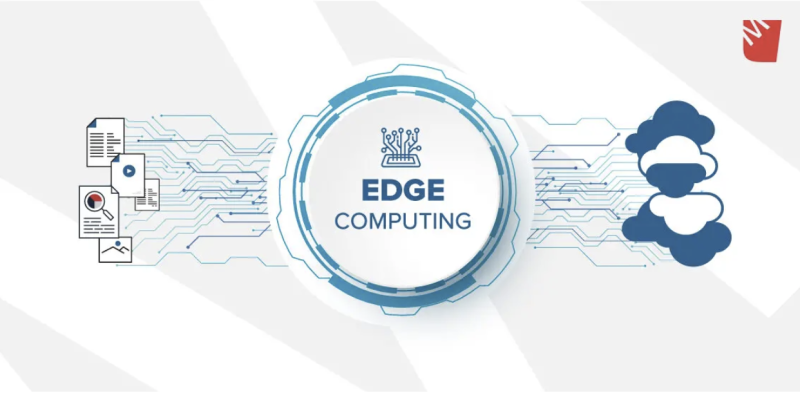
Edge Computing is an advanced way of bringing computing power and data processing closer to the user—right on the device. For the past few years, with the growth of IoT (Internet of Things), processing more data locally on devices has become increasingly necessary. Edge computing has made this easier. While traditional methods require constant communication between devices and servers, edge computing accelerates tasks by reducing the need for constant connections with the server. Once a task or computation is completed, the information is sent to the server afterward. We will see much more use of edge computing in 2021.
2. 5G Data Networks
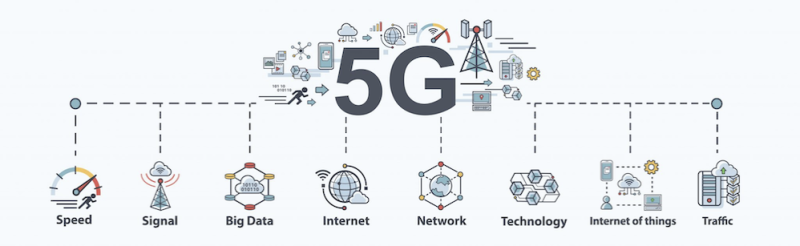
This is a new generation, the fifth, of mobile networks. Though it began testing in many countries in 2020, we’ll see it spread even further this year. 5G connections have extremely low latency and very fast data transfer rates. As a result, you’ll be able to stream 8K resolution videos on your mobile devices without any buffering. The download speed of 5G networks is up to 100 times faster than 4G, with speeds ranging from 1,000 Mbps to 10 Gbps. If you’re an online gamer, you’ll notice quicker gaming performance on 5G. More importantly, the chance of losing connection will be greatly reduced, which is even more significant than speed.
3. Artificial Intelligence

Artificial Intelligence refers to the capacity of machines to think and reason like humans or animals. It’s the ability of a machine to make decisions based on its own logic, similar to human thinking. Though many consider AI a threat to humanity, we should remember that artificial intelligence is primarily used to simplify routine tasks based on data. However, like human beings, AI cannot handle everything dynamically. In the coming years, we’ll see an even broader application of AI, especially in healthcare, banking, retail, and manufacturing.
4. Intelligent Apps
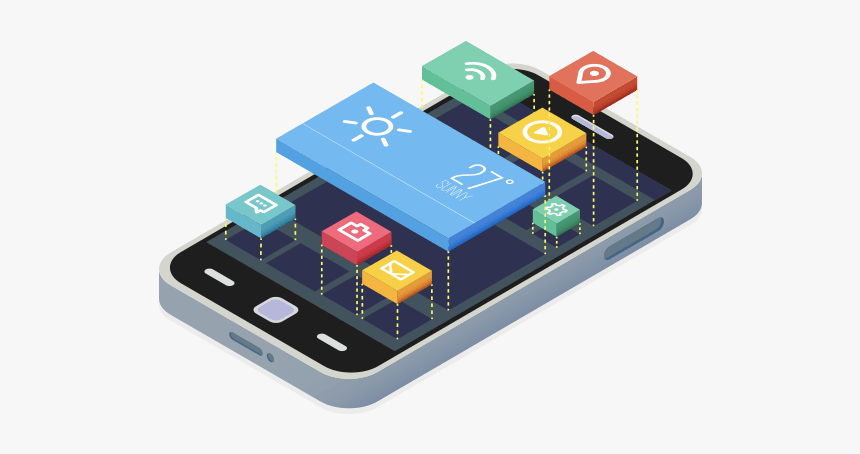
A new chapter is about to begin in the world of mobile apps—intelligent apps. These are mobile applications integrated with artificial intelligence. Such apps use data from your phone to offer improved services. Though they may appear quite simple, these apps employ cutting-edge AI technology. For example, a smart keyboard that enables fast typing on your phone is an intelligent app. Or, when you interact with a support bot on a website, it’s not a human replying—artificial intelligence searches its database and responds with the most likely solution. Even digital assistants like Siri or Google Assistant on your phone are intelligent apps. This year, we’ll see even more of these smart applications emerge.
5. Unhackable Internet

The internet we use today is not entirely secure. To keep it safe, we use various forms of encryption technology, but none are completely foolproof. Cracking or hacking may require a lot of time, but it is not impossible. However, scientists are now working on developing an internet that cannot be hacked at all. Such a network, using quantum technology, is being built. Normally, data transfer uses electrons, but quantum technology uses protons to transmit information, making it impossible to hack. Although these types of internet connections have been developed in labs over the past few years, this year we will begin to see the commercial application of this new secure internet.
6. Digital HealthCare

Due to the COVID pandemic, we’ve seen how information technology has dramatically expanded the reach of our current healthcare systems. Technologies such as telemedicine, digital medicine, virtual doctors, and virtual patients are among these. The threat of infection and the challenge of transportation have shown us how digital technologies can deliver healthcare right to our doorsteps. This year, we’ll see even more adoption—not just for emergencies but also as a routine part of healthcare. In addition to this, due to the proliferation of remote work and online education, we anticipate seeing many more new technologies and platforms emerge this year.
References:
https://www.computer.org/publications/tech-news/research/digital-health-five-things-you-should-know
https://www.delawareconsulting.com/en-us/solutions/intelligent-apps
https://www.investopedia.com/terms/a/artificial-intelligence-ai.asp










অনেক সুন্দর আর্টিকেল,
nice
Greetings ♥♪♥ Thanks
Oww..nice