


Quantum computing marks the unveiling of a new horizon in the world of computation. It is a new type of computing method that is far faster and more powerful than conventional computers. The foundation of the quantum computer lies in quantum mechanics, a branch of physics. Let’s learn more about quantum computing and discuss how it could revolutionize our lives.

What is Quantum Computing?
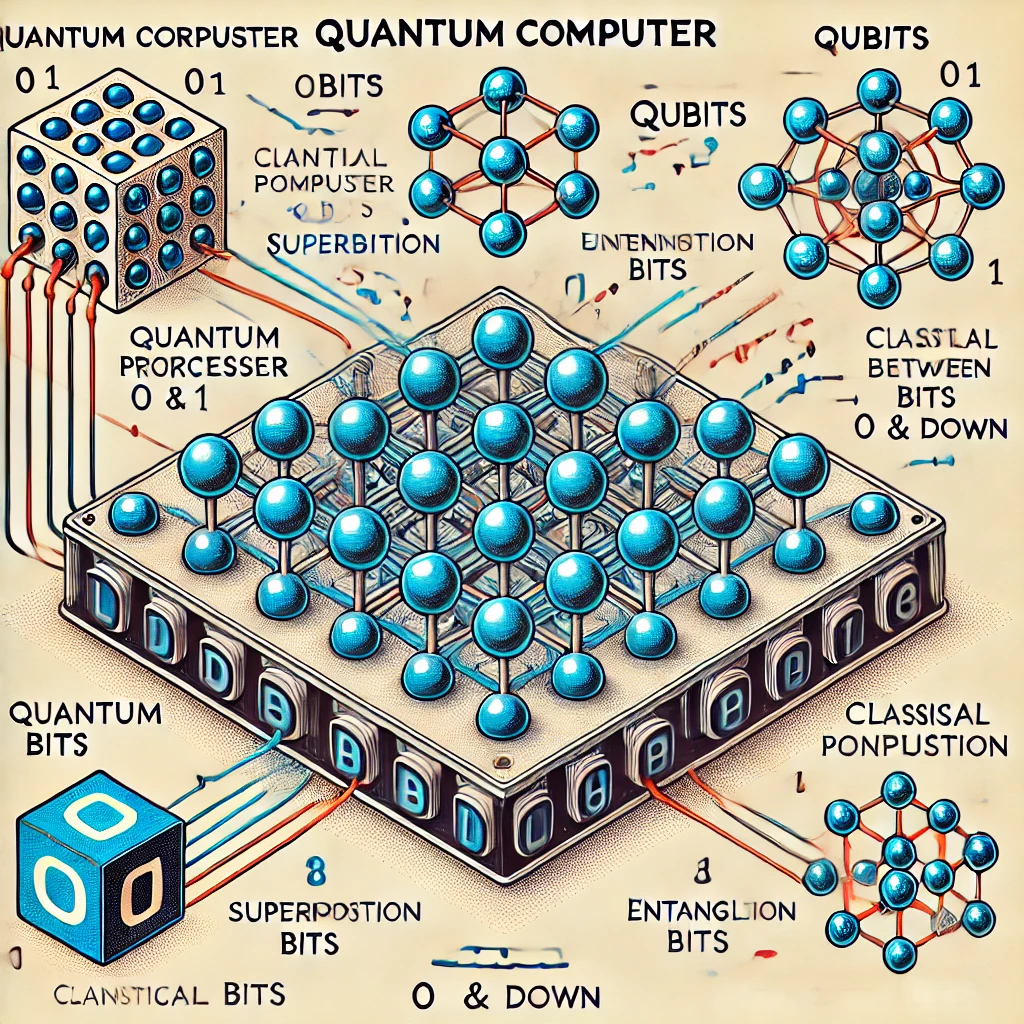
Quantum computing is a technology that utilizes quantum bits or qubits. In conventional computers, bits are used that can be either in a 0 or 1 state. However, a qubit can exist as both 0 and 1 at the same time, a property known as superposition. As a result, quantum computers can perform multiple tasks simultaneously, something impossible for traditional computers.
How Does a Quantum Computer Work?
Quantum computers operate by utilizing some crucial characteristics of quantum mechanics. Two of the most important are superposition and entanglement.
Applications of Quantum Computing
Quantum computers have the potential to revolutionize various fields. Some of the notable ones include:
Research and Development
Quantum computers can play a significant role in research and development across different scientific disciplines. They can quickly and efficiently analyze various chemical reactions, which can assist in the discovery of new medicines and other products.
Cryptography
Quantum computers could bring a revolution in the field of cryptography and privacy protection technology. They are capable of breaking conventional encryption systems, leading to the development of more secure and advanced encryption methods.
Machine Learning and Artificial Intelligence
Quantum computers can also play a significant role in machine learning and artificial intelligence. They can analyze large datasets rapidly and efficiently, which can help make machine learning algorithms more effective and advanced.
Energy and Environment
Quantum computers may help solve problems related to energy and the environment. They can quickly and efficiently analyze different methods of energy production and usage, which may help reduce environmental impact.
Limitations of Quantum Computing
Although quantum computers have many advantages, they also have some limitations. Some of the notable ones are:
Technological Challenges
Building and operating a quantum computer is extremely complex and expensive. Maintaining the superposition and entanglement states of qubits for extended periods is difficult. Ensuring error-free performance from qubits is also a major challenge.
Software Development
Software development for quantum computers is still at an early stage. There is a need for new algorithms and programming languages that can fully harness the power of quantum computers.
Security
Due to the powerful capabilities of quantum computers, they can break existing encryption systems. As a result, new and advanced methods for data security may be required.
The Future of Quantum Computing
The future of quantum computing is bright and full of possibilities. Although this technology is still in its early stages, researchers believe it will achieve significant progress in the coming decades. The potential and applications of quantum computers are immense, which could revolutionize our lives.
The Impact of Quantum Computing on Daily Life
Quantum computers could influence our daily lives in various ways. Some notable areas include:
Healthcare
Quantum computers could revolutionize the healthcare sector. They can rapidly and efficiently analyze different diagnostic and treatment methods, opening doors to more advanced healthcare options.
Financial Services
Quantum computers may also have a significant impact on the financial services sector. They can quickly and efficiently conduct various financial analyses and predictions, which may assist in investment and other financial decision-making.
Transportation and Logistics
Quantum computers could revolutionize transportation and logistics as well. They can rapidly and efficiently analyze different routes and transportation methods, which could help create faster and more cost-effective transportation systems.
FAQs
- How does a quantum computer work?
- Quantum computers operate by using various properties of quantum mechanics, such as superposition and entanglement.
- What are the applications of quantum computers?
- Quantum computers can be applied in diverse fields such as research and development, cryptography, machine learning and artificial intelligence, energy, and the environment.
- What are the limitations of quantum computers?
- The limitations of quantum computers include technological challenges, software development, and security-related issues.
- What is the future of quantum computing?
- The future of quantum computing is bright and full of potential. Researchers expect significant progress over the next few decades.
- Will quantum computers replace conventional computers?
- Quantum computers will not entirely replace traditional computers, but they will play an important role in complex and high-speed computations.
- Explanation of quantum computing in Bengali:
- Quantum computing is an advanced technology that performs computation using the quantum-mechanical properties of atomic and subatomic particles. It can solve complex problems much faster and more efficiently than classical computers.
In Conclusion:
Quantum computing has the potential to revolutionize drug discovery, weather forecasting, financial modeling, and artificial intelligence. However, it may take several more years for this technology to reach the general public. Governments and major tech companies across various countries are heavily investing in and researching quantum computing. Scientists believe it could bring a huge transformation to the world of computing in the future.










Leave a comment