
(Device for monitoring remote patients)

From childhood, Mili had seen that her grandfather has diabetes. Although her grandfather does not need to take insulin, he has to check his blood glucose level every few days. Since they live in a small town, her grandfather has to go to a pharmacy at a distant main road to do this. If his glucose level rises, he has to visit the doctor. Mili has been familiar with this routine since childhood. But now Mili has grown up, and so has her grandfather aged. Going to the main road has become a little difficult for her grandfather. When Mili goes to university, she takes her grandfather to the pharmacy by rickshaw. But last week, her grandfather received an interesting device from the doctor, which allows him to measure his glucose level from home, and his doctor can observe his diabetic condition from the hospital itself. For the first time, Mili heard the name of this device—a peculiar name, Remote Patient Monitor System.
What is a Remote Patient Monitor System?
If translated into Bengali, Remote Patient Monitor System means “a device for monitoring a remote patient.” For general illnesses, visiting the doctor’s chamber for advice is needed. But in some diseases, instead of physically visiting the doctor, monitoring the condition is more important. These illnesses are known as chronic or long-term diseases. They cannot be cured quickly but need to be constantly monitored, such as high blood pressure and diabetes. With a Remote Patient Monitor System, patients can send their reports to their doctors from home. The doctor monitors these reports and, if necessary, provides suggestions to the patient through the system.
In addition, this Remote Patient Monitoring System is used mainly in remote areas where it is not possible for a patient to go to the doctor. Many patients can’t come to the hospital due to disability or age-related issues. For them, this Remote Patient Monitor System can be very helpful.

Image: Remote Patient Monitor System
(Copyright: http://www.webscada.com/scada/Images/WSSol_005.jpg)
Remote Patient Monitor Systems usually come with devices to measure blood pressure, body weight, and blood glucose levels. When readings are taken using these devices, the reports are automatically sent to the doctor. Additionally, new sensors are being integrated into these systems—for example, to check if elderly people are moving around inside the house. While such systems aren’t common in our country yet, in foreign countries, many elderly people live in houses far from the city. Often, no one is around the house. If there is no movement inside the house, the family members will automatically be notified on their mobile if anything goes wrong.
Besides those suffering from chronic diseases, health-conscious people are also showing great interest in these devices. They monitor whether everything is normal. This system is mostly used for elderly or age-related diseases. For example, in Japan and America, the use of such systems has significantly increased over the past ten years.
The Remote Patient Monitor System can play an important role in countries like Bangladesh too. Using Remote Patient Monitor Systems will significantly reduce the burden on hospitals. A large proportion of chronic patients can send their information from home directly to the hospital, so there is no need for them to come to the hospital in person.
A few days ago, I was talking about this with a doctor. Of course, doctors are more concerned with accurate diagnosis and ensuring proper care for their patients. But hospital authorities think about how to reduce patient loads in hospitals. Especially in government or central hospitals, a huge number of patients visit, and a significant part of them are long-term patients. Since the number of chronic disease patients is quite high and they can receive this service from home, the pressure on main hospitals will decrease.
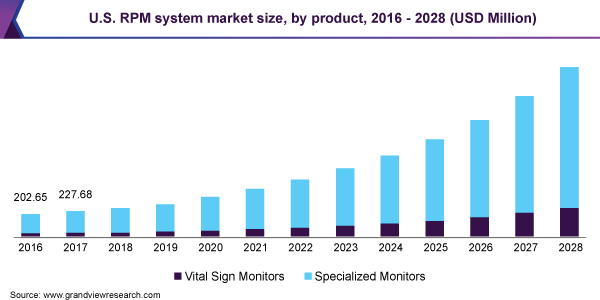
Figure: A statistic showing how the Remote Patient Monitor System may expand
https://www.grandviewresearch.com/industry-analysis/remote-patient-monitoring-devices-market
Another application of Remote Patient Monitor Systems is in nursing homes or old age homes, where elderly care is provided that cannot be managed from home. Generally, nurses there take care of the elderly. Nurses regularly record and send data such as weight, blood pressure, and other vital information to the doctor. Most of the time, this process is manual or written down using pen and paper. But with these advanced Remote Patient Monitor Systems, doctors can monitor their patients remotely.
The Future of Remote Patient Monitor Systems:
So far, the Remote Patient Monitor System is a setup that sends general data from sensors to the hospital. Usually, a doctor or an experienced nurse (whom we call care providers) monitors this information and makes decisions accordingly. If something important needs to be communicated to the patient, the doctor or nurse directly contacts the patient.
But now we are witnessing the second phase of Remote Patient Monitor Systems. In this phase, Artificial Intelligence is being integrated. In other words, data from sensors will be sent to the doctor. At the same time, Artificial Intelligence will also observe these data to see if there is anything suspicious or significant that needs the doctor’s attention. If any abnormal data is detected, Artificial Intelligence can come to a decision and notify the doctor, aiding them in their work. For instance, if a patient with high blood pressure suddenly has a high blood pressure reading, Artificial Intelligence will alert the user directly about the matter.
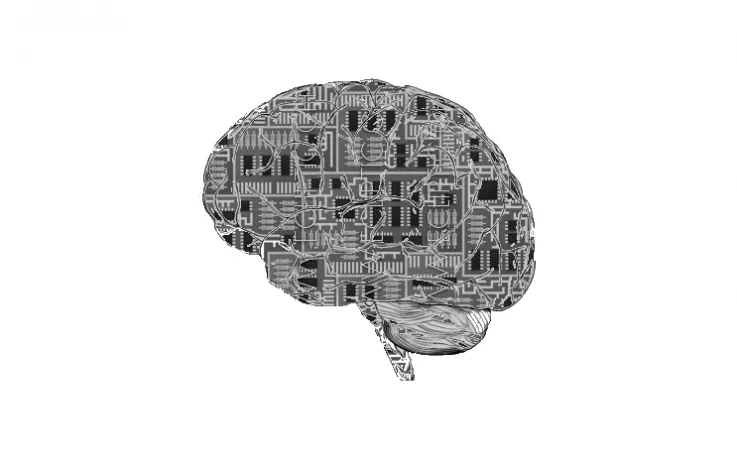
Image: Artificial Intelligence [http://www.newsweek.com/miracle-computer-chip-gives-big-boost-artificial-intelligence-451366]
So far, Artificial Intelligence is only acting in an assisting role, but in the near future, we may see it making its own decisions and even performing other tasks as needed. For example, when a diabetic patient’s test strips are running low, Artificial Intelligence can automatically place an order for diabetes strips. Through e-commerce, they will be delivered right to our doorstep.
This state-of-the-art technology, Remote Patient Monitor Systems and Artificial Intelligence, brings medical services right into our homes. Welcome to this new era of technology. Grandfathers like Mili’s will no longer have to struggle to visit the hospital; they can manage their daily routines from the comfort of their own home.
References:
● 19 million will use remote patient monitoring by 2018: https://www.getrealhealth.com/publications-media/med-city-news-report-19-million-will-use-remote-patient-monitoring-by-2018/
● Wikipedia Remote patient monitoring https://en.wikipedia.org/wiki/Remote_patient_monitoring
● http://connhealth.com/






ধন্যবাদ ড. মশিউর রহমান সাহেবকে। যার লেখা পড়ে আমি রিমোট পেশেন্ট মনিটর সিস্টেম সম্পর্কে জানতে পারলাম ও শিক্ষতে পারলাম। এমন লেখা আরও চাই।