Guest Author:
Dr. Ripon Sikdar,
Deputy Program Director (Seed), PARTNER, BADC.
Balancing the impacts of climate change and sustaining agricultural productivity is one of the major challenges of the current century. Global agricultural production now faces severe threats, risking both food security and a sustainable agricultural environment. Due to biotic and abiotic stresses such as diseases, pests, drought, salinity, and heavy metal toxicity, global crop losses account for roughly 20-40%, with an annual economic value of about 220 billion USD. The challenges are intensified by climate change impacts, making it increasingly difficult to maintain the balance between climate-resilient agriculture and productivity. Sustainable Development Goal (SDG) 2 also highlights the importance of “ending hunger, achieving food security and improved nutrition, and promoting sustainable agriculture” by 2030.
According to the United Nations, it is projected that the global population will reach 9.7 billion by 2050 and 11.0 billion by 2100. Meeting the food demand for this growing population requires boosting global agricultural production by 70% to 110%—without expanding arable land. Conventional farming practices, especially declining soil fertility, macro- and micro-nutrient deficiencies, reduced soil water retention capacity, poor irrigation management, use of chemical fertilizers, pesticides and herbicides, and the presence of heavy metals in soil, all pose serious risks to agriculture.
Enhancing agricultural productivity to meet the rising food demands is a formidable challenge. While various agronomic techniques and genetic engineering have been used to increase agricultural yield, these methods are expensive, labor-intensive, time-consuming, and often genetically modified (GMO) foods carry potential health risks. Nanotechnology has revolutionized agriculture, making it more efficient, resilient, and sustainable. Over the years, researchers have conducted extensive studies on carbon nanomaterials for sustainable agriculture, and research in this field continues. Due to their biocompatibility, environmental safety, and cost-effectiveness, the use and acceptance of carbon nanomaterials, particularly carbon dots (C-dots), is steadily increasing. C-dots are extremely small nanoparticles (<10 nanometers) within the carbon nanomaterial family, possessing fluorescent properties, and play a significant role in sustainable crop production by enhancing photosynthesis, nutrient uptake, nitrogen fixation, and increasing biotic and abiotic stress tolerance. C-dots offer higher photostability, higher quantum yield, and comparatively lower toxicity than other nanomaterials such as cadmium/lead, metal oxides, etc.
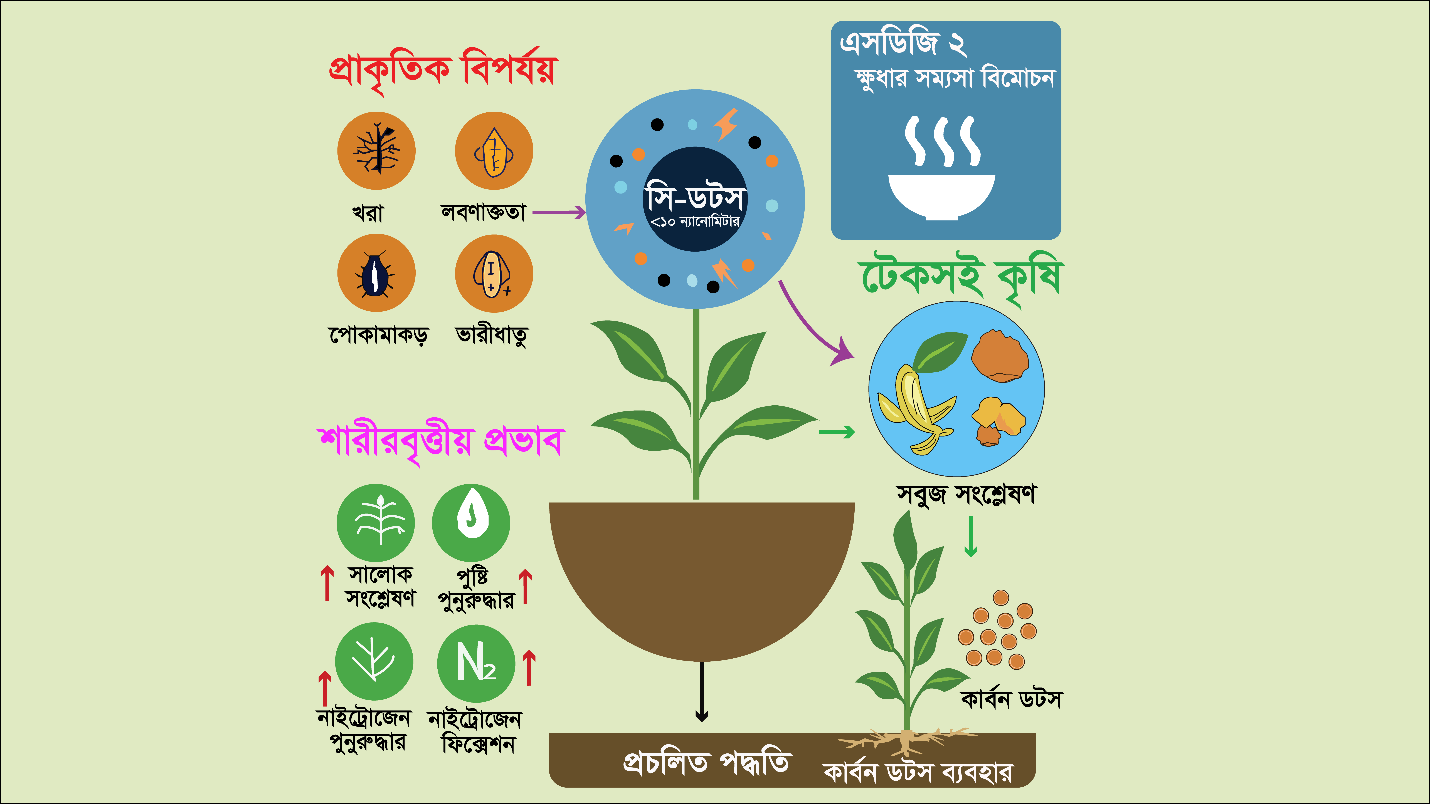
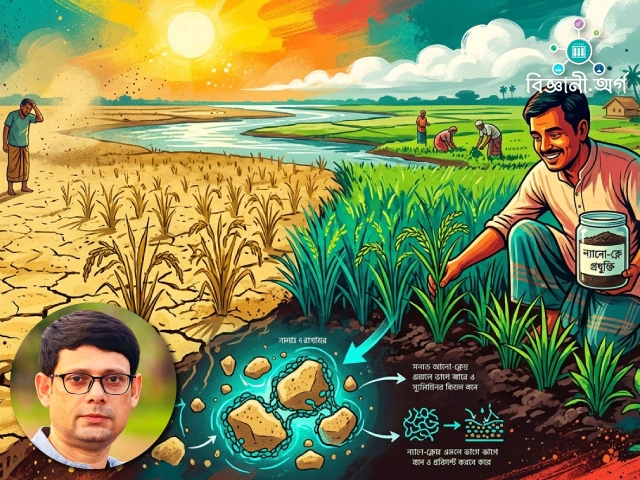
Figure: Role of carbon dots in sustainable agriculture. Tiny carbon dots produced from organic matter help enhance plant growth, nutrient uptake, and soil nitrogen retention. They are effective against climate-related stresses such as pests, drought, salinity, and heavy metals, thereby contributing to sustainable agriculture and the achievement of SDG 2, the “Zero Hunger” goal.
The rapidly growing global population, impacts of climate change, and limitations of conventional farming methods all highlight the significance of nanotechnology as a “game-changer technology” in agriculture. Nanotechnology is now being utilized in various agricultural sectors (e.g., nano-fertilizers, biotic and abiotic stress management, phytopathogen detection, etc.). As a new class of nanomaterial, C-dots are being used in agriculture and other sectors, with the aim of increasing food production while balancing the challenges posed by climate change. The details of their applications in agriculture are discussed below.
Carbon Dots in Enhancing Seed Germination
Seed germination is the first and most crucial stage of plant growth. Seeds of rice and wheat treated with aqueous solutions of C-dots have shown relatively higher germination rates. Water absorption and nutrient uptake and assimilation are vital for seed germination, plant growth, development, and good yield. C-dots can penetrate the hard seed coat, which facilitates water absorption and germination by easing water entry and increasing seed vitality. The germination rate, root growth, seed moisture retention, and seedling length all depend on the hydrophilic groups (such as hydroxyl and carboxyl) on the surface of C-dots. These hydrophilic groups help retain water molecules, which are absorbed by plants; appropriate water uptake accelerates germination and growth. Furthermore, C-dots enhance gene expression—such as aquaporin, which is crucial for germination—by lowering soil pH, facilitating water and nutrient uptake, and also accelerating soil microbial activities.
The hydroxyl and carboxyl groups on C-dots also assist in the absorption of essential plant nutrients (e.g., potassium, calcium, magnesium, copper, zinc, manganese, iron, etc.). These nutrients bond with hydrophilic groups on the C-dot’s surface through hydrogen bonding and electrostatic interactions, aiding nutrient absorption. When C-dots enter plant tissues, nutrient ion concentration increases, supporting gradual and sustained release from the xylem. Application of C-dots has been found to increase nutrient ion content in Arabidopsis compared to control plants. For example, after treatment with 40 mg/L in coriander and 0.02 mg/mL in lettuce, the levels of potassium, calcium, magnesium, phosphorus, manganese, and iron increased by 64.3%, 21.0%, 26.2%, 12.8%, 56.0%, and 125%, and nitrogen, phosphorus, and potassium increased by 4.4%, 10.8%, and 16.5%, respectively.
Soil contains abundant carbon, and C-dots are much more environmentally friendly compared to other common nanomaterials. Applying them to soil increases its electrical conductivity (EC), boosting the amount of biocarbonates. As a result, absorption of key nutrients like nitrogen, phosphorus, and potassium increases. Additionally, by enhancing the activity of soil nitrogenase and nitrogen-fixing bacteria, bio-catalytic electron transfer processes are increased, leading to higher nitrogen content in the field.
Carbon Dots in Enhancing Photosynthesis
Photosynthesis is essential for plant growth, development, yield, and biomass production, wherein light energy is converted into electrical and subsequently into chemical energy to produce food. Key processes in photosynthesis include light absorption, electron transfer, photophosphorylation, carbon assimilation, and vital chemical reactions. Research shows that nearly 90% of plant biomass is generated via photosynthesis. C-dots accelerate this vital physiological process. Typically, C-dots absorb ultraviolet (200-400 nm) light. They act as both electron donors and acceptors. Amine-functionalized C-dots bind strongly to the surface of chloroplasts, thereby accelerating the electron transfer chain in the photosynthetic reaction, and thus enhance overall photosynthesis. For example, using 5 mg/L nitrogen-doped C-dots increased maize photosynthesis rate by 21.5%. Another study found that C-dots significantly improved light conversion rate, electron supply rate, chlorophyll content, ATP synthase activity, and NADPH synthesis in maize. Furthermore, C-dots notably enhanced expression of genes like chlorophyll synthase and chlorophyll enzyme in rice seedlings, increasing chlorophyll synthesis and carbon dioxide assimilation. Thus, in crops like rice, mung bean, Arabidopsis, and others, C-dot application has significantly increased photosynthesis via boosted Rubisco enzyme activity, positively impacting yield. In conclusion, C-dots artificially support photosynthesis, increasing plant height, biomass, leaf area, stomatal conductance, Rubisco activity, ATP, NADP, PS-1, PS-2 activity, electron transfer chain rate, and most photosynthesis-related processes, ultimately boosting crop yields via increased carbohydrate production.
Carbon Dots in Mitigating Abiotic Stress
C-dots are important nanomaterials, effectively mitigating various abiotic stresses in plants such as salinity, drought, heavy metals, and high temperatures—with their impacts scientifically proven at physiological and cellular levels. Their tiny size and large surface area allow C-dots to easily cross plant cell walls and plasma membranes, where they scavenge reactive oxygen species (ROS) and lower oxidative stress. Under saline and drought conditions, C-dots stimulate the synthesis of abscisic acid, thereby enhancing water retention by closing leaf stomata and reducing transpiration. Simultaneously, C-dots increase proline, glutathione, and soluble sugar content to help maintain osmotic balance. In the presence of heavy metals, C-dots chelate metal ions, preventing their cellular entry and stimulating the synthesis of metallothioneins and phytochelatins for rapid detoxification. At elevated temperatures, C-dots penetrate chloroplasts to prevent D1 protein degradation, thereby preserving Photosystem II activity and keeping the photosynthetic electron transport system active. Moreover, C-dots influence plant gene expression, such as by strengthening the function of heat shock proteins, aquaporins, and antioxidative defense genes. Through these multifaceted processes, C-dots are being recognized as a promising, eco-friendly, and sustainable technology for mitigating abiotic stress, potentially making substantial contributions to agricultural productivity and climate adaptation strategies.
Carbon Dots in Mitigating Biotic Stress
Biotic stresses—especially infections caused by pathogenic bacteria, fungi, viruses, and other microbes—are among the primary causes of reduced crop yield and quality. Traditionally, chemical fungicides and bactericides are used to control such diseases, leading to issues like environmental pollution, declining soil fertility, and increased resistance in pests. C-dots offer an innovative and environmentally friendly solution to these challenges. Research shows that the antimicrobial properties of C-dots can directly destroy pathogen cell walls or disrupt their metabolic processes. They also enhance plants’ disease resistance by increasing the activity of defense enzymes and accelerating the expression of related genes. For example, nitrogen-doped C-dots can control more than 50% of Fusarium graminearum (a fungus causing Fusarium head blight in crops). In tomatoes, the application of C-dots after pathogen attack markedly increases the activity of various defensive enzymes (such as Phenylalanine Ammonia Lyase (PAL), Peroxidase (POD), Polyphenol Oxidase (PPO), Catalase (CAT), etc.). These enzymes quickly fortify plant cell walls via synthesis of defensive compounds like phytoalexins. With such multifaceted capabilities, C-dots are being acknowledged as an effective and safe method for mitigating biotic stresses in sustainable, eco-friendly agricultural systems.
Carbon Dots-Based Sensors
Carbon dots-based sensors are a new technology in agriculture, recognized for their eco-friendliness and high sensitivity. Due to their light-sensitivity and fabrication from organic materials, these nano-particles can easily detect soil nutrients, moisture, heavy metals, pesticide residues, or pathogens. As a result, farmers can better time irrigation, fertilizer applications, or disease-prevention steps. The use of carbon dot sensors facilitates precision farming, ultimately increasing yields and reducing costs. This technology is playing a vital role in ensuring sustainable agriculture and food security. Below is a table highlighting some examples of C-dot-based sensors.
| Crop | Problem | Sensor Mechanism | Advantage in Farm Management |
| Rice | Bacterial blight (X. oryzae) | Fluorescent biosensor detects presence of bacteria | Early disease prevention, selection of disease-resistant varieties |
| Tomato | Leaf spot disease (Alternaria solani) | Detects fungal presence by analyzing chemical changes in leaves | Timely fungicide application |
| Cabbage | Nitrogen deficiency | Measures soil nitrogen levels | Accurate fertilizer use, improved yield and quality |
Green Synthesis Methods and Sources of Carbon Dots in Agriculture
The green synthesis method for carbon dots is significant as an environmentally friendly technology in agriculture. These nanoparticles are usually made from organic waste such as banana peels, tea leaves, fruit peels, or other plant waste, processed at high temperatures to achieve <10 nm size. They aid in photosynthesis, nutrient uptake, and nitrogen fixation, thus supporting sustainable agriculture to face climate challenges. The following table summarizes various green synthesis methods and organic sources used for producing carbon dots for agricultural applications.
| Carbon Source | Synthesis Method | Main Features/Advantages |
| Agricultural waste, plants, medicinal plants, other organic matter | Ultrasonic technique, chemical oxidation, carbonization, hydrothermal, microwave irradiation | Cost-effective, high stability, simple protocol, safe and eco-friendly |
| Jackfruit seeds, banana peels, cotton linter waste | Microwave-assisted, hydrothermal, pyrolysis | Suitable for various applications, waste reuse |
| Honey, onion waste, lemon juice, kiwi fruit extract, turmeric/lemon/grapefruit extract, waste tea | Hydrothermal | Cell imaging, fluorescence sensors, cancer imaging, anti-cancer |
| Natural resources, agricultural waste, food industry by-products | Pyrolysis, hydrothermal, microwave-assisted, magnetic hyperthermia, aldol condensation polymerization, oxidation | Widely available, affordable, renewable, scalable, energy-saving |
| Sago waste, mint leaves, orange peel waste, banana stems, waste fryer oil | Hydrothermal | Eco-friendly, waste reduction, low toxicity |
| Sugarcane ash, microalgae, organic matter, flower waste, ornamental plants, fruits | Hydrothermal | Low toxicity, C-dot production from waste |
| Fruits, vegetables, flowers, leaves, seeds, stems, crop residues, fungal/bacterial species, waste products | Hydrothermal/carbonization | High yield, easy control, low air pollution, low energy consumption, low cost |
| Citric acid, urea, sugars, lemon peel, leaves, watermelon rind, organic-waste lignin, paper | Hydrothermal | Eco-friendly, use of low-toxicity solvents |
Differences Between Conventional Farming and Use of Carbon Dots
Some key differences can be observed between conventional farming and methods using C-dots. Firstly, C-dots enhance crop yield by improving nutrient absorption capabilities through modifications in plant physiology and metabolic pathways. In contrast, traditional farming methods boost yields through soil fertility management, use of organic and inorganic fertilizers, and pest/disease control. Secondly, C-dots help mitigate environmental stresses by increasing resistance to biotic and abiotic stresses or pests, whereas conventional methods primarily depend on chemical pesticides and other pest management approaches. Thirdly, C-dots help reduce the use of pesticides and chemical fertilizers, thereby decreasing environmental pollution and lowering production costs; C-dots also have numerous easy and affordable sources and are comparatively less toxic to the environment. Commonly used pesticides and chemical fertilizers in conventional agriculture can be expensive, less efficient, and may rapidly cause environmental pollution, ultimately reducing the overall economic benefit from farming.
Although C-dots hold significant promise in agriculture, their production and availability for commercial applications are still limited. Currently, carbon dots are mainly available in powder or liquid solution forms. However, in most cases, the use of these specialized nanomaterials is still largely laboratory-based. In Bangladesh, universities and research institutions source various types of carbon dot powders or solutions from companies such as CD Bioparticles (Source: CD Bioparticles website), Ossila (Source: Ossila website), and MSE Supplies (Source: MSE Supplies website) for research purposes.
In conclusion, the use of nanotechnology, such as C-dots, in crop production could prove much more advantageous and profitable than traditional practices. Modern technologies like C-dots can help further advance agriculture in our country. However, wider application will require significant further research in areas such as eco-friendly cultivation and management techniques, the role of C-dots against phytopathogens and phytoviruses, use of C-dots in seed and crop disease management, environmental risk assessment and management practices—for the future development of sustainable agriculture.
Contact Information:
Email: [email protected]