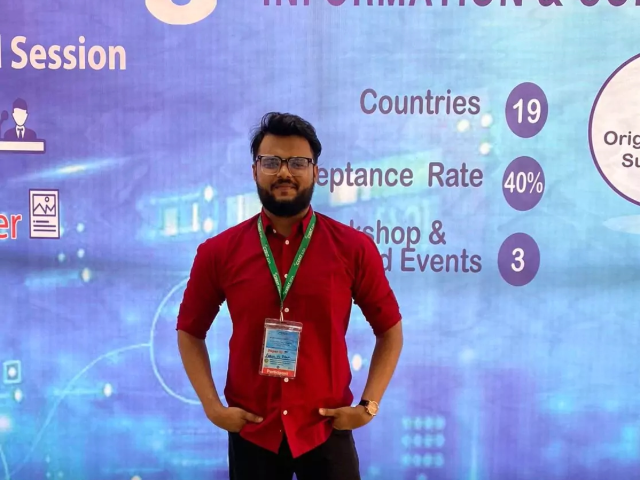
Recently, we interviewed Md. Fahim-ul-Islam. He is currently working as a Research Assistant in the Department of Computer Science and Engineering at BRAC University. He is in the final stages of completing his master’s thesis in the same department at BRAC University. He shared many important insights for our new generation of researchers. To learn more, read his interview:
First, we would like to know about you.
Hello! I am Md. Fahim-ul-Islam. At present, I am working as a Research Assistant in the Department of Computer Science and Engineering at BRAC University. I am in the final stages of my master’s thesis in the same department at BRAC University. Previously, I completed my Bachelor’s degree from the same department at BRAC University.
What is the focus of your research?
My main research interests are in developing advanced machine learning methods for automated systems and creating solutions to enhance language understanding. I work in computer vision and natural language processing (NLP), where I strive to use artificial intelligence (AI) to analyze images and videos, detect various objects, and improve the ability to comprehend the meaning of language. In computer vision, I am developing algorithms that can automatically identify objects from images and videos. In NLP, I am working on building large language models (LLMs) that can capture the complexity and context of human language, making understanding and responding to language more natural. Through this research, I aim to build systems that can better interpret human language and visual data, which will make automated systems smarter and more effective in the future.
How does or will your research benefit us?
My research can benefit us in various ways. Firstly, the development of automated systems can make the use of technology easier and more effective. For example, if we create advanced computer vision and language understanding capabilities, then in various industries—such as healthcare, security, and transportation—data analysis and decision-making processes will become quicker and more accurate.
Secondly, by creating large language models (LLMs), machines that can understand human language will be able to communicate more fluently, enhancing user experience. For instance, chatbots and virtual assistants will be better equipped to answer questions and assist users.
Thirdly, this research will help solve both technological and social problems, such as automated translation and accurate data analysis. As a result, our everyday use of technology will be enriched, making tasks easier and creating new opportunities for business and innovation.
Would you share any special experiences from your research work?
I had an experience during my first year at university that deeply influenced me. I wanted to create an AI model to predict diseases in healthcare, but soon realized that I didn’t have enough data. I did not give up and tried to collect additional data by contacting various healthcare institutions. Within a short time, I was able to acquire valuable data, and by using data augmentation techniques, I made more effective use of the limited information. This experience taught me that in research, communication and collaboration are just as crucial as technical skills.
In your view, what qualities should a scientist possess?
First, curiosity is essential, as it drives the desire to learn about new things. Second, critical thinking is necessary to analyze information and make sound decisions. Third, patience is indispensable because the research process can be challenging and lengthy. Creativity helps in solving new problems, and I believe collaboration and good communication skills are vital for bringing together diverse perspectives in research.
Do you have any message for young Bangladeshi students who want to pursue science?
Be ready to embrace new ideas. Stay eager to learn during your university years, and gain hands-on experience by participating in research, internships, and seminars. Science cannot be done alone, so build relationships with peers, teachers, and experienced scientists, and share knowledge with others.
Your Email: [email protected]
Your LinkedIn: https://www.linkedin.com/in/fahim-ul-islam-99707b214/
Your Website, Research Links: https://scholar.google.com/citations?user=awqnhTYAAAAJ&hl=en
Finally, on behalf of Biggani.org, we extend our heartfelt congratulations and best wishes to Md. Fahim-ul-Islam. His interview was extremely enjoyable and inspiring for us. He is an exemplary role model for our young researchers, and by following in his footsteps, we can unlock new horizons in science and research.