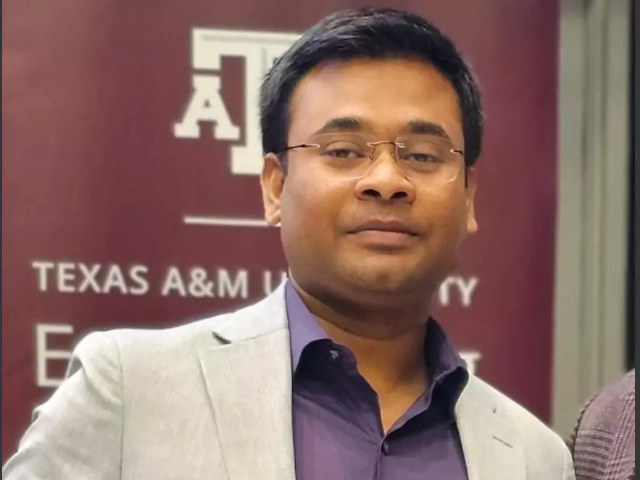
Today we interviewed an emerging researcher, Md. Saifur Rahman, who is pursuing his Ph.D. in the Department of Biomedical Engineering at Texas A&M University. He is focused on developing implantable and wearable devices that can be used for diagnosis, treatment, and monitoring. He shared some inspiring experiences regarding the future prospects of biomedical engineering. According to him, this field is not limited only to students of life sciences; people from physics, chemistry, materials science, mechanical engineering, data science, and even medical backgrounds can contribute as well. He says that anyone with a basic understanding of mathematics, biology, physics, and chemistry, and who has an interest in biomedical engineering, can study this subject.
What qualities are essential to succeed as a researcher,
In this regard, he said, “The most important thing in research is to identify your area of interest. Patience, maintaining enthusiasm, and unwavering determination toward your goal are crucial on the path of research.” It is important to discover what excites you and the subject areas you feel comfortable working with. Additionally, patience, enthusiasm, consistent effort, discipline, and a goal-oriented mindset are essential qualities.
He also shared that,
He discovered his true area of interest while doing his master’s in South Korea. The opportunity to work with researchers from different countries and find solutions to global problems is what motivated him. Even though he was working in Bangladesh, his passion for research took him to Korea, and now he is doing his Ph.D. in the USA.
He was asked,
about the challenges he faced when studying abroad for research. He said that adapting to a new culture has a significant impact. Especially in countries where English is not the first language, learning the language, meeting new people, and building connections become major challenges. Regarding his experience abroad, he said that while adapting to cultural and linguistic differences was challenging, these experiences enriched him both personally and professionally. Language and cultural differences helped form new relationships, which he found to be positive and enjoyable.
Currently, he is engaged in translational research,
aiming to effectively apply laboratory-developed techniques directly to patient care. In particular, he is working on developing implantable and wearable devices for humans. He believes that his research will lead to advancements in the diagnosis, monitoring, and treatment of neurological and cardiovascular diseases in the future.
His advice for researchers in Bangladesh,
We should focus on identifying local problems and seek to solve them through research. He believes there is tremendous potential to further expand the research landscape in Bangladesh, and emphasizes the need for fresh perspectives.
He also shared some more important tips for new researchers,
He said it is very important to develop communication skills and become proficient with essential tools. To undergraduate students, he suggests working on a project and making an effort to publish the results to demonstrate their capabilities.
Additionally, for those preparing for higher studies, it is not enough for a recommendation letter to merely state that someone is a ‘good student’. There should be specific examples and evidence to prove the candidate’s skills and abilities. An ideal recommendation letter should contain positive and accurate comments from a professor or lecturer who truly knows the student and can provide detailed insights about their abilities and achievements.
His advice for writing an SOP or Statement of Purpose,
It should read like a true story. The SOP should contain a simple and authentic story, reflecting the candidate’s personality and interest in learning. It should naturally express the applicant’s enthusiasm and motivation for their chosen area of study.
If ever you lose motivation in research, he recommends talking to your mentor or colleagues. He believes his research will not remain confined within the lab but will make a direct impact on people’s lives. His work can inspire the younger generation, showing that science is not only about research but also has a significant impact on real life.
Many times, researchers are uncertain about what to work on. According to him, a lot of research is possible even using affordable sensors for simulation or point-of-care solutions. He also offers excellent advice regarding gaps in your CV during higher education; if you do not have formal experience at an institution or a research lab during that period, you can include your independent research or work in your CV, with a detailed description. He encourages new researchers to find their field of interest and focus on their research, adding that there is great potential for research in Bangladesh. For those interested in higher education, he inspires Bangladeshi students to get involved in research.
Watch our full interview on YouTube for more details:
On behalf of Biggani.Org, we extend our heartfelt congratulations and best wishes to Md. Saifur Rahman. This interview with him was truly a delightful experience for us. He is an exemplary figure for young researchers, who will be able to follow his path and open new horizons in their own research.
Emerging researcher Md. Saifur Rahman: Research experience and advice in biomedical engineering!
Today, we interviewed an emerging researcher, Md. Saifur Rahman is a Ph.D. candidate in the
Biomedical Engineering department at Texas A&M University. He is focused on developing
implantable and wearable devices that can be used for diagnosis, treatment, and monitoring. He
shared inspiring insights on the future potential of biomedical engineering. According to him,
this field is not restricted to biology students; rather, people from physics, chemistry, materials
science, mechanical engineering, data science, and even medical backgrounds can also
contribute. He said anyone interested in biomedical engineering, with a foundational
understanding of mathematics, biology, physics, and chemistry, can pursue studies in this field.
When asked about the qualities needed to be a successful researcher, he said, “The most
important thing in research is finding your area of interest. It’s crucial to have patience, maintain
enthusiasm, and stay focused on your goals.” He added that researchers should discover what
excites them and find the subjects they feel comfortable working on. Additionally, patience,
enthusiasm, consistent effort, discipline, and a focused mindset are essential qualities.
He further mentioned that he discovered his area of interest while doing his master’s in South
Korea. Working with researchers from different countries and finding solutions to global
problems motivated him. Although he was working in Bangladesh, his passion for research led
him to Korea, and he is now pursuing his Ph.D. in the United States.
When asked about the challenges he faced while studying abroad for research, he noted that
adapting to a new culture has a significant impact. Especially when going to a country where
English is not the first language, learning the language, meeting new people, and building
connections can be major challenges. Reflecting on his experience studying abroad, he said that
adapting to language and cultural differences was challenging but enriched him personally and
professionally. These differences helped him build new relationships, which he found to be
positive and enjoyable.
Currently, he is engaged in translational research to apply lab-discovered techniques in patient
care effectively. Specifically, he is working on developing implantable and wearable devices. He
believes that his research will contribute to advancements in diagnosing, monitoring, and treating
neurological and cardiovascular diseases in the future.
His advice for researchers in Bangladesh is to identify local problems and focus on finding
solutions to those issues through research. He believes there is tremendous potential to expand
the field of research in Bangladesh and that new perspectives are needed.
He also shared some essential tips for new researchers. He emphasized the importance of
developing communication skills and using essential tools proficiently. For undergraduate
students, he recommends working on projects and trying to publish the results to demonstrate
their skills.
Additionally, for those preparing for higher studies, he advised that recommendation letters
should do more than label the applicant as a ‘good student.’ They should include specific
examples and concrete evidence to showcase the applicant’s skills and abilities. A
recommendation letter should also include positive and accurate remarks from a professor or
lecturer who knows the student well and can provide detailed insights about their abilities and
achievements.
Regarding writing an SOP (Statement of Purpose), he suggests making it sound like a genuine
story. The SOP should contain a simple, true story reflecting the candidate’s personality and
passion for education. It should naturally convey the candidate’s interest and motivation for their
chosen field of study.
He also advised speaking with mentors or colleagues whenever one feels a loss of motivation in
research. In his view, his research will not remain confined to the lab but will directly impact
people’s lives. Through his work, he hopes to inspire the younger generation and show them that
science plays a vital role not only in research but also in real life.
Researchers often feel uncertain about what to focus on. He believes substantial research is
possible even with affordable sensors for simulations or point-of-care applications. He also gave
valuable advice on addressing gaps in one’s CV during higher education. If there is no work
experience from an organization or lab, one should include independent research or any work
done during that time with detailed descriptions. He encourages new researchers to find their
field of interest and dedicate themselves to their research, adding that there is vast potential for
research in Bangladesh. He motivates aspiring Bangladeshi students to engage in research
On behalf of Biggani.Org, we extend our sincere congratulations and best wishes to Md. Saifur Rahman. This interview with him is truly a joyful experience for us. He is an exemplary figure for young researchers, who will be able to follow his path and open new horizons in their research.