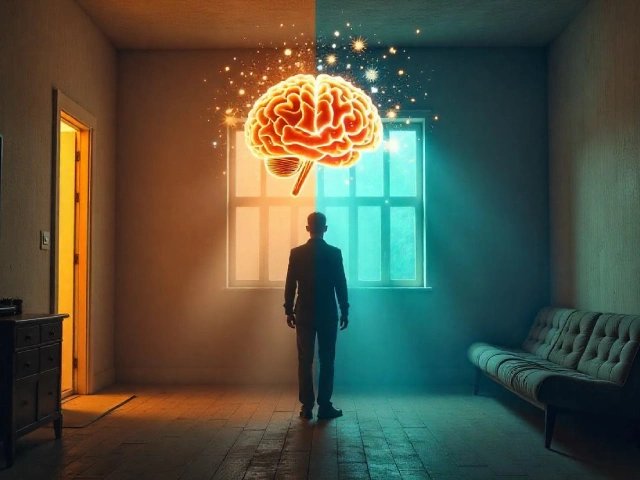
1. Let the story begin with a game of the brain…
That day, I moved into the new hostel at Cox’s Bazar Medical College. A bed beside the window, a wooden rack, and overheard conversations from the next room—suddenly it felt as though I had been here before!
In reality, this was my first time in this hostel. Yet something inside my head kept insisting—”You have already been here, just like this!”
This feeling is called déjà vu. A moment that is truly new, but your mind tells you—it’s familiar.
2. Déjà Vu: The Story Behind the Word
The word “déjà vu” comes from French. It means: “already seen.”
Behind this term lies a fascinating play between the brain, memory, and consciousness—one that science still finds difficult to fully explain.
Question: If we are certain something hasn’t happened before, why does the brain force us to think it has?
3. Brain Structure and the Process of Memory
Some of the memory-dependent parts of our brain:
- Hippocampus – for creating and organizing memory
- Parahippocampal Gyrus – for recognizing environments
- Temporal Lobe – for recognizing language, sounds, and faces
When there is any neural miscommunication among these regions, a new experience can mistakenly feel like an old one.
4. Scientific Explanations of Déjà Vu
4.1. Memory Misfiring (Short-Circuiting of Memory)
Sometimes, certain neurons in the Hippocampus and Parahippocampal areas activate “without cause,” making new information feel like a past experience.
Dr. Chris Moulin mentions a patient who experienced déjà vu numerous times every day. He was so troubled by it that he couldn’t watch movies—everything felt “already seen.”
4.2. Dual Processing Theory
The brain processes information through two separate pathways—if there’s a delay in one, it may feel like the information is happening a second time.
Analogy: Like taking two photos, but the second photo feels like it happened first.
4.3. Attention & Partial Perception Hypothesis
You looked at something, but your attention was elsewhere. When you suddenly notice it fully, déjà vu strikes.
4.4. Temporal Lobe Epilepsy (TLE)
For epilepsy patients, this may be a pre-seizure aura. Abnormal electrical activity is visible on EEG.
5. Is Déjà Vu a Feeling of Time Travel?
Some people claim they see déjà vu moments in their dreams before they happen in reality.
Though science hasn’t explained this, the “cryptomnesia” concept suggests—old memories can remain in the subconscious without you knowing it.
Question: Have you ever seen something in a dream and then experienced it in real life?
6. Different Types of Déjà Vu Experiences
- Déjà vécu: The whole situation feels like it has happened before
- Déjà senti: A smell or sensation feels familiar
- Déjà visité: An unfamiliar place feels known
7. Thought-Provoking Questions for Readers
- Has it ever happened to you—seeing a new place and feeling like you’ve already been there?
- Have dreams ever caused real déjà vu?
- Is déjà vu a sign of some psychological or neurological signal?
8. What Does Science Say, and What Do You Think?
Déjà vu is proof of our brain’s sophisticated memory processing. There’s nothing to fear from it.
But if it becomes frequent or uncomfortable, it’s important to consult a Neurologist.
9. References
- Moulin et al. (2005), The Clinical Neuropsychology of Déjà Vu
- Brown, A. S. (2004), The Déjà Vu Experience
- Spatt, J. (2002), The Lancet
- Malach, R. et al. (1995), Mapping Visual Cortex
- Gloor P. (1990), Temporal Lobe Epilepsy Phenomena
Final Thoughts
Every day, we walk the fine line between reality and imagination. Sometimes that line blurs, and that’s when déjà vu is born.
Do you think Déjà Vu is a memory from a past life? Or is it just a fascinating illusion of the brain?
Md. Iftekhar Hossain
Medical student, Cox’s Bazar Medical College
Interested in neuroscience, habit formation, and behavioral changes of the human brain