News Desk, Biggani Org
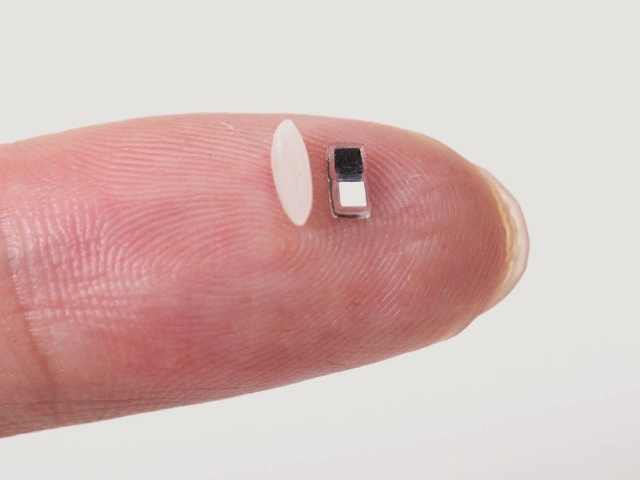
Recently, researchers at Northwestern University in the United States have developed a groundbreaking pacemaker that is even smaller than a grain of rice. This tiny pacemaker can be injected into the human body and will automatically dissolve after a certain period. As a result, no surgery is required for its use.
What is a pacemaker and why is it used?
A pacemaker is a medical device used to treat irregular heartbeats or arrhythmias. Conventional pacemakers require batteries and wires, which are implanted in the body through surgery. However, this new technology has neither wires nor batteries; it is completely wireless and can temporarily control the heartbeat.
How does this tiny pacemaker work?
This tiny pacemaker operates through a special type of chemical reaction known as a galvanic cell. The device contains two metal electrodes, which generate electricity with the help of the body’s internal fluids. This eliminates the need for a battery.
In addition, a soft, flexible wireless patch is placed on the chest to monitor the heartbeat. Whenever an irregular heartbeat is detected, the patch sends pulses of infrared light. This light penetrates the body and activates the pacemaker.
Why is this invention important?
This is especially important for children born with congenital heart disease. Surgery poses risks in children, so injecting the pacemaker is a much safer and more effective method. After use, the device dissolves in the body by itself, eliminating the need for an additional operation to remove it.
Potential for the Future and Broader Applications
This technology could be used in many other fields in the future. For example, it may be applied for rapid nerve and bone healing, wound recovery, and pain relief. Researchers believe that with different colors of light, this technology could be further enhanced to address various heart problems.
Research and Statements from the Scientists
This research was led by bioelectronics expert John A. Rogers and associate Igor Efimov. Their study was recently published in the renowned scientific journal “Nature.”
Such innovations in science and technology open new horizons for us, paving the way for even more advanced medical technology in the future.