News Desk, Biggani Org
Contact: biggani.org
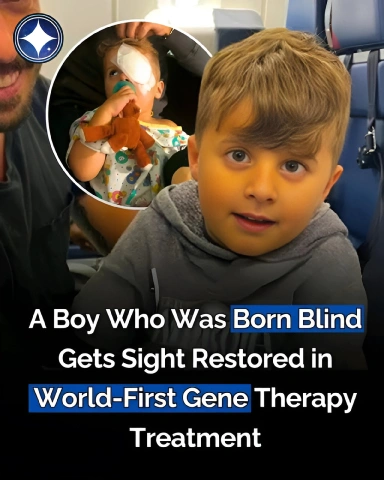
Jess Broadbent is now a remarkable name in the world of medical science. This six-year-old child had been blind since birth due to a rare genetic disease called Leber Congenital Amaurosis (LCA). This condition is caused by a defect in the AIPL1 gene, which disrupts the development of retinal cells necessary for vision. As a result, children are born blind or legally blind.
But in 2020, a team of doctors at London’s Great Ormond Street Hospital and Moorfields Eye Hospital performed a groundbreaking treatment on Jess—gene therapy. Through this treatment, light returned to her eyes, she regained the ability to recognize toys, and even gained the confidence to move around independently.
How does this gene therapy work?
Gene therapy is a modern medical technique where healthy genes are introduced to replace damaged or malfunctioning ones in the body. In Jess’s case, doctors performed a keyhole surgery (meaning a very small incision) and injected a healthy copy of the AIPL1 gene directly into the retina.
To deliver this gene inside the eye, a virus is used as a “vector” or transport vehicle. Typically, a harmless virus is modified in the lab to carry the gene, which then helps the correct gene function in the retinal cells. As a result, these retinal cells regain their ability to capture light.
What happened after the treatment?
Just one month after the surgery, Jess began to respond to faint light. Gradually, improvements were seen in her ability to recognize toys, and to move around the house. Specialists initially treated only one eye to assess safety and effectiveness. The other eye was left untreated for comparison. It was observed that the untreated eye continued to deteriorate, while the treated eye showed improvement in vision.
How significant is this achievement?
The success of this therapy has been published in The Lancet medical journal, and it is the world’s first effective gene therapy against the most severe forms of childhood blindness. It has opened new possibilities for treating other genetic eye diseases in the future.
This project was led by the University College London Institute of Ophthalmology, and similar treatments are already being administered to other children.
Future prospects
This kind of gene therapy shows promise not only for eye diseases, but also for various genetic disorders such as Muscular Dystrophy, Cystic Fibrosis, Hemophilia, and more. However, the treatment remains very expensive and is limited in availability. Scientists are hopeful that in the future, it will become more affordable and accessible.
Final thoughts
Jess Broadbent regaining her sight is not just the return of light to one child’s life—it is a beacon of hope for millions of children in the future. Gene therapy is showing us just how far science has come, and how humanity is breaking its own limits to open the doors to a new world.
If you want to know more about modern treatments and gene therapy for children, or would like to participate in awareness initiatives, contact biggani.org.