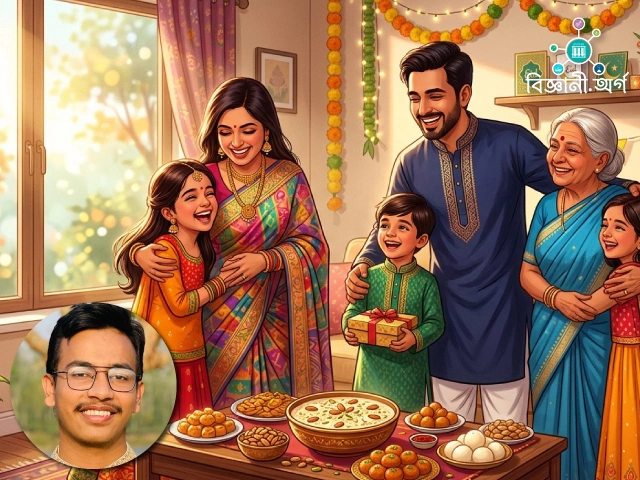
Sitting down to write an informative piece after quite a while. Haven’t found much time to write amidst all the busyness.
But today, one question keeps bugging me—
Has Eid changed… or have we changed?
Why doesn’t Eid excite us the way it did in childhood?
Why doesn’t putting on new clothes make my heart race like before?
Why, even when the whole family is together, does there always seem to be an invisible distance?
Or has our very definition of happiness quietly changed without us realizing?
Childhood Eid: The Spike of Joy
There was a time when the night before Eid meant sleepless anticipation.
From the moment the crescent moon was sighted, the whole world felt different.
The smell of new clothes, the steamy morning vermicelli, hugging everyone after Eid prayers—everything felt intense, deep, alive.
And now?
Everything’s still there. But the intensity seems to have faded.
Just a feeling of “it’s fine”—not terrible, not amazing.
Dopamine: The Chemistry of Anticipating Joy
Is this change just a matter of time? Or has something inside our brains shifted?
Behind all our happiness, excitement, and motivation is one crucial neurotransmitter: dopamine.
We usually call dopamine the “pleasure chemical,” but it’s actually the anticipation chemical.
In other words, it’s more active when we’re waiting for joy, rather than when we actually receive it.
Why was Eid so exciting as a child? Because every part of it was rare:
- One or two new outfits a year
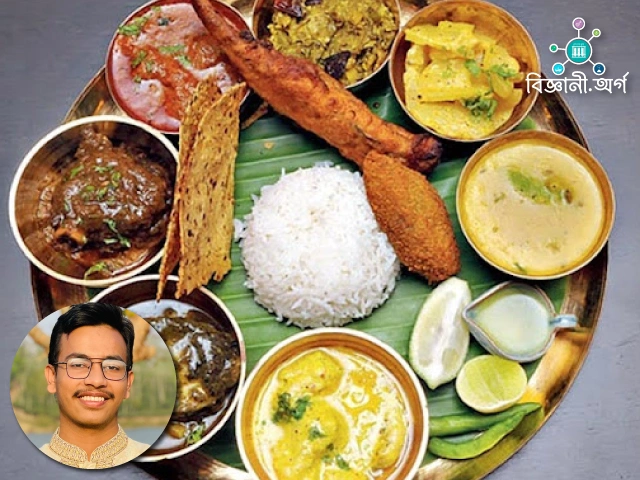
- Special treats reserved just for Eid
- Limited opportunities for enjoyment
This very anticipation would cause dopamine to surge.
Dopamine Over-Availability in the Modern Age
Now we live in an era where happiness isn’t rare—it’s over-available.
We get small “dopamine hits” every day—
- Scrolling social media
- Reels, shorts
- Gaming
- Instant entertainment
This constant stimulation has pushed our brain’s reward system to a new baseline.
Where Eid was once a major spike, now it’s become:
just another day with slightly better food and clothes.
The brain does something interesting—whatever it gets repeatedly, it starts to consider “normal.”
This is called a dopamine baseline shift.
The result:
- New clothes = expected
- Eid day = just a bit better than ordinary days
Comparison and Dissatisfaction
Another big factor: comparison.
Before, we were content with our own Eid.
Now, even on Eid, we look around—
- Who’s traveling where
- Whose outfit is more expensive
- Whose celebration is more grand
This comparison subtly breeds dissatisfaction.
You might be doing fine, but if you see someone “doing better,” your own happiness automatically shrinks.
Being Present in the Moment
Perhaps the most important question—
Are we truly present in Eid’s moments?
Or—do we eat just for the photos? Smile just for the posts? Travel just for the stories?
When we focus more on documenting than experiencing the moment itself, the depth of emotion is lost.
Some Ways to Rediscover Joy
If we try, it’s possible to feel joy as we used to. Here are a few things to try—
- Dopamine detox: Reduce social media before Eid
- Build anticipation: Hold back from certain things
- Make little things special
- Reduce comparison, increase gratitude
- Be present in the moment
Final Message
Eid hasn’t changed.
The moon of Eid still rises the same,
The morning breeze is still just as fresh,
Human love hasn’t diminished either.
The change is in our ability to feel.
Perhaps we need to relearn—
- How to find joy in less
- How to truly live a single moment
Then maybe someday—
All of a sudden it’ll strike us,
“Eid feels special again…”
Md. Iftakhar Hossain
2nd Year MBBS, Cox’s Bazar Medical College, Bangladesh
Areas of Interest: Behavioral Science, Neuroscience, Habit-Science