Guest Author – Azizul Haque
Assistant Professor, Yeungnam University.
Almost every research paper tells a story. But the question is, to whom and how is that story being presented? Often, authors share the story only from their own perspective, but editors, reviewers, or readers may want to see other sides of that story.
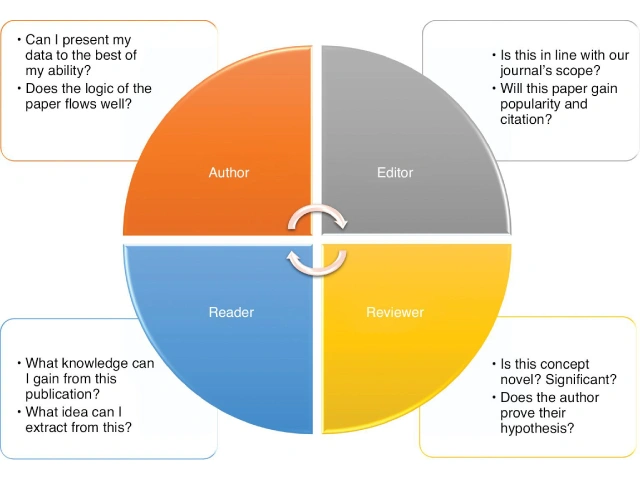
Publishing research is a competitive and complex process. Simply conducting good research does not guarantee success. This is because the acceptance of a research paper in an international journal depends on different stakeholders’ varied expectations and evaluation criteria. Academic or scientific writing has its own style, word choice, and precise terminology, which differ from regular storytelling. Many times, authors begin writing before fully understanding the basic rules, resulting in frequent and avoidable rejections. Therefore, to successfully publish research, authors must understand the perspectives of editors, reviewers, and readers, and structure the paper accordingly. For example:
Author:
The most important task for an author is to present their research data clearly, accurately, and credibly. This includes proper analysis of information, logically presenting the results, and maintaining consistency throughout the paper. Authors need to consider whether each section of the paper is coherent with others and if readers can easily follow the logic of the research. It is also essential to use proper scientific terminology while writing.
Editor:
The main goal for editors is to determine whether the research paper fits within the aims and scope of the journal. Will it be relevant and engaging for the journal’s readership? Will publishing the paper have a positive impact on the journal’s citation count?
Reviewer:
Reviewers deeply evaluate the research methods, data collection and analysis, results, and theories presented. They check whether the research offers new ideas or information, whether the quality and depth of the research are appropriate, and whether the author has successfully validated the main hypothesis or research objective. Reviewers point out any errors, ambiguities, or shortcomings in the paper so they can be improved.
Reader:
Finally, those who read the research paper try to determine how informative and useful the research is for them. They look for opportunities to learn new concepts or technologies, and assess how helpful the findings are for advancing their own work or research fields.