Dr. Mashiur Rahman
One evening, while scrolling through Facebook, I suddenly came across a stranger’s post. It claimed that a lemon and a pinch of salt could cure cancer. Below the post were thousands of likes, hundreds of shares, and tearful comments. Just a few scrolls down, another post read—getting vaccinated supposedly makes people infertile. There was the same frenzy there too. It made me think: in this massive digital crowd, the battle between truth and falsehood is so silent, yet so dangerous.
Worldwide, people’s presence on social media is unprecedented today. Recent global reports show that in 2024, there were about 5 billion social media users—around 62 percent of the world’s total population. On average, each user spends about 2 hours and 23 minutes daily on social media. The picture is no different in Bangladesh. The country now has over 60 million active social media users. In other words, about one in every three people in Bangladesh now regularly gets information via social media. Bringing science to this massive crowd means reaching millions upon millions of people.
But the danger lies at the intersection of speed and superficiality. Research shows that on social media, false information spreads about six times faster than the truth. A widely cited MIT study found that false news gets retweeted 70 percent more than factual information. This happens because lies usually sound more dramatic, more frightening, more sensational. The more people’s emotions are stirred, the faster the clicks and shares multiply.
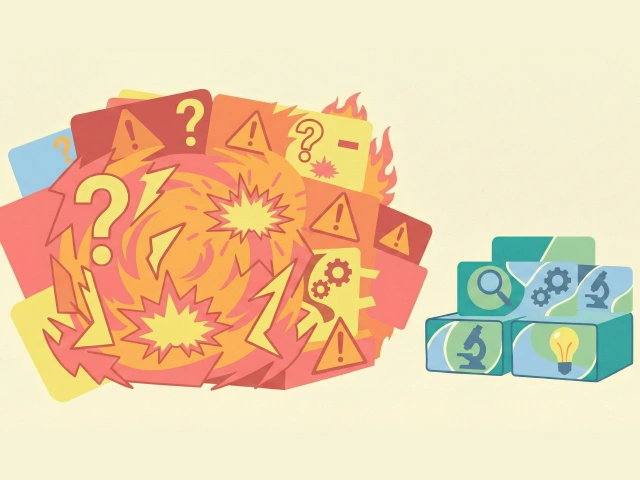
The more sensational a social media post’s headline is, the greater the risk of misinterpretation.
Health science is the biggest victim of this confusion. During the COVID-19 pandemic, the World Health Organization termed the situation an “infodemic”—meaning that alongside the virus, dangerous misinformation was spreading rapidly. A global survey found that, during the pandemic, about 1 in 6 people made wrong decisions due to false health information spread on social media—including many who delayed getting vaccinated or skipped it altogether. A study in the US revealed that those who regularly saw anti-vaccine posts on platforms like Facebook and YouTube were 20 to 30 percent more likely to refuse vaccines.
Another crisis for science is that social media is making people lazy about verifying information. An international survey showed that nearly 58 percent of users do not check a story elsewhere after reading it. Sharing comes first; reflection comes later. This trend is extremely dangerous for science, because the heart of scientific practice is to doubt, to test, to seek sources. Social media teaches just the opposite: I saw it, I liked it, I shared it.
Yet, there is still light in this jungle. Research indicates that if scientific and reliable content is regularly posted on social media, it is possible to change people’s behavior. Several studies show that users who consistently follow science-based pages or channels are about 30 percent less likely to believe in fake news. In Bangladesh too, awareness about health has increased significantly in campaigns where scientists were directly involved. For example, after digital health promotions, vaccination rates in some regions have risen by 10–15 percent—proving that social media is not just a place for confusion; it can be a tool for change as well.
But here awaits another danger for scientists—the temptation to build personal brands on the back of science. Clickbait headlines, half-truths, exaggeration—many are using these tactics to become “science influencers.” But truth pays the price for this popularity. Studies show that the more sensational a social media headline is, the greater the risk of misinterpretation. One analysis found that videos containing misrepresented scientific information have almost twice the number of views compared to those with accurate content.
In countries like Bangladesh, where the rate of scientific literacy is still limited, this risk is even greater. According to UNESCO, in many developing countries, a large part of the population lacks basic scientific knowledge. If scientists abandon social media in this context, the field remains open for amateurs, rumor-mongers, and conspiracy theorists.
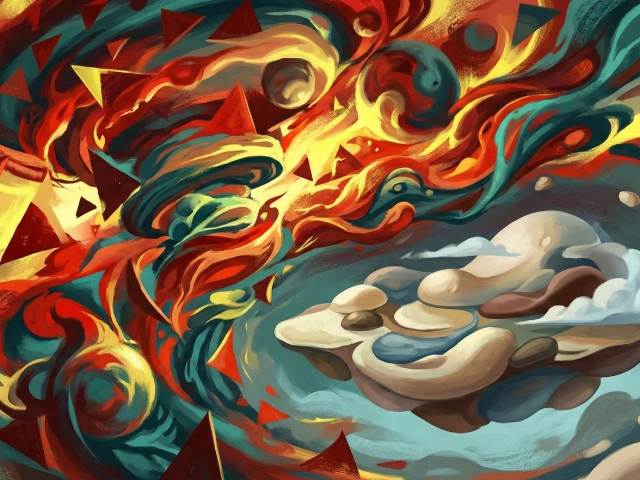
Videos containing misrepresented scientific information get nearly twice as many views as those based on accurate science.
Therefore, today’s scientist has a double responsibility. On one hand, they must step out of the lab’s complex language and speak in the language of ordinary people; on the other, they must uphold the integrity of information. They need to be popular, but not to sell out. Striking this balance is the most difficult art.
In the end, the question is simple yet weighty—will you stand for truth amid this crowd, or will your silence help falsehood spread? Your one post might save someone’s life, and your silence could just as easily cause harm.
Social media is no laboratory, but today it is the world’s largest classroom. If the language of science is absent there, only fear and rumor will be taught. But if scientists bravely speak out, then even amid this digital chaos, truth will find a way.
In today’s world, perhaps the greatest scientific work is not a new discovery, but delivering the truth to people.