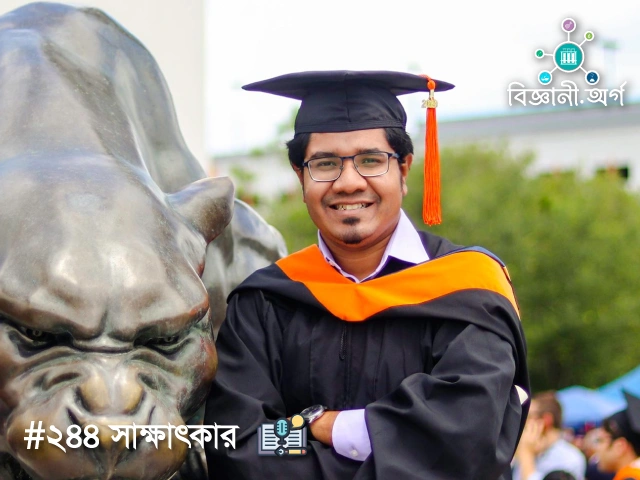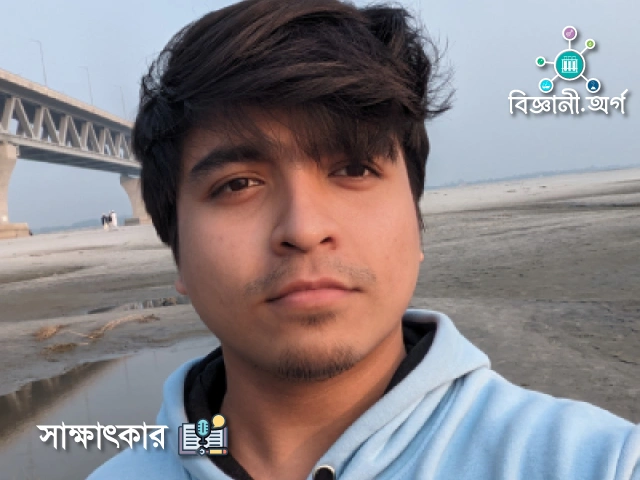
Shuvo Sarkar is a student of the Department of Computer Science and Engineering at North South University and is also working as a Teaching Assistant at the same institution. He is pursuing his undergraduate studies at North South University from 2021 to 2025. Currently, he holds a teaching support role in the Department of Electrical and Computer Engineering, assisting in courses such as Database (CSE311) and Programming Language Concepts (CSE425/CSE325).
Shuvo Sarkar’s main research interests are in artificial intelligence, machine learning, computer vision, and robotics-based problem-solving. He has led a research project on medical image processing—specifically brain MRI analysis—which was later published in a Q1-ranked journal. His objective is to develop precise and accessible automated diagnostic systems for resource-constrained medical environments by building lightweight AI models based on knowledge distillation. His research is founded on the vision of making advanced healthcare affordable in the context of Bangladesh and ensuring effective AI deployment even on low-power devices.
💬 Question & Answer Session
Question: First, tell us about yourself.
Answer: My name is Shuvo Sarkar. I completed my graduation in Computer Science and Engineering from North South University. At present, I work as a Teaching Assistant in the same department, mainly providing academic support to students in the Database (CSE311) and Concepts of Programming Languages (CSE425/CSE325) courses. My primary area of interest is research. In the future, I want to pursue an MSc or PhD abroad. Personally, I enjoy cooking and playing video games. I was born in Faridpur.
Question: What is your research about?
Answer: I mainly work with artificial intelligence (AI), machine learning, computer vision, and robotics. My recent research focused on medical images, especially brain MRI. This research was published in a Q1 journal. We used the knowledge distillation technique, through which the knowledge of a large model is transferred to a smaller, more lightweight model. As a result, it becomes possible to use AI with the capability of large models on low-resource systems. This is particularly helpful for rapid and accurate disease diagnosis in hospitals or clinics with limited facilities.
Question: How does your research benefit or has the potential to benefit us?
Answer: The goal of my research is to develop lightweight yet accurate AI models that can operate on minimal resources. As a result—
- Rapid disease diagnosis becomes possible.
- There is increased potential for AI utilization in rural or low-resource areas.
- High-quality healthcare can be ensured at a lower cost.
- Doctors receive better support in decision-making.
- Automation increases in healthcare.
Overall, this research can make healthcare more accessible, effective, and accurate.
Question: Would you like to share any special experience from your research work?
Answer: The biggest lesson I learned while doing research was the importance of patience. While working on Explainable AI, it took several days to find a small mistake. The repeated failures were discouraging, but staying persistent finally led to a solution. This experience taught me that perseverance and patience can yield new knowledge even from complex problems.
Question: What qualities do you think a scientist should have?
Answer: In my view, curiosity is the most important quality. Along with that, patience, analytical ability, a mindset open to acknowledging mistakes, a habit of continuous learning, and a collaborative attitude are essential for a researcher. Knowing how to ask questions and not being afraid to make mistakes are key aspects of scientific practice.
Question: What message do you have for young students in Bangladesh?
Answer: If you want to work in science, you must hold onto your curiosity. Big discoveries are born out of small questions. Don’t be afraid to make mistakes—every mistake is an opportunity to learn something new. Patience, regular learning, and believing in yourself—these qualities will help young people excel in science.
🔗 Profile Link
Email: [email protected]
LinkedIn: Linkedin.shuvo-sarkar
Research Paper: Sciencedirect.com
The research initiative led by Shuvo Sarkar to develop effective, lightweight, and accessible artificial intelligence models in healthcare could create new possibilities in the medical field in the future. His focus on enhancing AI usability in resource-constrained environments places his work in a realistic and vital context. The biggani.org team wishes Shuvo Sarkar progress and continued success in his research journey. We hope his work will inspire young researchers in Bangladesh to pursue science.
Knowledge Distillation in Brain MRI Analysis: Insights from Researcher Shuvo Sarkar
Shuvo Sarkar is a computer science researcher currently working as a Teaching Assistant at North South University (NSU), Bangladesh. He is completing his undergraduate studies (2021–2025) in Computer Science and Engineering at NSU. Within the university, he assists in teaching core courses such as Database Systems (CSE311) and Concepts of Programming Languages (CSE425/CSE325), supporting students in academic and laboratory work.
His primary research interests include Artificial Intelligence, Machine Learning, Computer Vision, and Robotics. Recently, he worked on medical image analysis—particularly Brain MRI classification—using advanced lightweight AI methods. His research, published in a Q1-ranked journal, focuses on knowledge distillation to transfer the capabilities of large models into smaller, more efficient ones. This approach enables high-performance AI systems to run on low-resource devices, which is especially relevant for healthcare settings in developing regions.
Shuvo aims to contribute to the development of accurate, accessible, and automated diagnostic tools, ultimately improving healthcare delivery in Bangladesh and beyond.
💬 Interview: Questions & Answers
Question: Please tell us about yourself.
Answer: My name is Shuvo Sarkar. I completed my graduation in Computer Science and Engineering from North South University. Currently, I am working as a Teaching Assistant in the same department, primarily assisting students in Database (CSE311) and Concepts of Programming Languages (CSE425/CSE325). My main interest lies in research, and I hope to pursue higher studies abroad—particularly an MSc or PhD. I enjoy cooking and playing video games, and I am originally from Faridpur.
Question: What is your research about?
Answer: My work revolves around Artificial Intelligence, Machine Learning, Computer Vision, and Robotics. My most recent research focused on medical imaging, especially Brain MRI. This work has been published in a Q1 journal. We used knowledge distillation, a technique where a large, complex model transfers its knowledge to a smaller, lightweight model. Our goal was to build efficient AI systems that require low computational power but still maintain high accuracy. This is particularly beneficial for hospitals and clinics with limited hardware resources.
Question: How does your research help people or society?
Answer: The goal of my research is to create lightweight yet accurate AI models that can operate with limited resources. This brings several benefits:
- Faster disease diagnosis.
- Usability in rural or low-resource healthcare centers.
- Reduced costs due to lower hardware requirements.
- Better support for doctors during decision-making.
- Increased automation in medical diagnostic workflows.
Overall, such AI systems can contribute to making healthcare more efficient, accessible, and reliable.
Question: Can you share any special experience from your research journey?
Answer: The biggest lesson I learned is the importance of patience. When working on Explainable AI, it took me several days to identify and fix a small error. Initially, the repeated failures were discouraging. However, by staying persistent, I eventually solved the issue. This process taught me that perseverance is essential in research and that even failed attempts contribute valuable learning.
Question: What qualities do you think a scientist should have?
Answer: Curiosity is the most essential quality. Along with that, patience, analytical thinking, the ability to accept and correct mistakes, continuous learning, and teamwork are important. A good scientist should not fear asking questions or making mistakes—these are critical parts of scientific growth.
Question: What message would you give to young students in Bangladesh who want to pursue science?
Answer: Never lose your curiosity. Big discoveries often come from small questions. Don’t be afraid of making mistakes—they are opportunities to learn. Develop patience, learn consistently, and believe in yourself. With these qualities, any student can progress in science.
🔗 Profile Link
Email: [email protected]
LinkedIn: Linkedin.shuvo-sarkar
Research Paper: Sciencedirect.com
Shuvo Sarkar’s work on developing lightweight medical AI models highlights the growing importance of accessible and efficient diagnostic technologies. His focus on resource-friendly solutions is especially relevant for improving healthcare delivery in underserved regions. The biggani.org team appreciates his dedication to scientific research and wishes him continued success in his academic and professional journey. We hope his work inspires young researchers across Bangladesh to pursue science with curiosity and determination.