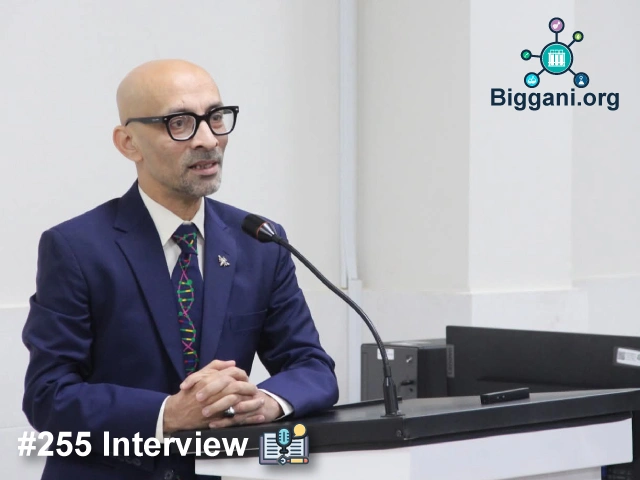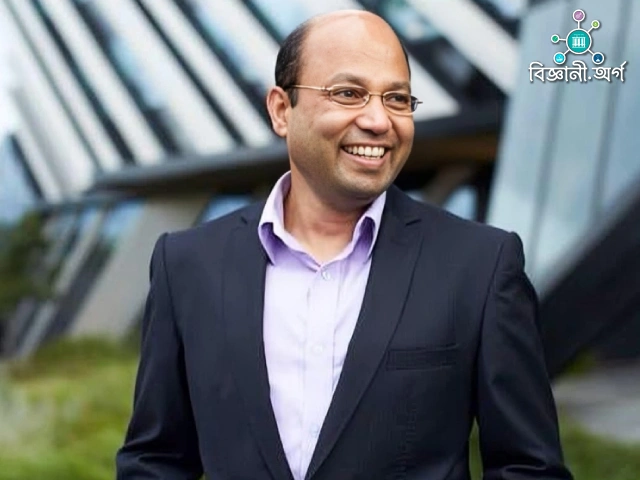
23 years ago, Dr. Naushad Haque had to wait days for a reply after sending letters by post to foreign professors for his PhD research inquiries. Now, young people in Bangladesh can instantly connect with countless knowledge resources and individuals worldwide through email and online platforms. Dr. Naushad Haque, a firm believer in utilizing the opportunities and advancements of technology, asserts that the doors to global research are much wider for today’s students—what’s needed is the right guidance and an indomitable will. Recently, Dr. Haque, Principal Scientist at Australia’s Commonwealth Scientific and Industrial Research Organisation (CSIRO), spoke with Bangladeshi students about his experience, research philosophy, and the paths to advancing in higher education. A former student of the University of Chittagong, he is now established in the international research arena—yet his heart always holds space for the development of Bangladesh and its youth. Professionally, he identifies himself as a “Scientist for Development,” dedicating his research to the service of progress. He believes that the greatest success for a researcher lies in putting knowledge and experience to use for the benefit of the country or the world at large.
Dr. Haque’s message to Bangladeshi students is clear: If you want to pursue research as a career, dream big, and embrace hard work and deep commitment. He shared how he rose from being an ordinary student to a global scientist, and what he learned along the way—offering advice rooted in his own journey. From renewable energy to language skill development for students, from securing research funding to personal motivation—his insights and guidance cover many areas. Let’s explore Dr. Naushad Haque’s perspective on the steps Bangladeshi students should take to become scientists.
From Bangladesh to Australia: The First Chapter in the Educational Journey
Dr. Naushad Haque was raised and received his early education in Bangladesh. He studied Forestry at the University of Chittagong, and after graduation, he began his career teaching at Khulna University. Aspiring for higher education, he then moved abroad—completing his Master’s from the University of Wales, UK, and his PhD from the University of Sydney, Australia (he finished his PhD in 2002). His deep passion for research continually presented him with opportunities to work in diverse environments. After his PhD, he spent three years conducting research at the Forestry Research Institute in New Zealand. In 2005, Dr. Haque joined CSIRO in Melbourne, Australia, where he has lived and worked ever since.
Over time in Australia, he established himself as a distinguished researcher. Currently, Dr. Naushad Haque leads a research team at CSIRO that manages various projects in applied research related to energy, mining, and the environment. Throughout his career, he has mentored numerous international students and fellow researchers, co-supervised PhD research, and arranged funding for a variety of projects. Even from abroad, he is always willing to assist Bangladeshi students. Dr. Haque says, “Bangladesh is always in our hearts. For those of us living outside, if any bit of our advice or knowledge helps someone, that alone brings us joy.” With this conviction, he regularly shares his experiences with young Bangladeshi researchers, answers their questions, and builds networks to offer support whenever possible.
Dr. Naushad Haque is also closely connected with various universities and research institutes worldwide. He is involved in research activities at RMIT University and Monash University in Melbourne and has served as an adjunct professor at Swinburne University. The drive behind this network is his diverse experience and wide range of interests. He is most comfortable identifying, first and foremost, as a researcher, while also feeling a deep sense of social responsibility: his goal is to bring about positive change in the developing world through research. This is why he refers to himself as a “scientist for development.” He believes real innovation only holds meaning when it benefits society or the environment—this core belief fuels his motivation.
Research in Renewable Energy and Green Technology
Dr. Naushad Haque’s area of research is vast, but the central theme revolves around developing environmentally friendly energy and industrial technologies, with the ultimate goal of zero carbon emissions. He has been engaged for many years in cutting-edge projects such as hydrogen fuel technology, renewable energy storage, electronic waste recycling, and green industrialization (like Green Steel). During his time in Australia, he spent nearly a decade involved in various hydrogen energy projects. He recalls that, during that period, research into hydrogen was especially exciting: with ample funding and facilities, their team could continuously engage in innovative work. Even today, global research is striving to make the promise of a hydrogen economy real—and Dr. Haque believes this progression will continue to accelerate in the future.
Why hydrogen? According to Dr. Haque, the main challenge with renewable energy (like solar and wind power) is that energy production is not constant—for example, no solar electricity at night, no wind power without wind. Thus, storing the generated electricity is a major challenge. One way to store electricity long-term is to convert it into chemical energy. If hydrogen gas can be produced from water (H₂O) through electrolysis using electricity, then that green hydrogen can later be used as fuel for power generation. In simple terms, excess electricity from sunlight or wind can be converted and stored as hydrogen; later, when that hydrogen is used as fuel, it generates electricity again—emitting only water as a byproduct, with no carbon dioxide. This method could be a boon for the environment compared to fossil fuels. Technology for hydrogen-powered cars, trucks, buses, and even trains and trams has already been developed. Compared to battery-powered vehicles, refueling hydrogen fuel cell vehicles is faster (via hydrogen stations like petrol pumps), and the only byproduct is water—completely pollution-free. Dr. Haque believes that green hydrogen could one day solve global energy crises, though costs are still high and commercial adoption is limited. He says, thousands of scientists worldwide are working to reduce technology costs and increase efficiency, with governments and industries making massive investments. Even in wealthy countries, hydrogen is not yet the mainstream energy source, but it’s steadily advancing.
In addition to hydrogen, another area of Dr. Haque’s research interest is electronic waste (e-waste) and recycling. Reflecting on Bangladesh, he notes that the country has almost 190 million mobile phone users, and within a few years, millions of phones and electronic devices will become unusable and turn into e-waste. By recovering valuable metals and materials from this e-waste, both environmental pollution can be reduced and economic gains achieved. Dr. Haque envisions that one day Bangladesh will have a modern e-waste processing facility where valuable metals hidden in vast amounts of waste can be extracted and utilized, creating new employment. He has personally seen such a plant in Australia where old computers, mobiles, and similar devices are dismantled for metal extraction. As a researcher, he works collaboratively with Bangladeshi partners to enhance technical aspects of e-waste management so that similar initiatives can be established in Bangladesh.
Green steel development is another focus of Dr. Haque’s research. While the steel industry is essential for development globally, conventional steel mills emit massive amounts of carbon dioxide. Despite the complexity of large steel factories, the core challenge is simple—how to reduce energy usage and carbon emissions in the steel production process. In the developed world, there’s extensive research into green steel, aiming to make the industry environmentally friendly through alternative fuels, using recycled materials, and more. Dr. Haque has participated in such projects and visited steel factories in different countries to gain knowledge. He believes that combining renewable energy, recycling, and effective process design can reduce the carbon footprint of the steel industry—a goal to which he is deeply committed.
On the topic of research impact and environmental assessment, Dr. Haque stresses that publishing research papers is not enough—the real question is how much the benefits of that research reach the real world. Whether a study has a positive impact through economic or environmental improvement is the key criterion for assessing research impact. For measuring environmental benefits, Dr. Haque encourages all researchers to learn Life Cycle Assessment (LCA). Simply put, if a technology or product can keep energy usage, carbon emissions, water consumption, and waste generation low throughout its life cycle, it can be called environmentally friendly. He reminds young people that if these four aspects (Energy, Carbon, Water, Waste) are taken into account at the planning stage of any project, it’s possible to ensure a sustainable impact on both society and the environment.
The Future of Energy and Research Capacity in Bangladesh
Dr. Naushad Haque’s perspective on renewable energy and research in Bangladesh is both pragmatic and forward-thinking. The main challenge for Bangladesh is its limited energy resources and growing demand. He explains that countries like Australia have abundant indigenous energy sources (coal, natural gas, solar, wind—all are in reserve), but countries like Bangladesh severely lack their own energy resources. For power generation, a significant portion must still come from imported fuel. To ensure 24/7 electricity for development, we must now look for alternatives with a long-term outlook.
Dr. Haque believes there is no single energy solution for Bangladesh—a mixed approach is the way forward. That is, energy must come from various sources, and reliance on fossil fuels must be gradually reduced. Large-scale wind power may not be practical in our country due to geophysical limitations; land for solar power is also in short supply. But whatever limited opportunities we have should be fully leveraged through creative means. Dr. Haque proposes installing solar panels on the roofs of Bangladesh’s vast textile factories, and on unused upper parts of government and private buildings. Decentralized small-scale solar projects can also make significant overall contributions. Technologies for energy efficiency and waste-to-energy production should also be considered. He says, the reality is fossil fuels cannot be abandoned overnight, but if we increase the use of renewables step by step from now, the long-term outcome will be beneficial.
Dr. Haque is optimistic about the potential of hydrogen technology in Bangladesh, but cautions that it can’t be implemented overnight. Even in advanced countries, the hydrogen economy is only just emerging; the technology will take more time to mature and become affordable. Therefore, Bangladesh should keep an eye on global trends and build its own skilled human resources in the field. He states, “We need to remain prepared in Bangladesh—so when hydrogen technology becomes fully functional globally, we can rapidly adopt it. From now, our universities and researchers should start gaining knowledge in this sector, inform people, and try small pilot projects at the initial stage. When the opportunity comes, we won’t be left behind.”
On how research can contribute to Bangladesh’s development, Dr. Haque’s views are very compelling. He believes nearly every problem in the country is a potential research topic—it just requires the right mindset to tackle them. He makes it clear: “If a student can’t find a research topic in Bangladesh, they should probably just flee from research! Because there is no shortage of problems and challenges in our country—there are hundreds of topics to work on in traffic, pollution, energy, agriculture, health. If you pick any one of these and explore it deeply, it will benefit society, and you’ll become a skilled researcher.”
For boosting Bangladesh’s capacity for research and development, Dr. Haque recommends prioritizing three things: infrastructure, human resources, and funding. Advanced laboratories, equipment, and technological facilities are essential for world-class research, which requires investment. At the same time, the skills of scientists and technologists must be improved—building a qualified researcher community through higher education and training is crucial. Third, sufficient funding and financial support are needed to allow researchers to work without anxiety. Combining these three will increase both the quantity and quality of research, bringing long-term benefits to the nation.
Even living abroad, Dr. Haque continues to contribute toward increasing research capacity in Bangladesh. Through various projects, he runs joint research with local institutions and finds openings for talented Bangladeshis. He has helped many brilliant young scientists secure scholarships to study and conduct research in Australia and other countries. Some have worked in his own lab for years, while others have returned home after overseas training to apply this new knowledge in local institutions. He’s also connected Bangladeshi students and researchers with partner labs in countries such as South Korea and South Africa so they can enhance their skills using global knowledge resources. In this way, Dr. Haque’s activities, even indirectly, have contributed positively to boosting scientific research capacity in Bangladesh. He humbly says this is the result of team effort—a collective exchange of knowledge and experience among many good people. Still, if a determined group of expatriate researchers can help Bangladesh’s youth access advanced infrastructure and skills, that is a significant gain for the country.
Higher Education Abroad: Universities and Scholarships
Many Bangladeshi students dream of studying abroad. However, due to lack of proper planning or inadequate information, many get confused. Dr. Naushad Haque has given open and practical advice on pursuing higher education overseas—especially in Australia. According to him, with adequate qualifications and preparation, it’s not difficult to find opportunities for higher study in Australia or any other developed country, but attention must be paid to some important issues.
He clarifies at the outset that it is nearly impossible to obtain a fully funded undergraduate scholarship—especially in the Australian context. There are a very limited number of government scholarships (such as previous Australian government schemes), but these are highly competitive and quota-based. Some universities might partially waive tuition fees, but it’s rare to find full funding for a BSc or honors degree. So, those wishing to study abroad at the undergraduate level must be mentally prepared to self-finance or arrange partial funding. Tuition fees are comparatively low in some European countries—if you can study for a bachelor’s there, that’s also akin to getting a scholarship. Dr. Haque says, “I don’t know of any country that offers full funding for a bachelor’s; so if that’s your aim, you’ll have to try for countries with lower fees.”
On the other hand, ample scholarships exist for postgraduate (Master’s) and PhD levels, especially in research-based programs. In Australia, full-funded scholarships are mainly for PhDs and, in some cases, research-based master’s. Therefore, if one can apply directly for a PhD program, that is the better route. Dr. Haque advises: “When seeking funding, aim for a direct PhD. There is not much scholarship for master’s coursework.” Even when doing a master’s, it’s better to try for a research-related course (like a Master’s by Research), as this can serve as a stepping stone to a PhD later. For those who, by choice, want to self-fund a master’s overseas, that’s a different story—meeting the university requirements will suffice in that case. To self-fund a master’s, you must be able to show at least one year’s tuition fees as well as a year’s living expenses for the visa—Dr. Haque highlights this reality. Additionally, visa officers may assess your intentions: are you genuinely going to study, or for another purpose—you must be clear and able to prove your authenticity.
Choosing where to study in Australia—or any country—is also essential. In Dr. Haque’s opinion, almost all Australian universities are world-class in terms of educational standards, so none should be underestimated. Some universities are members of the Group of Eight (a coalition of Australia’s top research universities) and are somewhat higher in rankings, but overall, there’s little difference in quality. Therefore, students should first decide which state/city they want to go to. Major city universities (Melbourne, Sydney, Brisbane, etc.) have comparatively higher tuition fees, but there are also more opportunities for part-time work alongside studies. By contrast, regional universities have lower fees and often offer more scholarships, but part-time work opportunities may be limited. Dr. Haque gives an example: Charles Darwin University in Northern Territory is a regional institution—lower fees, perhaps better scholarship chances, but it doesn’t have the urban environment and job market of Melbourne or Sydney. On the other hand, studying continuously at a regional university for several years can make it easier to attain permanent residency later due to extra points. Therefore, students must weigh these factors according to their own priorities.
Many worry about global university rankings when selecting institutions. Dr. Haque’s view is that rankings are not a big issue as long as the university offers good facilities or has experts in your specific research area. He says, “Once you cross the boundaries of Bangladesh and study in any good university abroad, it serves as a positive stepping stone for your career. You can move up from there later if you wish.” In many countries, students proceed step by step—many Iranian students, for example, first do a master’s in Malaysia, then, after gaining experience, go on to pursue a PhD in Australia or America. Bangladeshi students who don’t get a direct shot at top-ranked countries can also use this stepwise approach. Nevertheless, Dr. Haque emphasizes, ultimately, you have to keep your aim high—focus on where you can learn the best research and which areas align with your interests.
What do you need to win a higher education scholarship? Based on his experience, Dr. Haque notes three main qualifications that international scholarship committees usually judge applicants by:
- Academic results: Your university grades must be good. In Bangladesh, for scholarships, typically being in the top 20–30% of your class (CGPA) is competitive. It’s even better to be in the top 10% of the merit list.
- Proficiency in English: Tests like IELTS/TOEFL are essential for studying abroad, and having a good score is crucial. Dr. Haque mentioned that a strong IELTS score can sometimes offset slightly weaker academic results. The university itself is less important than your English proficiency—often, that alone decides the outcome. Hence, focus on excelling in English proficiency tests.
- Proof of research capability: Especially if you aim for a PhD, you must demonstrate familiarity with research methodology. The best proof is to have one or two research publications (papers). Dr. Haque acknowledges that producing international standard publications at undergraduate level in Bangladesh is challenging, but with effort, publishing a small study or review paper isn’t impossible. He suggests, “Don’t just add your name for the sake of it; rather, take the initiative and do original work as first author. Gradually build up your research portfolio.” Even if you don’t have publications yet, at least hands-on experience from a thesis or project will certainly be useful.
If you can fulfill the above criteria, the likelihood of winning a scholarship increases considerably. Dr. Haque adds that you must present yourself attractively for admissions and scholarships. The story of “why you want to pursue higher education” must be clear and credible. Think through your reasons for choosing that country, university, and professor. In your application or in emails to supervisors, clearly highlight your goals, interests, and strengths. He says, professors want to award scholarships to students who have genuine passion for research. “You have to prove you sincerely want to do research, not just go abroad for its own sake,” warns Dr. Haque, “If it’s clear someone just wants to do a PhD to go abroad, supervisors or funding authorities won’t be interested.” So, it’s important to express your motivation, curiosity, and readiness to work hard.
On choosing a supervisor, Dr. Haque advises prior research into a potential supervisor’s current research themes and recent publications before reaching out. In his words, “See what recent work is being published in your discipline. Focus on areas where there’s more funding or which are hot topics.” This way you’ll understand both global research trends and be able to indicate how your interests align when emailing a professor. When briefly outlining your qualifications and future plans in an email, write in proper English. Supervisors look at applicants’ IELTS/TOEFL scores—so if you’ve taken a test, it’s good to mention your score. Dr. Haque states bluntly, “If someone emails without IELTS, it’s very unlikely a supervisor will even notice.” Thus, it’s wise to complete your English preparation and test before reaching out with your score.
Dr. Haque urges students to adopt a realistic mindset: initial attempts may not bring success, but don’t be discouraged. You may need to email several supervisors and face rejection for 2–3 applications—but keep at it without losing motivation. He says, while the number of PhD scholarships has increased, so has global competition; Bangladeshi students are doing well among many more applicants and are getting opportunities. So trust yourself and keep trying, and success will come eventually. The most important thing is, do it from the heart—only then will you be able to prove yourself.
The Researcher’s Mindset & Preparation: Language, Skills, and Hard Work
The path of research is not easy, but with the right mindset and skills, it becomes much smoother. Dr. Naushad Haque emphasizes the development of certain skills and habits among young people. First among these is linguistic proficiency and communication skills—especially mastery of the English language, which is essential for modern higher education. He strongly stresses that investing time and effort in English should start as early as possible. When a high school student asked how they should start preparing, Dr. Haque advised: “Do something in English every day. Learn ten new words, listen to and read English news. Do it every day, with patience.” Using his own example, he shared that coming from a rural school, his English was initially weak and he still retains his native accent—but there’s no substitute for consistent effort. Only daily practice, diligently maintained, will build strong language skills over time.
For English proficiency, Dr. Haque offers practical tips. He recommends following the media of the country you plan to study in—if it’s Australia, listen to ABC News regularly; for British accents try BBC; for the U.S., CNN or other online podcasts. This will improve listening skills and acclimate you to different accents. For reading, he suggests exploring newspapers from various countries: China Daily, Hindustan Times, Dawn (Pakistan), Korea Times, Japan Times, New York Times—keeping an eye on the online editions of the world’s leading dailies. This diverse reading will enrich your knowledge base and broaden your worldview. Most importantly, you must challenge yourself daily in English—listening, speaking, reading, or writing—even just 10 minutes each morning will, over time, make a big difference. This habit should be enforced with strict discipline until it becomes part of your routine.
Academic writing skills are also crucial for higher education preparation. Dr. Haque has noticed that many students from our country struggle to write reports or deliver presentations effectively because they lack practice. Thus, he recommends building a habit of producing large reports during university studies whenever possible. Whether it’s a final-year thesis, a project report, or any competition—treat each writing opportunity as an important task to refine your work. If there’s no mandatory large project, take the initiative to do something that requires writing and analysis. Dr. Haque says, “You’ll learn a lot through writing, and later, if someone asks, you’ll be able to show the work you’ve done.” Good writing is not just for grades, but serves as proof of your communication and analytical skills, valuable for interviews or future studies.
Dr. Haque also places special emphasis on developing soft skills. Beyond rote learning and solitary work, survival in the real world requires the ability to work in teams, communicate, and demonstrate leadership. He notes that Bangladeshi students often lack experience in teamwork, even though collaboration is frequently necessary in studying and research abroad. He advises young people to seize every opportunity to work in groups—be it a project team, debate club, science club, or volunteer work. Cultivating teamwork, cooperative attitudes, self-confidence, and leadership experience needs to start early. Dr. Haque explains that universities and employers often assess such soft skills during admission or job interviews. For example, you may be asked, “When did you have to lead, and what decisions did you make?”—if you can’t give a satisfactory answer, it means leadership qualities are lacking. So, the earlier you build experience, the better. For school and college students, he gives the same advice: participate in extracurriculars, do group projects, volunteer—these will expand your personality and skill set.
If you want to build a future in research or engineering, focus on technical skills—especially proficiency in various software and tools. Dr. Haque says, nowadays, almost every subject involves using specialized software—for example, Aspen in chemical engineering, HEC-RAS/HEC-HMS in hydrology, Python/Matlab for data analysis, etc. Our education system doesn’t teach everything in class—a lot must be self-taught. Whatever your field, try to become proficient in at least one important software. There are now countless free online courses and tutorials—use these and practice on your own initiative. For instance, if you study chemical engineering, try installing Aspen Plus or similar simulation tools and create small-scale projects yourself. If you’re in mechanical engineering, master AutoCAD/SolidWorks. Dr. Haque says, “No one at university will teach you everything step by step—you have to have a self-learning attitude.” Having proof of using such software in any project (like a report or presentation) will massively strengthen your CV. Overseas employers and professors directly ask whether you have experience with specific software. Then, you can confidently say, yes—I did this and that with it. This one skill alone can greatly boost your chances for scholarships and jobs.
For international students studying in Australia, CSIRO offers a yearly Vacation Scholarship program where talented students from second year onwards get the chance to do research internships for 8–12 weeks. Dr. Haque used to take a few students each year in his department for such internships; now, despite a heavier workload, he still offers some opportunities. He hopes students already enrolled in Australian universities will avail these kinds of internships. Interested students can check online for the types of projects offered by CSIRO or other institutions’ vacation scholarships each year. He says, some years, there are many energy or sustainable technology projects; in others, more IT or other fields get focus. If you select your topic in advance and prepare accordingly, you can secure a spot by applying. Such internships and research experience are often highly valuable when later applying for full scholarships.
Dr. Naushad Haque also concludes with some words of caution for young people. These days, there are many so-called “consultants” and agents online promising tempting offers or paid advice regarding higher education and immigration.
He says, “It’s fine if someone offers advice selflessly, but most of those who charge money give fake or fabricated information.” All information about visa processing, university admissions, etc., is now available online—if you carefully read the immigration websites and universities’ own guidelines, you can handle all preparations and applications yourself. It’s much safer to verify things yourself than rely on hearsay.
He firmly states that students who do their own research, make informed decisions, and choose to go abroad will succeed. But those who go just because others entice them, without understanding things for themselves, may face an uncertain future. So set your own direction, and double-check your sources of information.
Message to the New Generation: Dreams, Hard Work & Success
Dr. Naushad Haque’s life story and advice are woven together by a common thread—hard work, perseverance, and correct guidance are the keys to fulfilling your dreams. From being an ordinary student in Chittagong, he is now a top scientist at a leading Australian research institution; this journey included many challenges, but he never lost his passion for learning. Even abroad, he never forgot his roots or identity—rather, he has always felt driven to give back to his homeland. He wants to see Bangladesh’s brightest young people engaged in world-class research and is committed to supporting them in that endeavor.
His main advice to young people is: Don’t lose confidence, keep working hard, and stay focused on your goals. Great success does not come overnight, but small daily progress adds up to big achievements in time. He says, no matter how much talent or intellect you have, there is no substitute for hard work—“Genius without hard work is a tragedy,” he remarks. Often average students achieve more because they put in more effort and dedication. On the other hand, a highly gifted student who doesn’t try ends up wasting their potential. So, be prepared to work hard for your dreams and never give up, no matter what.
Whether journalism or science—almost all professions require similar core qualities for success. Dr. Naushad Haque wants to see determination, patience, and integrity practiced amongst Bangladesh’s rising talents. He is optimistic that, with the right guidance and diligence, Bangladesh’s youth will one day solve the country’s energy crisis, innovate locally in renewable technology, and lead in international research. At the end of the discussion, Dr. Haque extends his best wishes to all participants, saying, “Keep working persistently, stay focused—sooner or later, success will come.” Those success stories will, in turn, inspire even more dreamers to pursue science and higher education in the days to come. May the brilliance of Bangladesh’s talent spread across the world beyond national borders—that is our hope.
Watch the video of Dr. Naushad Haque’s interview at the following YouTube link:
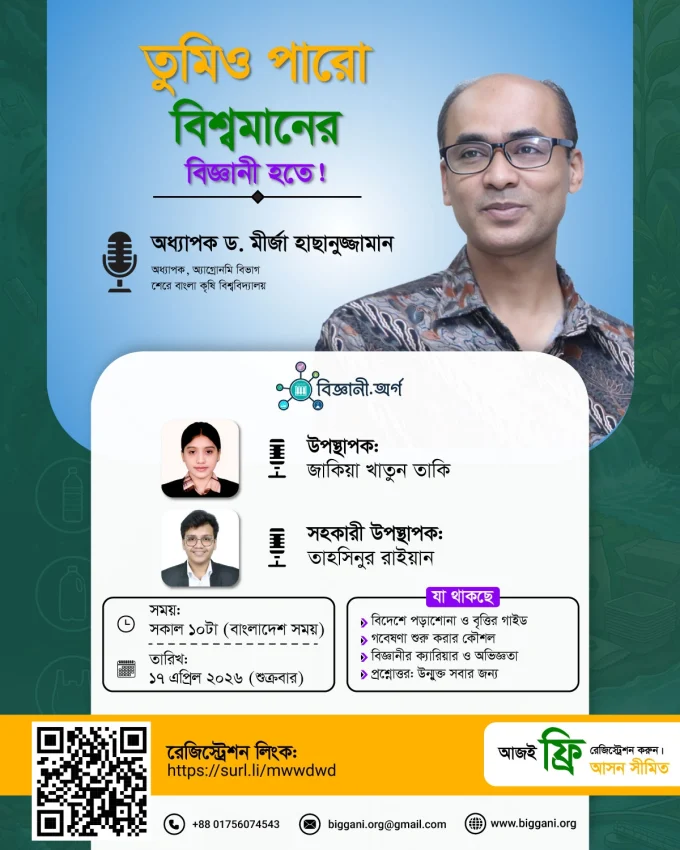
The program was hosted by Scientist Org volunteer Tahsin Ahmed Supti. The event was held online on December 10, 2025. Special thanks from Scientist Org to Mohiuddin and Tahsinur Ryan for coordinating the program overall.