Dr. Moshiur Rahman
For today’s youth, the world seems both larger and more challenging than ever before. When you look at global statistics on higher education and employment, the picture becomes clear. Every year, more than five million students leave their home countries to study abroad—a number that has nearly doubled in the last two decades. A significant portion of them come from developing nations, dreaming of a different future by stepping into the developed world. Yet, this journey doesn’t end with earning a degree; the real chapter of struggle begins right after.
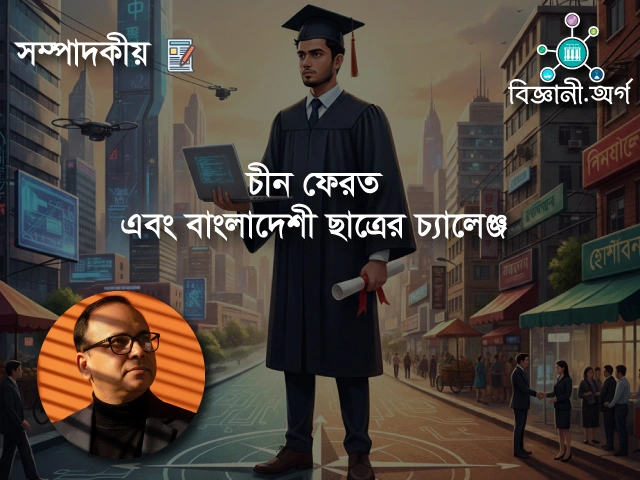
This reality becomes evident again when a young person from Bangladesh comes to me for career advice. He returned home after studying computer science in a technologically advanced country like China, yet finds his confidence waning in the job market. This story is not unique. Various international education reports show that a large segment of returning graduates do not secure their desired jobs in the first year back home. The growing frustration inside raises the question: was it a mistake to go abroad for studies?
The young man said that, when searching for jobs at home, he realized that employers don’t always see his foreign degree as an advantage. For many organizations, a well-known university name is the first filter. Multiple recruitment surveys indicate that, in many developing countries, a university’s brand often outweighs a candidate’s skills. As a result of this trend, countless qualified candidates are lost on paper and never make it to the interview table.
On the other hand, when he tries to position himself in the international job market, he faces a different challenge. Data from global recruitment portals show that at least 70 percent of overseas job postings prioritize real work experience, not just degrees. A fresh graduate stands in a competition where most rivals have five or six years of experience. As a result, he sends out hundreds of applications but receives only a handful of responses.
This makes it clear: the problem is not education, but transformation. The belief that a foreign degree will automatically open doors is a kind of romantic fantasy. In reality, it’s essential to present your experience in such a way that employers understand the unique value you bring. Statistics show that those who are strategic in showcasing their skills and achievements are almost twice as likely to be invited for interviews compared to the average candidate.
One of the other major keys to unlocking opportunities in the Bangladeshi job market is networking. Global career research suggests that around 60 percent of job opportunities come through personal contacts and referrals. In other words, who you know often determines how far you go. This reality can be discouraging for young people, but it’s also full of potential. It’s discouraging, because qualifications alone are not enough; it’s full of potential, because when you build relationships, new paths open up.
Thrive in the global job market requires yet another type of preparation. Technical skills alone are insufficient. International companies’ HR policies are increasingly prioritizing cross-cultural communication, teamwork, and adaptability. Recent workplace analyses show that soft skills are now one of the biggest recruitment criteria in more than 80 percent of multinational companies. That means, alongside how well you code, your ability to understand people is equally important.
In this respect, the experience of studying in a country like China can make a young person truly unique. Working in a different culture, communicating in a foreign language, and surviving in a rigorous academic environment—these are skills you can’t learn from books. But if you can’t articulate these experiences in the right language, they become worthless. Surveys indicate that many young people fall behind in international recruitment because they can’t properly “translate” their experiences.
As I was advising him, I couldn’t help but reflect on my own life. I, too, have faced times when my path was anything but straightforward. But I learned that I must write my own story. If you don’t have answers prepared to who you are, where you come from, what you’ve learned, and where you want to go, then someone else will write those answers for you—and they may not work in your favor.
The path ahead for today’s youth is complex, but opportunities are unprecedented. The internet, remote work opportunities, international freelancing platforms—all together have created a new world of work where geographic boundaries have become blurred. Global employment reports suggest that by 2030, the field of digital and remote work will more than double. In other words, from Dhaka you can now work for companies in Singapore, Berlin, or Toronto.
Still, the bottom line is that preparation matters even more than dreams. Just being a returnee from abroad does not set you apart—you must make yourself stand out. Your university’s name may be a part of your identity, but it’s not your whole identity. Your full identity comes from your skills, your mindset, and your story.
To young people, I would say: being in Bangladesh does not limit you; studying abroad does not make you invaluable—there is no simple equation. What matters is what you learn, how you prepare yourself, and how you present yourself to the world. For those standing between local realities and global dreams and feeling lost, there is just one message: take control of your own story.
Your path may be winding, it may be dusty, but it is your own. In today’s world, the greatest strength lies in being able to tell your story well. Who knows—maybe, someday, a young person will read your journey and find the courage to pursue their own dreams.