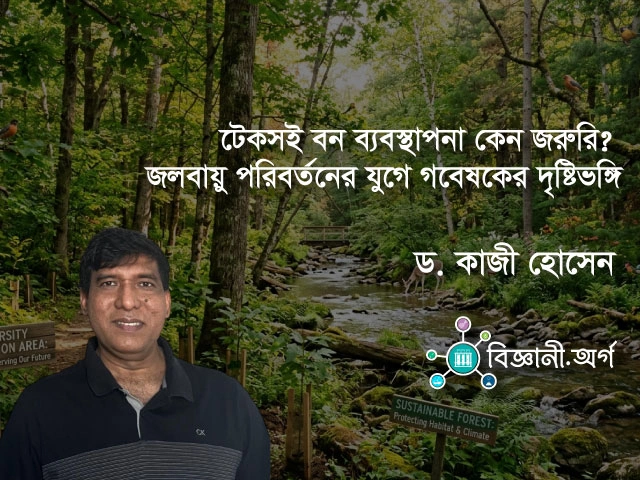
The world’s forests are now facing a harsh reality due to the impacts of climate change. On one hand, there is deforestation; on the other, extreme weather events like wildfires, droughts, and heavy rainfall—combined, forests are now at greater risk than ever before. In this context, the experience of researchers like Dr. Kazi Hossain encourages us to rethink—forest management is not just about harvesting timber; it’s a matter of safeguarding the environmental security of future generations.
According to Dr. Kazi Hossain, sustainable forest management refers to a framework in which the needs of the present generation are met without harming the prospects of future generations. Forests should be viewed as living systems—including not only trees, but also biodiversity, water resources, and soil health. If a forest is managed solely for timber production, its long-term ecological balance is at risk.
In countries like Canada, a large portion of forest land is publicly owned. Companies are given permission to harvest timber based on specific plans. These plans involve collaboration between environmentalists, biologists, and statisticians. Decisions about how forests regenerate after natural disasters like wildfires, or which areas require increased conservation, are made using long-term data and modeling. This ensures transparency and accountability in forest management.
The impact of climate change has made forest management even more complex. Rising temperatures are increasing the risk of wildfires and bringing about new diseases and insect infestations. These changes disrupt the natural growth cycles of forests. Dr. Kazi Hossain believes that regular data collection and analysis are essential for understanding these changes. Comparative analysis of past and present information is needed to decide which areas are at higher risk and where reforestation is necessary.
In the context of Bangladesh, the need for sustainable forest management is even more acute. Increasing salinity in coastal regions, the risk of landslides in hill areas, and the pressures of climate change on sensitive ecosystems like the Sundarbans present major challenges. Here, forest conservation means more than just protecting trees; it’s also about safeguarding coastal communities, preserving biodiversity, and reducing disaster risk.
Dr. Kazi Hossain believes that the success of sustainable forest management relies on a collective effort from science, policy, and society. Policymaking is weak without data from research, and no plan is sustainable without community participation. Protecting forests in the era of climate change is about protecting the future. The sooner this realization is reflected in our policy decisions, the sooner we can move towards environmental security.
To learn more about this discussion, readers can view the full interview with Dr. Kazi Hossain published on biggani.org.