Written by:
Dr. Moshior Rahman
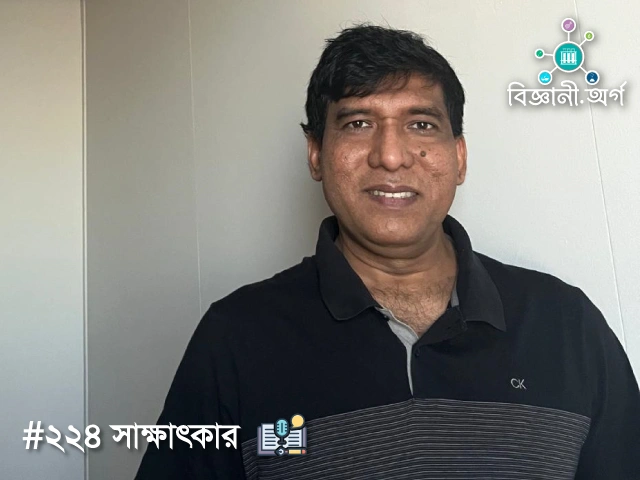
It is not easy to rise from the soil of Bangladesh and work within one of the world’s most advanced research systems. Yet, with perseverance, curiosity, and a passion for learning, the impossible becomes possible—Dr. Kazi Hossain’s life path is a testament to this. Currently, he works as a Senior Resource Analyst under the Government of Alberta, Canada. His work is directly involved in forest management, natural resource planning, data analysis, and policy-making. As a researcher, his work is not limited to accounting for timber production; rather, he considers multi-layered objectives such as biodiversity, ecosystem, water resources, and fish habitat conservation together.
The Journey from the Roots: Beginning of Inspiration
Dr. Kazi Hossain began his academic life in Bangladesh. As a student growing up in the city, subjects like agriculture and forestry were not initially very attractive to him. However, the country’s socio-economic realities, employment opportunities, and his family’s advice encouraged him to study at an agricultural university. Later, agroforestry—a new subject at the time, meaning integrated management of agriculture and forestry—opened up a new horizon for him. Seeing agriculture and forestry not as separate entities but as an integrated management approach provides a realistic path to sustainable development in a densely populated country like Bangladesh.
Connecting with the faculty of the Forestry Department at the University of Chittagong, field visits to the Chittagong Hill Tracts and sal forests, seeing the ground realities of forests up close—all these experiences deeply impacted him. It was then that he realized forestry is not just an academic subject; it is closely connected to nature, human lifestyles, and future generations.
Higher Education Abroad: Courageous Decisions and Real Challenges
Making the decision to study abroad was courageous, but not easy. Although he applied to countries like Japan, Australia, and Germany, a forestry program in Canada eventually opened the door for him. The first shock after arriving in a new country was environmental and cultural. Adapting to harsh winters, a new language, and a new educational system was difficult. However, he gradually realized that in foreign education systems, conceptual learning is more important than rote memorization. The culture of asking questions, expressing differences of opinion, and fostering cooperative relationships with teachers helped shape him in a new way.
He also speaks openly about the limitations of his own learning. Memorizing was always tough for him; understanding through reasoning was his strength. This realization gave him further resolve on his research path.
Data and Decisions: The Foundation of Modern Forest Management
At the heart of Dr. Kazi Hossain’s research and professional work lies data-driven decision-making. He believes that relying solely on experience or assumptions for major decisions increases risk. In forest management, answers are needed for questions such as how many trees are in certain areas, how forests are regenerating, where biodiversity is at risk—all of which require reliable information. Statistics play a crucial role in collecting and analyzing this data. Where direct measurements are not possible everywhere, sampling methods are used to set the limits of uncertainty and error. This helps policy makers understand how reliable each decision is.
Use of Technology: Remote Sensing and Machine Learning
The role of technology in modern forest management is increasing day by day. Satellite imagery, drones, and LiDAR technology are used to gauge forest height, density, and species of trees. These fall under what is called remote sensing—collecting information from a distance. Machine learning is being used to analyze this massive amount of data. For example, algorithms such as ‘Random Forest’ or ‘Support Vector Machine’ are used to estimate different features of a forest. This allows for a comprehensive view of large areas quickly, although it’s not always as precise as direct field data. Risk assessment is crucial in determining which data is suitable for which application.
This technology is not just about timber production; it is also used to identify small waterways, fish habitats, or sensitive ecosystems within forests. As a result, environmental protection is becoming more strongly integrated into forest management.
Work Culture in Canada: Collaboration and Accountability
His experience working in Canadian government institutions taught him the value of a collaborative work culture. Here, the senior–junior relationship is not authority-based; rather, there is space for exchanging opinions. Junior employees can disagree with the boss, and the boss can also admit mistakes. The quality of work matters in decision-making, not personal feelings. Accountability is enforced—performance and outcomes are regularly assessed for everyone’s responsibilities. This environment builds confidence and a sense of responsibility among employees.
Sustainable Forest Management: The Road Ahead
A significant focus of Dr. Kazi Hossain’s research is sustainable forest management. It is important to see the forest not just as a source of timber but as a living system. In Canada, a large part of forest land is publicly owned; companies operate there based on predefined plans. These plans bring together biologists, water resource experts, and growth-and-yield modeling specialists. After natural disasters like wildfires, long-term data and statistical models are used to understand how forests regenerate. This makes it easier to decide how much timber can be harvested in the future or where conservation efforts need to be increased.
Message for the Youth
Dr. Kazi Hossain’s journey sends a clear message to the youth—if you are eager to learn, limitations cannot stand in your way. Data analysis, statistics, and technology—these skills are indispensable in future research. At the same time, it is important to have the courage to ask questions and to cultivate respect for divergent views. His advice to Bangladeshi students is to develop the habit of conceptual learning instead of memorization, and to strive to engage with research at an international standard.
The interview was held online on February 15, 2026. It was hosted by Scientists Org volunteers Rony Islam and Tahsinoor Rayyan.
Dr. Kazi Hossain’s LinkedIn: https://www.linkedin.com/in/kazi-hossain-70084252/
Final Words
Dr. Kazi Hossain’s life and work prove that it is possible to rise from Bangladesh and contribute in the global arena of research. His journey is not just a personal success story; it is also a shining inspiration for the youth of his country. Bringing together forests, data, and human welfare in one vision is as important for present-day Bangladesh as it is a valuable guideline for future generations.
Watch Dr. Kazi Hossain’s interview video on YouTube at the link below: 👇👇👇