
As the saying goes—”First comes appearance, then comes judgment of qualities.” On the other hand, there is also the popular saying—”Don’t judge a book by its cover.” To be honest, putting aside the tug-of-war between proverbs, this matter entirely depends on an individual’s personal perspective: whether they will only observe the outward appearance of a person, object, event, or matter without digging deeper, or whether both hold importance to them. However, when we judge someone by their external looks, our brains almost always incorporate a particular consideration: is the person “attractive,” “plain,” or “unpleasant”? The English language offers several commonly used words to describe attractive people, such as “hot,” “handsome,” “beautiful,” and so on. The question we now seek to answer is: how does our brain determine if someone is outwardly attractive? How does our brain decide if a man looks “hot” or “handsome”? On what basis do we assign adjectives like “hot” or “beautiful” to actresses in films, on TV, in fashion magazines, or in the media? In fact, the assessment of these things occurs in the intuitive part of the human brain, but in order for this judgment to be effective, the intuitive area needs preparation, and the rational part of the brain helps with that preparation. In other words, whether the person before you seems attractive, or when you are dressing up and looking in the mirror before leaving home, whether you feel you look handsome or beautiful—all such decisions are made by the brain using intuition, and the rational part of the brain continually supplies relevant learned concepts from memory to the intuitive part, helping shape this intuition over time. To understand the science behind human physical attractiveness in detail, we must first understand the “intuitive” and “rational” regions of the human brain, but to do that, we need to start by learning some foundational aspects of the human brain.
Short-term memory, brain waves, and the analysis of stored information in the brain:
The “cerebral cortex” of our brain is divided into several lobes—the “frontal lobe,” “parietal lobe,” “occipital lobe,” and “temporal lobe.”
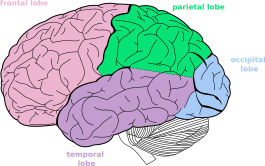
The four main lobes of the cerebral cortex
Located near the “visual cortex” in the occipital lobe is a neural loop (a neural loop is a collection of neuron cells that are interconnected in a sequence to perform a specific task, transmitting neurological signals from one part of the brain to another) that is used for “visual short-term memory.” There is also a phonological neural loop that, together with Broca’s area in the frontal lobe, serves as the “short-term memory” for auditory and language-related information. Let me briefly explain what “short-term memory” means. To understand the meaning of the sentence you’re currently reading, you have to remember the start of the sentence while reading the end—this is done by your brain’s short-term memory, which holds onto small amounts of information for a short period (10 to 15 seconds, or sometimes up to a minute).
The human brain is made up of countless neurons and several supporting cells called “glial cells.” The simultaneous or sequential excitation of a group of neurons gives rise to “perception” (i.e., sensation through the senses, recollection, the birth of new logic-based thoughts, intuitive decisions, or imagination). Notice how a musician’s agile fingers dance over a harmonium keyboard, rhythmically striking the keys. Sometimes, certain groups of neurons in the brain are also excited in rhythmic patterns. When excited rhythmically, each neuron repeatedly fires at intervals—this rhythm of neuronal excitation is called a “brain wave,” which can be of different types based on frequency.
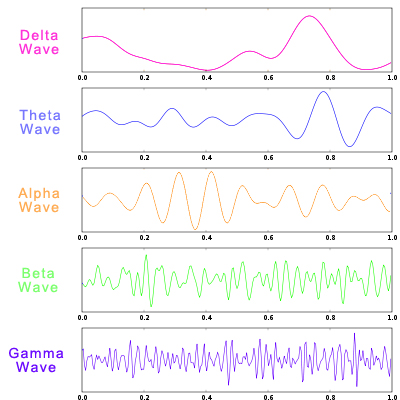
Different types of brain waves
The brain collects “visual short-term memory” data (visual information) through the eyes and analyzes it in two components—”spatial visual information” and “temporal visual information.” Similarly, the brain gathers “auditory short-term memory” data (auditory information) through the ears and analyzes it as “spatial auditory information” and “temporal auditory information.” The question now is, how does the brain analyze acquired information into spatial and temporal components? This process is aided by a special type of brain wave. As mentioned earlier, brain waves can be of various frequencies, and the highest-frequency brain waves discovered so far in humans are “gamma waves” (40–100 Hz), which are present alongside other brain waves both during sleep and in waking or meditative states.
In fact, neural loops connecting the “cerebral cortex” and the “thalamus,” along which gamma waves travel, extract the spatial component from visual, auditory, and language-related information accumulated in the brain. Similarly, gamma wave-carrying neural loops connecting the “cerebral cortex” with the “midbrain” extract the temporal component of the information collected.
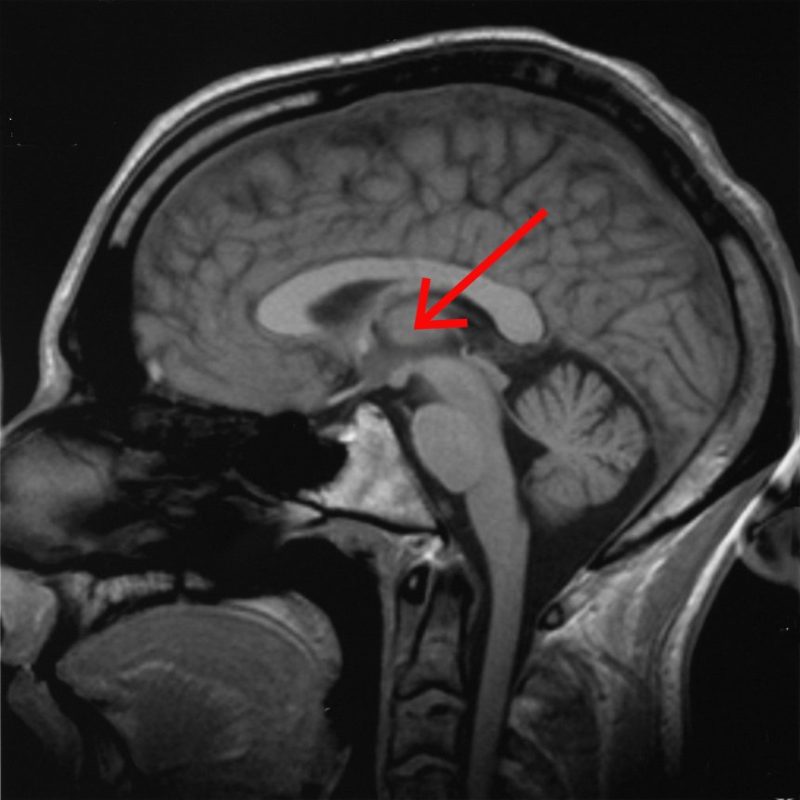
Thalamus
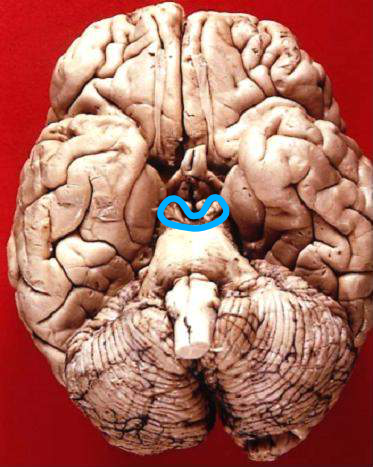
Midbrain
The Intuitive Region of the Human Brain:
The temporal component of auditory and language-related data is first encoded in the “superior temporal sulcus” based on time, then in the “associative auditory cortex” based on frequency, and finally reaches the visual cortex. Similarly, temporal components of visual information from visual short-term memory arrive at the polysensory area of the “superior temporal sulcus,” are encoded there, and then also reach the visual cortex. The visual cortex uses these encoded visual, auditory, and language-related data as search criteria to retrieve certain information from “procedural long-term memory” (which resides in the “cerebellum,” “putamen,” “caudate nucleus,” and “motor cortex”) and decodes them—this decoded information forms “intuitive decisions,” and the ability of the brain to make such decisions is called “intuition.” Needless to say, these “intuitive decisions” are essentially products of the brain’s intuitive region. In other words, the main areas comprising the brain’s intuitive region are the “superior temporal sulcus,” “associative auditory cortex,” “visual cortex,” “cerebellum,” “putamen,” “caudate nucleus,” and “motor cortex.”
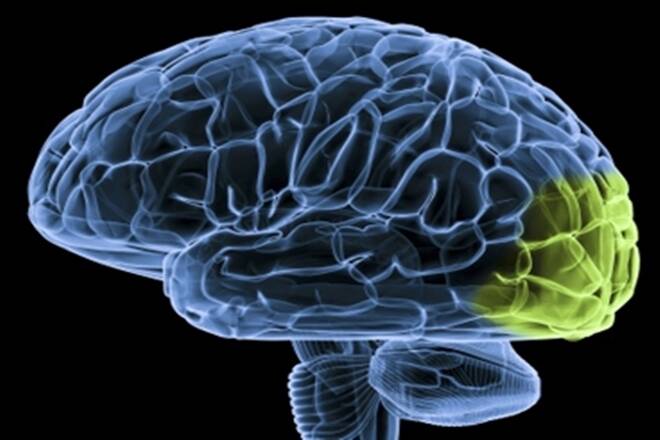
Visual cortex
The Rational Region of the Human Brain:
The rational region of the human brain is mainly formed from the central executive part of the “prefrontal cortex” at the front of the frontal lobe and “declarative long-term memory.” The brain’s “declarative long-term memory” is formed through the “hippocampus,” “entorhinal cortex,” “perirhinal cortex,” and “temporal cortex,” all located in the middle of the temporal lobe. Additionally, the “ventral intraparietal area,” “lateral intraparietal area,” “primary auditory cortex,” and “caudal auditory belt and parabelt” are also parts of the rational region. Spatial components of visual information from visual short-term memory go to the “ventral intraparietal area” and the “lateral intraparietal area,” where they are encoded and then collected by the central executive part of the prefrontal cortex. Similarly, the spatial components of auditory and language information go from auditory short-term memory to the “primary auditory cortex” and the “caudal auditory belt and parabelt,” are encoded there, and then gathered in the central executive part of the prefrontal cortex. The central executive part of the prefrontal cortex then uses this encoded visual, auditory, and language-related information as search criteria to retrieve and decode information related to experiences, events, facts, and concepts stored in declarative long-term memory—this process is called “recall” in the brain.
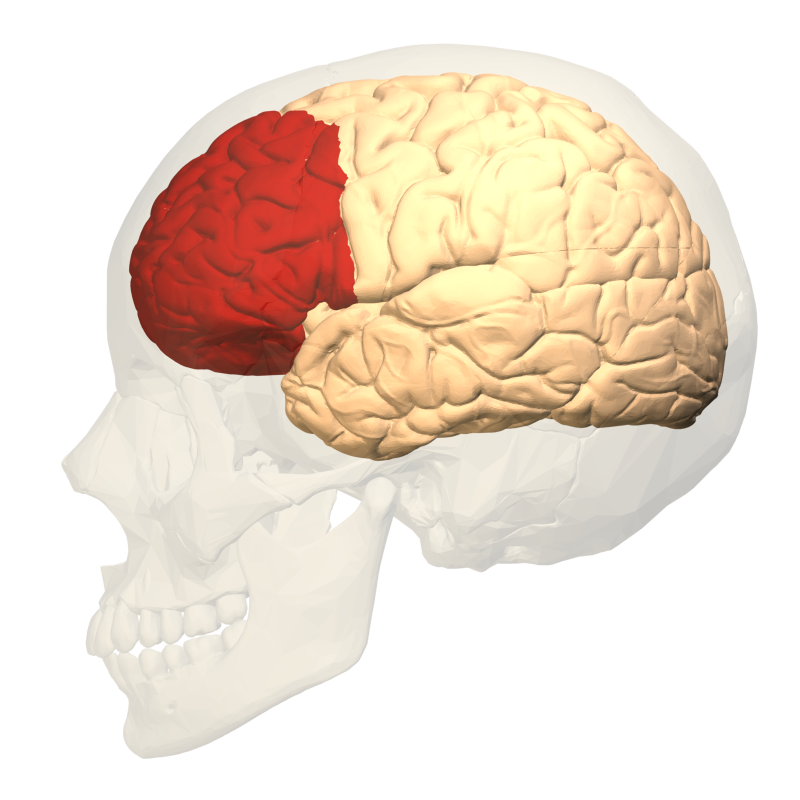
Prefrontal cortex
How does the brain’s intuitive region judge a person’s external attractiveness with the help of the rational region?
We have already learned that procedural long-term memory is a part of the intuitive region of the brain, storing information about acquired skills and tasks, while declarative long-term memory is part of the rational region, storing knowledge about experiences, events, facts, and concepts. The experiences of our ancestors and early humans with society, culture, lifestyle, and observations about human appearance influenced their genetic information, much of which we have inherited and which affects the structure and functioning of the neurons in our “semantic memory” (a subset of declarative long-term memory). In addition, our current social, cultural, and personal experiences of human appearances are continually altering the neural genes of some neurons in our brain’s semantic memory. As a result, many concepts about physical attractiveness are stored in the semantic memory. The rational region recalls these concepts and sends them to short-term memory, from which the intuitive region takes them, and, through generalization over time, encodes a set of “qualitative analytical tasks” and “quantitative analytical tasks” in procedural long-term memory. When observing the appearance of a person, the intuitive region decodes this stored information, executes these analytical tasks one by one, and arrives at a decision about the person’s external attractiveness.
Let us now discuss the qualitative and quantitative analytical tasks performed by the brain’s intuitive region—
Consideration of facial symmetry
Most people’s faces are not perfectly symmetrical; one side of the face is often slightly wider than the other, or the eyes may differ subtly in shape. There is a bone between our eyes and cheeks that, for some, is more prominent on one side than the other. Many such facial asymmetries can be concealed with makeup or corrected via surgery. The brain’s intuitive region performs a qualitative analytical task to consider the facial symmetry of the person in front. The less asymmetry it finds, the more attractive the face is deemed to be.
Comparison with the “Golden Ratio”
The intuitive region also performs a quantitative analytical task to assess the ratio between the vertical distance from the hairline to the tip of the nose, and from the nose-tip to the chin. The closer this ratio is to 1.618033… (the “golden ratio”), the more attractive the face is considered by the intuitive region.
Consideration of skin tone and lip features
The intuitive region finds someone’s face attractive if the skin tone is even throughout. If you are a woman, let me ask you—why do you use lipstick? Even if you don’t, you’ve likely noticed many women and girls using lipstick, eyeshadow, etc. Some men use them too, though far less often. Anyway, the simple answer is—”to look beautiful.” But have you ever wondered why the proper use of lipstick and eyeshadow makes you look even more attractive? If there is a noticeable difference between the lip color and skin tone, and if the skin around the eyes is darker than the facial skin, the intuitive region perceives a person as female! The use of lipstick and eyeshadow enhances these feminine traits. In addition, broad, smooth, and full lips are interpreted by the intuitive region as a marker of nurturing capability (lipstick is also used to create or accentuate these lip features). Not only that but the intuitive region believes that selecting lip color based on time, situation, and attire is an expression of artistic skill. So, femininity, motherhood, and artistic expression—all contribute to whether the intuitive region finds a woman’s face attractive or beautiful.
Assessment of voice frequency
One quantitative analytical task of the intuitive region is to evaluate the frequency of a person’s voice. It considers 165–255 Hz to be the voice of an adult woman, and 85–155 Hz to be the voice of an adult man. Among women, the higher the vocal frequency within 165–255 Hz, the more attractive she is to the intuitive region. For men, the lower the vocal frequency within 85–155 Hz, the more attractive he is perceived to be.
Estimation of leg-to-torso ratio
The intuitive region calculates the ratio of leg length to torso length (excluding head, arms, and legs) as a quantitative analytical task. For a ratio around 1.67, the brain identifies the person as female, and for about 1.37, as male. However, women whose ratio exceeds 1.67 by about 5% are considered especially attractive, and men whose ratio exceeds 1.37 by about 7.5% are considered especially attractive. Wearing high-heeled shoes increases the perceived length of the legs, thus increasing this ratio. Accordingly, high-heels are popular among women as they easily add 5% to that ratio. For men, increasing it by 7.5% would require heels so high that they become uncomfortable despite practice, which is why high heels are primarily worn by women.
Observation of the “lumbar arch”
Many people’s backs form a slight angle where the torso meets the hips, creating an arch. This “lumbar arch” can be observed in both men and women, but the brain’s intuitive region mainly recognizes this curve as a feminine trait. If the woman’s lumbar arch forms a precise 45.5-degree angle, her waist is considered attractive to heterosexual women and homosexual men, while her hips are attractive to homosexual women and heterosexual men. When the angle deviates from 45.5 degrees, the perceived attractiveness decreases. When standing or walking in high heels, a woman’s center of gravity rises, which increases gravitational potential energy. To regain balance, her back increases in curvature, forming more of an arch, allowing some of that potential energy to convert to elastic potential. Thus, high heels further accentuate this feminine feature, making women appear even more attractive to the intuitive region of the observer.
Calculation of waist-to-hip circumference ratio
For the intuitive region of the observer’s brain, a waist-to-hip ratio between 0.67 and 0.8 signals a healthy female body, while a ratio between 0.8 and 0.95 indicates a healthy male body. However, a woman’s body is only deemed truly attractive when this ratio is about 0.7 or 0.8, and for men, it is 0.9.
Consideration of steps taken per unit time, stride length, foot length, and pelvic oscillation
Ignoring fatigue and rest, an average adult man takes about 5,340 steps per day, while an average adult woman takes about 4,912. This shows that women take fewer steps per unit time than men. Women also have a shorter average stride length (2.2 feet) compared to men (2.5 feet), and shorter foot length. However, women’s pelvis oscillates more while walking. Observation of the number of steps per unit time, stride length, foot length, and pelvic swing are all tasks for the intuitive region too, as these quantitative parameters help it determine gender. High heels further accentuate these feminine traits, making a woman look more attractive to the observer’s intuitive region—wearing high heels decreases walking stride length and steps per unit time, as well as effective foot length. In addition, some of the gravitational potential energy described earlier is converted into oscillation energy, increasing pelvic swing. However, it’s worth remembering that long-term use of high heels can cause various foot and ankle problems!
Looking for similarity with oneself
When considering attractiveness in terms of marriage and offspring, the intuitive region also performs an additional analytical task—comparing the external appearance, personality, and social traits (phenotypes) of the person in front with one’s own. The more resemblance it finds, the more attractive the person is perceived to be. There’s a fundamental reason for this “search for similarity.” Every organism’s traits are determined by its genes. A trait manifests only when it serves a functional purpose for adapting to the environment; a set of such observable traits makes up a “phenotype.” Some phenotypes contain interdependent traits—if any one is missing, the others cannot function, jeopardizing the organism’s survival! If the phenotypes of parents differ greatly, offspring can inherit incompatible combinations, making some traits nonfunctional, threatening their fitness. Now you understand why, in marriage, we look for similarities between ourselves and our prospective partners?
Conclusion:
To summarize the significance of the analytical tasks described above: the brain’s intuitive region performs specific analytical tasks to evaluate particular external features. Some features help the intuitive region determine whether the person is male or female. If it decides the person is male, the more distinctly masculine those features appear, the more attractive that person is considered. Similarly, the intuitive region assesses a woman’s external attractiveness. Again, some features allow the intuitive region to judge attractiveness regardless of gender.
Procedural long-term memory in the brain is termed “unconscious memory.” Thus, we are not consciously aware of the analytical tasks encoded in procedural long-term memory, nor do we fully register them as the intuitive region performs them. However, we do notice the decision the intuitive region reaches about someone’s external attractiveness—we sense whether a person is attractive, plain, or unattractive.