News Desk, Biggani Org
Email: [email protected]
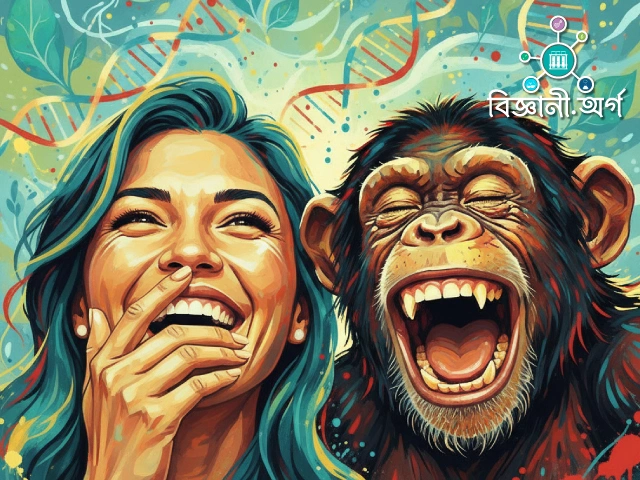
Humans can laugh—this is one of our most natural yet most profound characteristics. Whether it’s joy, pain, surprise, or embarrassment, people express many emotions through laughter. But the question is, is this laughter reserved only for humans? Do other animals not know how to laugh at all?
For many years, scientists believed that laughter was an exclusively human ability. However, recent research has changed this notion. Scientists now say that laughter isn’t limited to humans alone—behaviors or sounds resembling laughter also exist in many other creatures of nature.
What is Laughter, Really?
Human laughter is essentially a complex biological and social response. When we are happy or see something funny, the limbic system and hypothalamus in our brain become active. Then, the muscles in our face, our breathing, and throat nerves work together to create “ha-ha” or “hee-hee” type sounds. At the same time, laughter also strengthens our social bonds. Through laughter, humans exchange signals of friendship, empathy, and safety.
A similar response is also seen in animals, although their laughter manifests more in behavior than sound.
Examples of Animal Laughter
Research has shown that over 60 animal species, apart from humans, display behaviors or make sounds similar to laughter. The most well-known examples are among species of monkeys and chimpanzees.
Chimpanzees and gorillas make a gentle throat noise when playing or when tickled, which sounds a lot like laughter. Experiments on rats have shown that when their fur is gently stroked, they make high-frequency chirping sounds, believed to be analogous to human laughter. Animals such as dogs, dolphins, and foxes also produce special sounds or gestures during social play that indicate their joy.
Scientists call these types of sounds “play vocalization”, meaning sounds expressing joy during play.
Where is the Difference?
Human laughter is not just an expression through facial movement or sound; it’s also a social language. Animal laughter is comparatively quieter, more sensitive, and behavior-based. During play, chimpanzees show their teeth, but it is not like a human smile—rather, it’s just a play signal.
Human laughter is unique in another way as well. It is not only a means of expressing joy but also an important tool for social communication. For example, in awkward situations, people use laughter to ease discomfort or to influence others’ attitudes. Among animals, such social and psychological uses are not observed.
Laughter from an Evolutionary Perspective
Scientists believe that laughter is probably an evolved social signal. The rhythm of breathing that develops during play among ancient mammals is thought to be the source of human laughter. Research suggests that laughter first served as a signal indicating friendship, not aggression.
In other words, when an animal showed its teeth and made soft sounds during play, it acted as a peaceful signal to others—saying, “I’m not here to fight, I’m here to play.” Over time, this behavior in humans evolved into the complex social language of “laughter.”
The Connection Between Human and Animal Laughter
Even today, laughter remains one of the most human expressions. However, among animals too, signals of joy, play, and social relationships exist, even if their expressions aren’t like those of humans.
Laughter, therefore, is not just at the corner of our lips but is a shared heritage woven into the fabric of evolutionary history. Humans and animals alike have signaled joy and friendship in their own ways, establishing connections with each other.
Conclusion
The idea that no animal except humans can laugh is not entirely accurate. Many animals are capable of laughter; it just doesn’t sound the same as ours. Rather, their laughter reminds us that joy and empathy are not the property of a single species, but a beautiful heritage shared across all of nature.