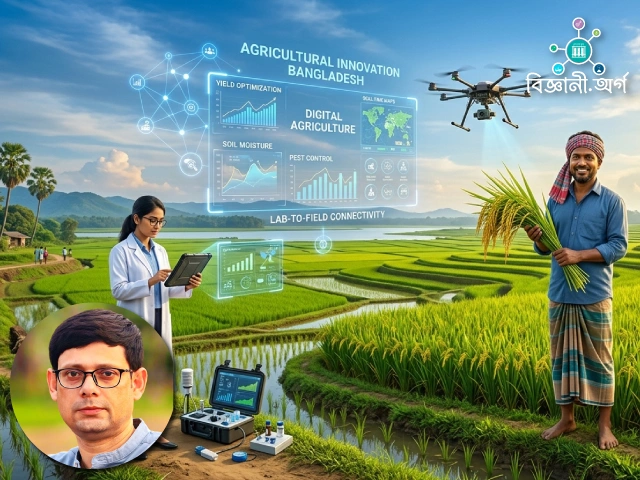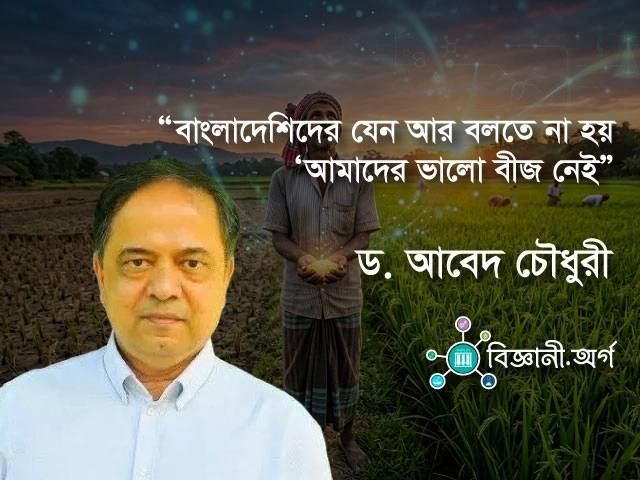
Whenever the topic of agriculture in Bangladesh comes up, we often hear complaints: there are no good seeds, seeds are not available on time, or the seed quality is poor. These are not just grievances; they are reflections of a structural weakness in the country’s food production. Referencing this reality, plant scientist Dr. Abed Chaudhury says that he dreams of building a system where Bangladeshi farmers no longer have to say, “We don’t have good seeds.” This dream is not a personal one—it is deeply connected to a national necessity.
Seed Crisis: A National Challenge
In Dr. Abed Chaudhury’s analysis, the seed crisis is not an isolated problem. It is linked to agricultural production, farmers’ incomes, food security, and ultimately, the national economy. Without good seeds, farmers’ efforts do not yield full results. If improved seeds are used on the same land, production can increase significantly. Yet in reality, a large portion of farmers cannot access quality seeds.
Given this scenario, strengthening the seed supply system is not just the responsibility of the Ministry of Agriculture; it needs to be an integrated national initiative. A robust seed management framework must be established through collaboration among research institutions, the private sector, NGOs, and local entrepreneurs.
The ‘Krishan’ Concept: Merging Science and Entrepreneurship
Dr. Abed Chaudhury has emphasized the need for science-based entrepreneurial initiatives to address the seed crisis. In his vision, an organization like ‘Krishan’ would not just be a business selling seeds; it would be a platform for research, quality control, and direct communication with farmers. Such initiatives can deliver high-quality seeds to farmers and simultaneously create local employment and skill development opportunities.
The Importance of Local Production and Distribution Systems
Another major reason for the seed crisis is the weakness of local production and distribution systems. Often, even if superior seeds are developed in laboratories, their quality deteriorates by the time they reach the field. According to Dr. Abed Chaudhury, if local capacity for seed production and preservation is enhanced, farmers can access seeds more quickly and at a lower cost. This would reduce transportation costs, save time, and maintain seed quality.
National Pride and Food Security
Food security is not solely an economic issue; it is also a matter of national pride. Strengthening our own agricultural system will reduce dependence on importing food or seeds from abroad. In Dr. Abed Chaudhury’s view, ensuring good seeds is synonymous with ensuring food security for future generations. It is a long-term investment, the benefits of which the people of the country will enjoy for generations to come.
Final Words
“So that Bangladeshis no longer have to say—‘We don’t have good seeds’”—within this aspiration lies a national dream. If improvement of seed quality, reform of the supply system, and science-based initiatives are advanced together, a sustainable transformation in Bangladesh’s agricultural system is possible. This change will not only improve the lives of farmers; it will also strengthen the foundation for the country’s overall development.
Read the full interview with Dr. Abed Chaudhury: