Humans love to think. Thought is the driving force of civilization. Yet, sometimes people fall into the illusion that they can conceive of everything, plan everything, and that thinking defines the boundaries of reality. But the truth is, there is a vast world outside the confines of thought and planning, a world where the most wondrous events are born, the most unexpected discoveries happen, and the deepest truths emerge. That realm might belong to our subconscious, to nature, or be hidden somewhere among the layers of time—where conscious thought cannot reach, but where life flows incessantly.
We often believe that every discovery is the result of deliberate planning. But if we look at history, many great inventions and creative inspirations of humanity have arrived suddenly, as if whispered from within. Newton did not plan to discover the law of gravity when the apple fell. Archimedes did not imagine the moment he leapt out of the bath shouting, “Eureka!” There is a mystery in such events: thought is not always the inner voice of our mind; often, a world outside of thought inspires our thinking.
In neuroscientific terms, our conscious mind is like the tiny visible tip of an iceberg, while the subconscious mind lies vast and hidden beneath the ocean. No matter how much one thinks, most of our thoughts originate from places we cannot consciously access. Many times, we do not fully know why we make certain decisions. We later justify them with reason, as if they were all part of a plan. In reality, those decisions come from the subconscious, or some “inner world” that works beyond the limits of our thinking.
This is why the phrase, “There is a vast world beyond our thoughts and plans,” is not just poetry—it is a truth in neuroscience and cognitive psychology. The human brain generates around 60,000 thoughts per day on average, most of which are repetitive or formed subconsciously. This means that many of our decisions, emotions, and even creative ideas arise from places that conscious planning cannot reach.
This mysterious realm is the “unknown world”—where nature, time, the subconscious, and chance all converge. Many of life’s greatest lessons come from here, even if we do not recognize them. You might feel that nothing is going as planned, but in that moment an unexpected person, event, or even a book comes along and changes your life. You did not plan for it, yet within that uncontrolled incident lies the seed of your progress.
No matter how intelligent a person is, the scope of their thought is limited. We see time as a straight line—past, present, and future. But reality is much broader. Many scientists now believe that reality may exist in multiple layers, where the flow of time and events is unlike our assumptions. Due to the limitations of our brains, we only perceive a small fraction of this greater reality. Perhaps that is why many events seem “unexpected,” though they are part of a larger mathematical or biological pattern, beyond our comprehension.
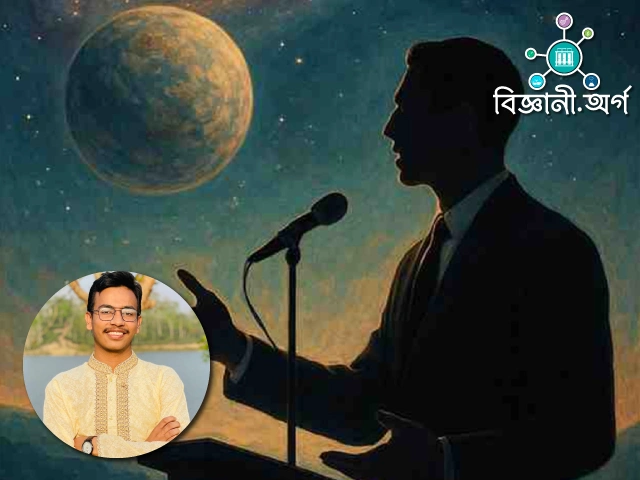
This is the most fascinating part: we think we will speak, plan, then act; but in reality, many times people act first and then, through reasoning, explain it as “planned.” Someone rises to make a speech, yet their mind is a blank. As they begin to speak, those unplanned words form a message that surprises both the speaker and the listeners. As if, in that moment, another force speaks through them—one not of thought, but of feeling, experience, and deep insight.
Some call that world “intuition,” others “inner voice,” or “divine inspiration”—but whatever the name, it does not belong to the individual alone. To enter it, one must break through the walls of ego and planning. For as long as we think “I am the thinker, I know,” we remain disconnected from this larger world. But when we open ourselves up, a connection forms with the unknown. Then, the world beyond thought flows into our minds like a stream, and we find ourselves saying or doing things we cannot explain.
This phenomenon is often neglected in our society. We are taught to think, plan, and reason before we speak. Reason is, of course, necessary, but not everything in life fits into a logical mold. The most beautiful decisions in life arise from feeling—where mind, brain, time, and reality blend together. A child does not learn to walk by thinking; it falls, gets back up, and tries again and again. That is not the world of thought, but the spontaneous flow of life.
In the same way, an artist may plan meticulously before painting, but the true moment of art arrives when the brush begins to move on its own. A scientist may spend years researching, but the day the results appear suddenly, it is not only the “fruit of thought”—it is as if the unknown world has touched them for a brief instant.
If we pay attention, we find such moments in our daily lives too. You might be about to say something to someone and suddenly utter something new even to yourself—and that becomes the most important advice for their life. You did not think about it beforehand, but it still happened. These moments of “unthinking” prove that much of life happens outside our plans.
Yet people fear the unknown. We yearn for safety and control, so we prefer to think everything through in advance. But nature does not follow the law of control—it follows the law of balance. Those who dare to be a little unplanned are the ones who may discover the profound truths of life.
This unknown world is not a rival to our thinking, but its complement. Planning shows us the way, but uncontrolled events create the turns in our paths. Life is chaotic without planning, yet lifeless with only planning. The beauty of life lies in the mix of both—some known, some unknown, some thinking, some feeling.
So when someone stands up to give a speech without thinking, perhaps it is not the brain, but that greater world they are connected to as they speak. Through them flows that invisible current we call “inspiration,”—that is, taking breath in, something entering deep into the soul. Perhaps that breath belongs to nature, or to God, or to some deep layer of human consciousness from which all creation begins.
Ultimately, understanding the limits of our thoughts and plans is the beginning of wisdom. The rest of wisdom comes from having the courage to go beyond those limits. Perhaps we should not always worry about how to say things; sometimes we should simply speak from the heart, so that the unthinking world can speak through us. For, no matter how much we think, the deepest truths of life are discovered not by thinking, but by feeling.
Md. Iftekhar Hossain
MBBS 1st Year, Cox’s Bazar Medical College, Bangladesh |
Main areas of interest: Behavioral Science, Neuroscience, and Habit Science.