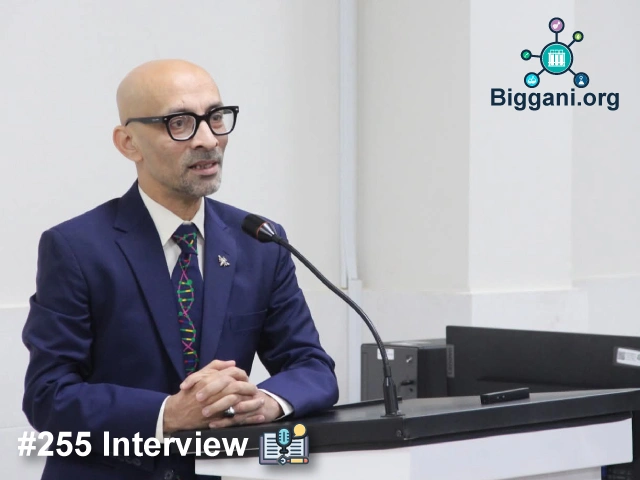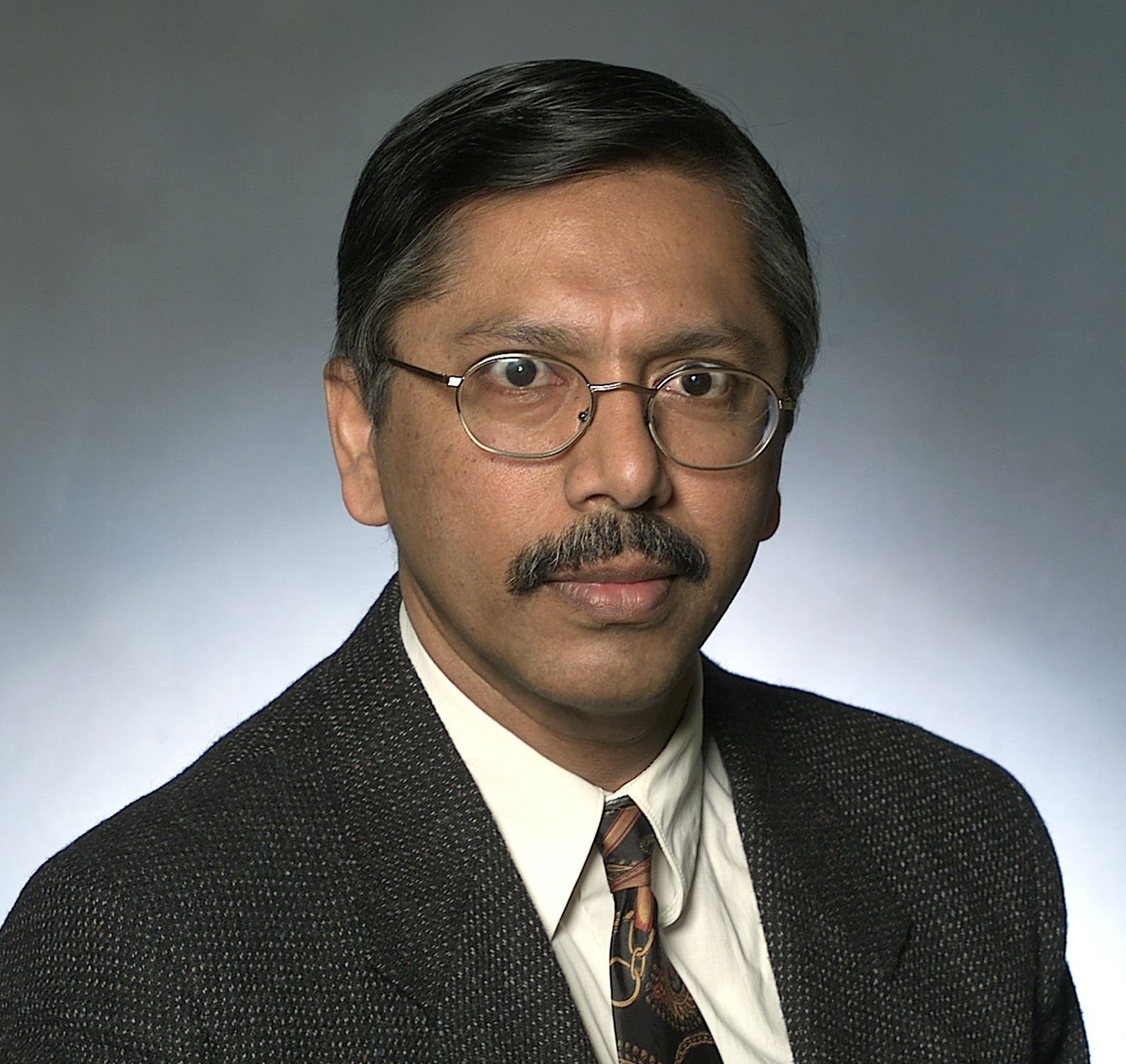
In this intensely competitive world of the twenty-first century, the key to any business’s success lies in ensuring product quality and minimizing waste. The most acclaimed methodology globally for achieving this goal is ‘Six Sigma’. Dr. Habib Siddiqui has made Bangladesh’s name shine on the world stage through his mastery of this complex mathematical and management system. An alumnus of Rajshahi Cadet College, Dr. Siddiqui is not just a successful researcher; by attaining Six Sigma’s highest rank—‘Master Black Belt’—he has established himself at an extraordinary height. Recently, in an interview, he shared the ups and downs of his life, the evolution of his research, and his vision of building a humane world.
A Diverse Foundation in Education and Research
Dr. Habib Siddiqui’s journey began at BUET, where he completed his undergraduate studies in Chemical Engineering. He then went abroad to North America for higher studies. After obtaining a Master’s degree from the University of Saskatchewan, Canada, he earned his PhD in Chemical Engineering from the prestigious University of Southern California (USC) in the United States. Among his academic accolades are advanced degrees in Nuclear Engineering and Engineering Management.
His research interests are also remarkably varied—ranging from fractals, percolation theory, flow through porous media, thermal hydraulics, two-phase flow, corrosion, and safety management systems. Between 1990 and 1994, he also served as an editorial reviewer for the ‘Canadian Journal of Chemical Engineering’ and the ‘AIChE Journal’.
Leadership in Corporate America and the Realm of Six Sigma
At the start of his career, Dr. Siddiqui was engaged in teaching and research at several leading North American universities (UCLA, USC, and the University of California, Santa Barbara). He later transitioned to corporate America, where he went on to work at world-renowned organizations such as Exxon, DuPont, and Witco.
Currently, he serves as Distinguished Engineer, Technical Fellow, and Global Six Sigma Process Leader at Rohm and Haas, the largest specialty chemical company in the United States. As an internationally recognized Master Black Belt, he works extensively in reducing defects and increasing productivity. He also serves as Executive Vice President of the ‘Quality Masters Group’.
Six Sigma in Simple Terms: The Aim Is Zero Defects
Dr. Siddiqui describes Six Sigma as a business philosophy. In statistical terms, a process is considered to reach Six Sigma quality if there are just 3.4 defects per million opportunities.
He clarifies the concept with a simple example. When we travel from home to office, it does not always take the same amount of time; sometimes it’s 30 minutes, other times, owing to traffic jams, it can take an hour. This variation is what’s called ‘variation’. Six Sigma fundamentally seeks to identify the causes of such variations and, by controlling them, strives to ensure consistent results. According to Dr. Siddiqui, if an average company improves its work quality even slightly, it can potentially reduce annual waste by as much as 20 percent of its income.
A Resolute Voice in the Service of Humanity
Dr. Habib Siddiqui’s identity is not confined to the walls of the laboratory or the corporate office. Since 1978, he has been a tireless advocate for human rights, social justice, and the cause of humanity, using his pen. He is one of the most prominent names among Muslim intellectuals in the global media. Through more than two hundred essays and columns, he has ardently spoken out for the rights of the Rohingya in Myanmar, Chechnya, Palestine, and post-9/11 American Muslims.
In recognition of his social and human rights work, the ‘Philadelphia Inquirer’ once featured him on the cover of their local edition. He remains a calm yet powerful voice for marginalized and disadvantaged communities.+1
Literary Pursuits and Guidance for the Next Generation
In addition to science, Dr. Siddiqui has profound expertise in theology, history, and culture. He has authored several books, including ‘Islamic Wisdom’. His significant translation works include Imam Ghazali’s ‘Mukashafat al-Qulub’ and Allama Ibn Hajr al-Asqalani’s ‘Al-Munabbihat’. His collection of Nasreddin Hodja stories for children is another testament to his versatile talent.
In his personal life, Dr. Siddiqui is the father of two children and a regular speaker at colleges, universities, and Islamic centers. His life teaches us how essential it is to be a conscientious global citizen along with being a skilled engineer or scientist.
Dr. Habib Siddiqui’s enduring journey stands as a source of endless inspiration for the young generation of Bangladesh. He has shown us how logic from science and compassion from the heart can together build a world that is beautiful and free from defects. This global celebration of intellect is a narrative of pride for every Bengali.
Date: 7 November 2006 Duration: 60 minutes
Bio-data of Dr. Habib Siddiqui:
Dr. Habib Siddiqui, a graduate of Rajshahi Cadet College, earned several post graduate degrees in Chemical and Nuclear Engineering, and Engineering Management in Canada and the United States, including a Ph.D. in Chemical Engineering from the prestigious University of Southern California, Los Angeles. He did his B.Sc. in Chemical Engineering from BUET, Dhaka.
After spending several successful years in the Academia with many of the leading North American universities (University of Saskatchewan, Canada; University of California, Santa Barbara; UCLA and USC, Los Angeles), Dr. Siddiqui now serves in the corporate America. He is currently a Distinguished Engineer, Technical Fellow and Global Six Sigma Process Leader – responsible for deploying Six Sigma initiatives within the Rohm and Haas Company, the largest specialty chemicals company in the USA. As a Six Sigma Master Black Belt, he is an internationally recognized expert on Six Sigma methodology for defect reduction, yield and productivity improvement. He has also worked for Exxon, DuPont and Witco (now Chemtura) Corporation. He is a member of American Institute of Chemical Engineering. He was an editorial reviewer in the area of mixing for Canadian Journal of Chemical Engineering and AIChE Journal (1990-94). He is a frequent speaker in Manufacturing Excellence and Six Sigma forums. Additionally, he holds the post of the Executive Vice President at the Quality Masters Group (http://www.qualitymastersgroup.com/), an organization with premium service offerings on Process Engineering, Quality and Six Sigma.
Dr. Siddiqui’s research work includes such diverse subjects as fractals, percolation theory, disorder, flow through porous media, thermal hydraulics, two-phase flow, corrosion, mixing, separation science, heat transfer, computational modeling, and safety management systems.
Dr. Siddiqui has a long history of a peaceful activist in his effort towards improving human rights and creating a more just and equitable world. He has been a prolific author in the arena of humanity, social conscience and human rights since 1978, making him one of the most recognized Muslim names in the media. He has written over 200 essays, many of which are published as Op/Ed columns in newspapers, magazines, journals and the Internet around the globe. He has tirelessly championed the cause of the disadvantaged, the poor and the forgotten here in the backyard of his Philadelphia home, Americas and abroad. His home newspaper, Philadelphia Inquirer, recognized his social activism with a front-page feature column in its local section. His meticulously researched essays and articles combined with real human dimensions on the plight of the displaced peoples of Rohingya (Arakan) in Myanmar, Chechnya and Palestine, and American Muslims in the post-9/11 era have made him a singularly important intellectual offering a sane voice with counterpoints to the shrill threats of the oppressors and the powerful. He offers a fresh and insightful perspective on a whole generation of a misunderstood and displaced people with little or no voice of their own.
Dr. Siddiqui has written extensively on comparative religion, history, culture and civilization of Muslim people. He has authored several books including – “Islamic Wisdom” – a compilation of wise sayings in Islam. The titles of some his other books (unpublished) are:
- Translation of Allama Ibn Hajr al-Asqalani’s (R) “Al-Munabbihat”,
- The Compilation of Nasreddin Hodja Stories for Children of All Ages;
- Book of Devotional Stories,
- Book of Wisdom in Islam;
- Translation of Imam Ghazzali’s Muqashafatul Qulub.
Dr. Siddiqui is a frequent speaker on Muslim and minority issues at various colleges, universities, churches and Islamic centers. He is active in many community based voluntary activities. He is married with two children.