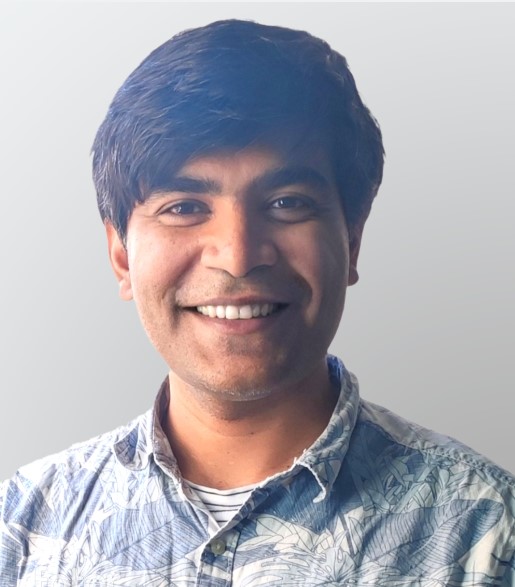
Three Countries, Three Degrees, One Goal—The Quest for Neuroscience’s Untold Chapters
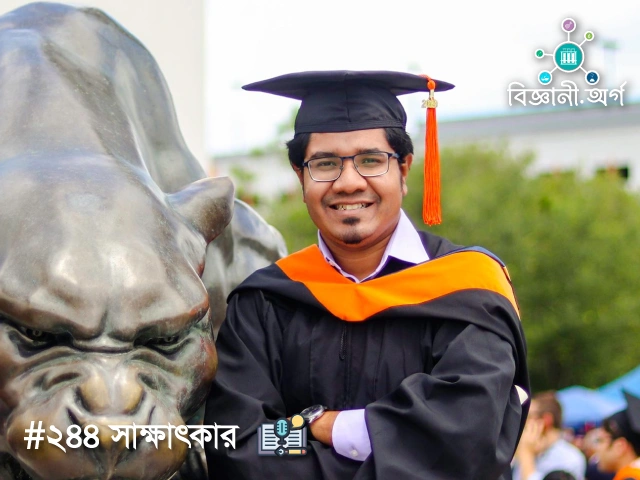
Dr. Intakhar Ahmad’s story is a remarkable scientific journey. After earning Master’s degrees in Microbiology, Medical Science, and Systems & Synthetic Biology across Bangladesh, Sweden, and France, he completed his PhD at the University of Bergen, Norway. But this long educational path was just the beginning. Currently, he is working as a postdoctoral researcher at the University of Illinois Chicago (UIC) College of Medicine, USA, where his research focuses on diseases of the central nervous system (CNS)—especially myelin pathology, neuroprotection, and remyelination.
Science has always been at the center of his interests, but his core inspiration arose from family experience. His mother suffered from schizophrenia, and that experience deeply inspired his commitment to mental health research.
Primary Research Focus: Finding the Pathways to Neural Recovery
Our brain and nervous system function through thousands of complex cells and biochemical processes. They control human thoughts, emotions, memory, and behavior. But when disease, inflammation, or toxicity damages nerves, recovery becomes extremely difficult.
Dr. Intakhar Ahmad is seeking solutions to those challenges. He has realized that conventional treatments mostly focus on alleviating symptoms, but not enough has been done for true neuronal regeneration or repair.
Three Novel Biomarkers: New Horizons in Neuroprotection
One of the major achievements of his PhD research was discovering three novel biomarkers, which may play a crucial role in the restoration of myelin damage.
Myelin is a type of neuronal sheath that helps transmit signals rapidly between neurons. It acts just like the plastic insulation of an electric wire, protecting its core and ensuring fast and secure information flow.
When myelin is damaged, communication between the brain and body slows down, leading to multiple sclerosis (MS), Parkinson’s disease, and other neurological disorders.
Remyelination and Neuroprotection: New Possibilities
Currently, Dr. Intakhar is working on neuroprotective and remyelinating molecules that can accelerate nervous system recovery.
Through this research, he is exploring:
✅ The potential of new drugs to help reconstruct myelin.
✅ Ways to reduce inflammation to prevent neuronal destruction.
✅ The potential to prevent neurological diseases, which could play a key role in developing advanced treatments for Alzheimer’s, Parkinson’s, and MS in the future.
He believes that if effective methods of neuronal protection and recovery are developed, it will bring a revolution to neurodegenerative disease treatment.
Extracellular Vesicles (EVs): The Secret Messengers of the Cell
Another fascinating aspect of Dr. Intakhar’s research involves extracellular vesicles (EVs). These are tiny cellular particles released by cells to communicate with others and play crucial roles in various physiological processes.
During a particular experiment, he noticed that tiny vesicles released from one cell were determining the fate of another—sometimes sending messages of hope, other times signals of destruction. He realized that even among our cells, there is a kind of human-like mutual understanding—they talk, feel, react, sometimes resist, and sometimes surrender.
This gave him a new realization—
“Research is not just about results; it’s a profound philosophy, where the mysteries of life, death, regeneration, and healing are hidden. My research has taught me that science is ultimately an attempt to understand the language of nature—each cell, each molecule wants to tell us its story. We just need to be willing to listen.”
The Promise of New Therapies: The Future of Neuroscience
Dr. Intakhar’s research is not only for academic success, but his main goal is to find practical solutions for real-life applications.
His research is centered on neurodegenerative diseases, neuroprotection, remyelination, and cellular communication (extracellular vesicles – EVs), which could improve human health and open new opportunities in medical science.
He believes to fundamentally transform treatment for neurodegenerative diseases, effective ways to restore neurons and reduce inflammation-induced damage must be discovered. His research is progressing along that path.
Potential Applications of the Research:
1. Advancing Treatment for Multiple Sclerosis (MS) and Myelin-Related Disorders
His research has identified three novel biomarkers for neuroprotection and remyelination, which can offer new therapeutic targets for MS and other myelin-related disorders.
✅ New Therapeutic Targets: These biomarkers could help restore myelin damage, playing a groundbreaking role in treating neurodegenerative diseases.
✅ New Drug Potential: This research will assist in inventing new drugs and developing advanced treatment strategies that could offer effective alternatives for MS patients.
2. Therapeutic Possibilities for Inflammatory Neurological Disorders
He is researching neuroprotective and remyelinating molecules to reduce neural damage caused by inflammation and toxicity.
📌 There is potential to improve treatment for inflammatory neurological disorders such as Alzheimer’s, Parkinson’s, and MS.
📌 New ways are being explored to reduce inflammation and accelerate neuronal regeneration.
📌 Using neuroprotective molecules, cellular resistance to damage can be increased.
3. The Impact of Extracellular Vesicles (EVs) and Cellular Communication
EVs play an important role in neurological diseases, inflammation, and infections.
🔬 Research is underway to understand how EVs exchange information between cells and how this affects neurological health and disease progression.
🔬 Advances in EV-based diagnostics and therapeutics could revolutionize disease detection and treatment in the future.
🔬 Using EVs for neuroprotection and treatment of neurological diseases could open new therapeutic avenues.
The Dream of an Independent Research Laboratory
He dreams—
🔬 of establishing an independent laboratory, where research into neurodegenerative diseases—especially myelin-related disorders—will continue.
🧠 that his research will one day translate into clinical trials, which will improve the quality of life for millions affected by neurodegenerative diseases.
He believes that with the right research, neurodegenerative diseases can be cured, and his research can become one of the driving forces for this change. 🚀
Qualities Essential for a Scientist
What qualities are important for a scientist?
🔹 Curiosity: An insatiable desire to learn new things is a researcher’s greatest strength.
🔹 Perseverance: Failures will come, but never giving up is the true challenge for a scientist.
🔹 Analytical Ability: The skill to analyze data and make deep observations.
🔹 Ethical Integrity: It’s important to present accurate information and maintain transparency in research.
🔹 Creativity: The willingness to think outside the box and seek new solutions.
He believes,
“Science is never final; it is a continuous quest, where every answer brings forth a new question.”
A Message for Young Scientists in Bangladesh
Dr. Intakhar’s advice for young scientists in Bangladesh is profoundly inspiring—
“Learn to ask questions. Don’t be afraid of failure, and never be content with the boundaries of what you know.”
He believes that science is not limited to the pages of a book—it is a deep dialogue with nature. Young people should not simply follow existing norms but identify new problems and seek solutions.
Dr. Intakhar Ahmad’s research is helping deepen our understanding of neuroscience, neurodegenerative diseases, and cellular communication. His story proves that a true researcher’s strength lies in patience, dedication, and the desire to reveal new horizons.
“Science expands our ability to think, opens our eyes, and gives us the chance to turn future possibilities into reality.”
He continues to move forward unwaveringly on the path to building that future.
Contact Information
📩 Email: [email protected]
🔗 LinkedIn: Intakhar Ahmad