In the medical college classroom, we learn about bones, blood, and cells.
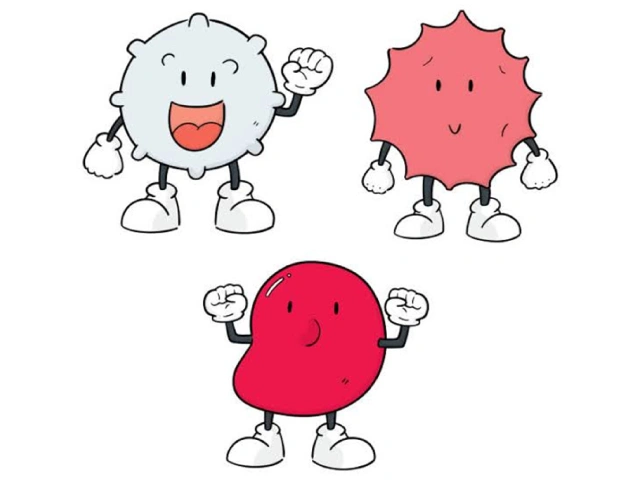
On lab slides, we see round, granular white cells known as WBC, White Blood Cell.
Almost unknowingly, the boys and girls of medical life become like these white cells themselves, surrounded by viruses, bacteria, infections—
all of which, like blood, flow from classroom to ward,
from the patient’s bed to the hostel dining hall.
For centuries, the human body has lived, slept, and eaten in rhythm with the sun. But as civilization’s new wheel turned sleepless nights into habit, our bodies—especially those tiny soldiers, the White Blood Cells (WBC)—found themselves in trouble on the battlefield.
In the silence of the night when the city sleeps, the hospital duty room, call center phones, factory shift machines, and people themselves stay awake. But are the body’s immune soldiers willing to work the night shift too?
1. Circadian Rhythm: The Invisible Clock’s Law
Inside our bodies runs a precise clock—the Circadian Clock. This clock determines when you sleep, when hormones release, and when the body fights off disease.
In 2002, a study in Nature Immunology (Scheiermann et al.) stated that the movement of white blood cells and other immune cells is also regulated by this Circadian Clock. When we sleep at night, the body goes into Repair Mode, and Melatonin increases. Melatonin directly modulates the immune system, activating T-cells, B-cells, and NK-cells (Natural Killer Cells).
But when someone stays up at night, cracks appear in this natural rhythm. Melatonin decreases, Cortisol (the stress hormone) rises, causing the immune system to lose its way.
2. Natural Killer (NK) Cell: The First Line of Soldiers
NK Cells are the most important defense soldiers in our body, silently identifying and killing virus-infected and tumor cells.
In 1997, Irwin et al. conducted a classic sleep study revealing that just one sleepless night reduces NK Cell activity by nearly 72%.
Even more recent research, Benedict et al., 2012 (Journal of Immunology), proved that those who keep irregular hours at night face a significantly higher risk of viral infections (such as the common flu).
3. Night Shift Workers: Walking the Thin Line Between Life and Death
Today, over 20% of people work the night shift (International Labour Organization, 2018). Among them, healthcare, factory, and call center workers are the majority.
According to a British Medical Journal (BMJ) meta-analysis (2015), Night shift nurses and healthcare workers have a 20-30% higher risk of breast cancer. The reason? Disrupted circadian rhythm → melatonin suppression → errors in the DNA repair mechanism → weakened immune surveillance.
4. Chronically Sleep Deprived: Soldier Crisis Day After Day
Losing sleep isn’t just a one-night loss. Those who do 2-3 night shifts a week or consistently get little sleep gradually build up chronic inflammation in their bodies.
Harvard Medical School researcher Charles Czeisler (Sleep Medicine Reviews, 2009) showed that during the night shift, cortisol levels stay high, which reduces lymphocyte production. As a result, wound healing and infection control both slow down.
5. Practical Real-life Example: Stories from the Hospital
Imagine a night duty nurse, standing in the ICU for 12 straight hours. When she should be sleeping, she’s dealing with antibiotic charts and emergency calls in the ward. During the day, she snatches just 3 broken hours of rest. If she falls sick after months of this, who will care for her?
Grajcar et al., 2018 (Occupational Medicine) showed that the effectiveness of flu vaccination drops among night duty healthcare workers because proper antibody production doesn’t occur.
6. Ways to Survive: Give the Soldiers Their Rest
Proper Sleep Hygiene: After your shift, aim for 7–8 hours in a dark, cool, low-light room.
Power Nap: A 20–30 minute nap during your shift can boost immunity.
Balanced Diet: Omega-3, Vitamin C, Zinc, and other natural immunity boosters.
Regular Light Exercise: Walking and stretching lower cortisol and keep NK Cells active.
Bright Light Therapy: Helps night shift workers reset their circadian rhythm.
One Sleepless Night, an Uprising of Ten Million Soldiers
When you stay up all night, the tiny soldiers inside your body beg for some rest. But if you don’t let them rest, they become weary, defeated, and disoriented. That’s when viruses, bacteria, and even cancer cells take advantage.
Time’s wheel may force you to stay up at night, but if your body’s soldiers lose their routine, winning on the battlefield becomes exceedingly difficult.
References :
1. Scheiermann et al., Nature Immunology, 2002 – Circadian Regulation of Immune Cell Trafficking
2. Irwin et al., Psychosomatic Medicine, 1997 – Sleep Loss Reduces NK Cell Activity
3. Benedict et al., Journal of Immunology, 2012 – Sleep & Viral Susceptibility
4. BMJ Meta-analysis, 2015 – Night Shift & Cancer Risk
5. Czeisler et al., Sleep Medicine Reviews, 2009 – Chronic Sleep Loss & Cortisol
6. Grajcar et al., Occupational Medicine, 2018 – Vaccine Response in Night Shift Workers
Md. Iftekhar Hossain
Medical student, Cox’s Bazar Medical College | Interested in neuroscience, habit formation, and behavioral changes in the human brain.