One of the biggest mistakes newcomers to research make is relying solely on reading. Even if you read hundreds of articles, books, and studies, if you don’t capture their main arguments, that effort often goes to waste. That’s why it’s essential to develop good habits from the start—taking notes and organizing them systematically.
Note-taking isn’t just about writing down information; it’s a way to structure your thinking. If we merely highlight important sentences while reading an article, it becomes difficult later to remember why those lines mattered. However, if we also write explanations in our own words, it becomes more than just information—it turns into genuine understanding.
Many young researchers in Bangladesh often take notes by hand. This is a good start, as writing by hand helps the information stick. Nowadays, however, digital tools like Notion, Evernote, or OneNote have made research note-taking even easier. With tags, folders, and search functions, you can quickly find any piece of information. Reference management software such as Zotero or Mendeley also has note-taking features, making research even more efficient.
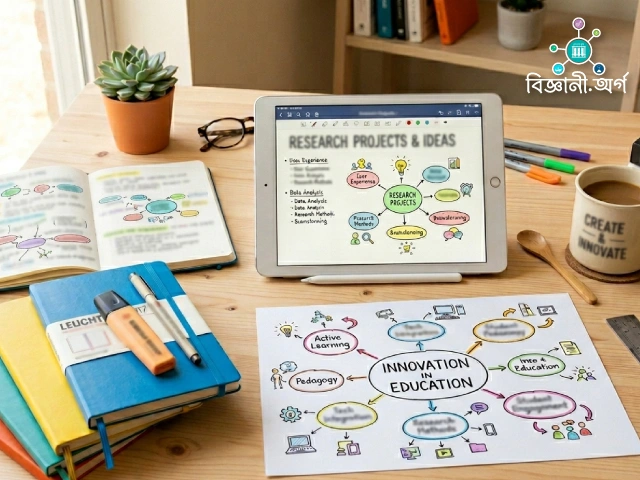
Another powerful way to organize ideas is by creating mind maps. Placing the research question at the center, you can arrange arguments, evidence, and sub-questions visually around it. This kind of visualization makes it easier to grasp the structure of a research project. Often, you can break large concepts into smaller parts, which becomes extremely helpful later when writing a thesis or paper.
Certain techniques are very effective for research note-taking. For example, the Cornell Method divides a page into three sections—main points, keywords, and summary. The “Summary Notes” approach entails writing a one-paragraph summary in your own words at the end of each article. These habits later become invaluable when writing research papers.
Young researchers should find a note-taking style that suits them. Some may feel comfortable writing by hand, while others prefer digital tools. What matters most is integrating information with your own thinking. Every note taken for research is actually a seed for future papers or theses.
In conclusion, note-taking and organizing ideas aren’t extra tasks—they’re at the heart of research. The better a researcher keeps track of their notes, the smoother their research journey will be. For young researchers, this isn’t just a way to save time, but a key to making their research deeper and more meaningful.