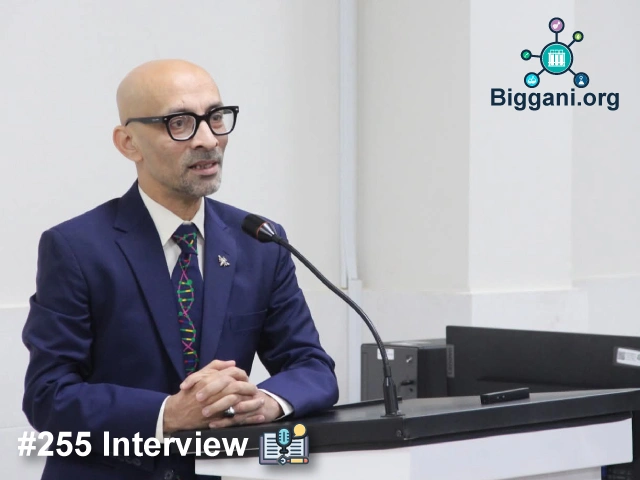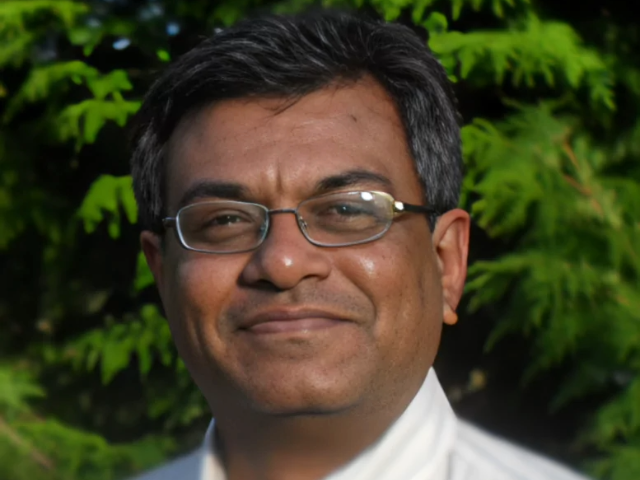
For a researcher, curiosity serves as the compass, and resilience is the fuel that propels one along the path of discovery. In the field of signal and image processing, visionary scientist Professor Farook Sattar is a living example of these qualities. His journey from Dhaka to Sweden and then to Canada is an extraordinary story, reflecting boundless passion, multifaceted inquiry, and international recognition.
From Humble Beginnings to Academic Heights
Professor Sattar began his academic journey in Bangladesh, where he earned his BEng and MEng degrees in Electrical and Electronic Engineering from the Bangladesh University of Engineering and Technology (BUET). But he didn’t stop there. Driven by an insatiable desire to learn and innovate, he went on to Lund University in Sweden, where he delved deeply into signal and image processing.
His time at Lund was a turning point in his life. It wasn’t just about academic rigor, but certain special traditions also had a profound impact on him. He says, “When I started my PhD at Lund University, I learned about a special tradition: on the day of your defense, the university raises the national flag of the candidate’s country. It may seem like a small gesture, but for me, seeing the Bangladeshi flag flying on campus was a huge inspiration. It reminded me of my roots and responsibilities and strengthened my resolve.”
After achieving his PhD and Technical Licentiate degrees, Professor Sattar ventured into new territories—both geographically and academically. He joined the School of Electrical and Electronic Engineering at Nanyang Technological University (NTU) in Singapore as a faculty member. He later moved to Canada, conducting research and teaching at several prestigious institutions, including the University of Victoria (UVic), where he is currently based.
Modern Renaissance Researcher:
Professor Farook Sattar is the embodiment of a modern Renaissance researcher, bringing together different disciplines to solve problems across multiple fields. His expertise encompasses signal and image processing, pattern recognition, machine learning, deep learning, and artificial intelligence. But it’s not just the breadth of his knowledge—his unique ability to apply these technologies for the benefit of humanity and nature sets him apart.
In Life and Healthcare,
Professor Sattar is a pioneer in developing advanced and affordable diagnostic tools. His research is focused mainly on creating improved methods for diagnosing respiratory and cardiovascular diseases. His innovative research is committed to making advanced diagnostic facilities accessible to the world’s resource-constrained populations. By reducing costs and increasing accuracy, his innovations have the potential to save countless lives and revolutionize healthcare.
In Environmental Conservation and Sustainability,
His research on marine ecosystems has opened new horizons. He has worked on identifying marine animals—such as endangered whales, sound-producing fish, and other marine species—through the analysis of underwater acoustic signals using passive acoustic monitoring. This research not only contributes to environmental preservation but also plays a vital role in monitoring marine biodiversity and assessing ecosystem health.
In the Automotive Sector,
Professor Sattar has developed robust approaches for intelligent transportation systems (ITS). The outcomes of his research include vehicle localization systems, driver drowsiness detection tools, and audio-based surveillance systems for advanced traffic control. These technologies help to make roads safer, reduce accidents, and enhance the effectiveness of urban transportation.
In Digital Security,
He has taken pioneering steps to address the complex challenges of the modern age. Professor Sattar has developed advanced blind digital image watermarking techniques to mitigate deepfake technology, ensuring content authenticity and preventing disinformation.
Professor Sattar’s research is a brilliant example of the transformative power of interdisciplinary science. His work in solving real-world problems—such as in healthcare, environmental preservation, transportation, and security—is not just rooted in scientific understanding, but brings long-lasting, meaningful benefits to society.
Lessons Learned in a Life of Research
From his long career in research, Professor Farook Sattar has distilled invaluable pearls of wisdom. His journey, full of patience, perseverance, and endless curiosity, is a perpetual source of inspiration for new scientists. He shares, “In science, we often hear—‘Think before you act.’ I want to add, ‘Think with curiosity.’ Curiosity is a spark that unveils new perspectives, fuels innovation, and turns challenges into opportunities for discovery.”
Professor Sattar emphasizes the importance of balancing theoretical and applied research. In his view, theoretical research lays the foundations of knowledge, while applied research transforms this knowledge into real-world solutions. For him, this balance is not just a method, but a mindset that drives his success.
On the importance of patience and perseverance in research, he says: “Research is a journey, not a sprint. It’s important to remain patient and committed when solving complex problems.” He recalls his PhD advisor’s words: “‘Things Take Time’ (TTT)—this mantra has always helped me stay attentive and dedicated.”
Professor Sattar finds the true beauty of research in the process of discovery itself. “Research is not just about solving problems; it’s about loving the process. Every question, every experiment, and every insight adds to the thrill of discovery.”
Inspiration for the Next Generation
Professor Sattar’s advice for young scientists in Bangladesh is both practical and ambitious. He emphasizes not only hard work but also intelligent strategies and a global outlook.
He says, “Along with hard work, it’s also important to work smart. Avoid repeating mistakes, learn from failures, and improve your methods.”
He encourages young researchers to embrace multifaceted research challenges that expand knowledge and foster innovation. He says, “Science today is not limited to a single discipline. Interdisciplinary collaboration allows you to see problems from multiple perspectives.”
Regarding the importance of connectivity with the global community in research and submitting high-quality publications, he says, “Expanding your global network opens doors to new ideas and opportunities.”
Professor Sattar shares the joy of working with real data and creating practical solutions. “A love for hands-on research and a focus on realistic solutions keep research relevant and effective.”
Most importantly, he urges young scientists to nurture their curiosity and love for discovery. His message:
“Let curiosity be your compass, and perseverance your guide. The future of science is in your hands. The journey is as meaningful as the destination.”
A Visionary Leader in Science
As a researcher, teacher, and mentor, Professor Farook Sattar has left an indelible mark in many fields through his work. His research continues to inspire young scientists, and his life story is a living testament to the transformative power of curiosity and perseverance.
From raising the Bangladeshi flag at Lund University to confronting global challenges through pioneering research, Professor Farook Sattar is a beacon of inspiration for young scientists worldwide.
Connect with Professor Farook Sattar:
- Email: [email protected]
- Research Profile: ResearchGate
- LinkedIn: LinkedIn Profile
- Website: ORCID