✍️ News Desk, Biggani.org
📧 [email protected]
In the twenty-first century, we live in an information-dependent world. Artificial intelligence (AI), cloud computing, and the tide of digital technologies are powering our daily lives through countless servers and data centers. But keeping these data centers running requires massive amounts of electricity and water—most of which is spent solely on cooling systems.
Traditionally, data centers are built in dry areas where low humidity reduces the risk of equipment damage. However, China is completely upending this convention and forging a new path. They are now moving towards establishing data centers in the world’s wettest places—under the sea.
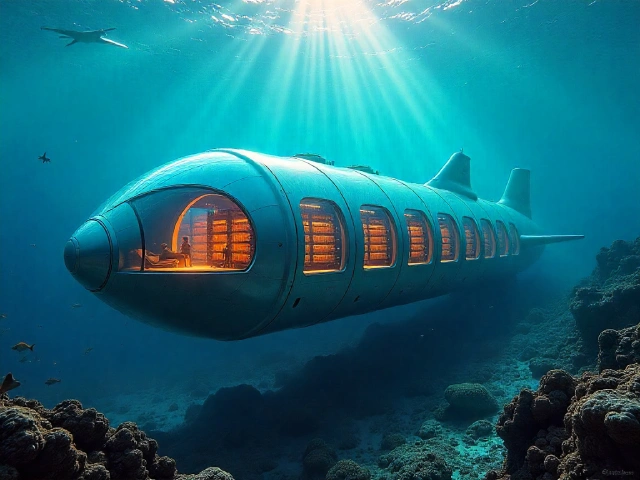
In June 2025, the construction of an innovative data center began six miles off the coast of Shanghai. This will be a wind-powered submarine data center, to be installed deep beneath the sea.
🔧 How Will This Underwater Data Center Work?
In a conventional data center, hundreds of servers work together. The heat generated from these servers must be removed; otherwise, the equipment can be damaged and data lost. To keep servers cool, cold water is used, sourced from underground, rivers, canals, or even treated wastewater.
About 50 percent of a typical data center’s electricity consumption goes just into cooling.
China’s new underwater data center will feature specialized pipelines and radiator systems that draw cold seawater directly to absorb the heat from servers. The seawater will flow through pipes into radiators behind the server racks, absorbing and carrying away the heat.
This system eliminates the need to spray or discharge excess water, thereby preventing water wastage. Furthermore, using the naturally cold seawater means electricity consumption will also decrease.
🌍 A Step Toward an Eco-Friendly Future
Globally, the data center sector has become a major source of carbon emissions. It is estimated that about 1–3 percent of the world’s total electricity consumption is spent on data centers. This demand continues to rise each day as our dependence on online services grows.
Against this backdrop, experts view China’s initiative with special importance.
Sabrina Nadila, an analyst at the energy research organization Ember, says:
“China’s bold move is a major leap toward sustainable digital infrastructure, which could set new standards globally.”
In other words, this innovation could serve as an example not only for China, but for other countries as well.
🧠 Why Is Such Innovation Needed?
Recent studies on data centers indicate:
- A large data center uses hundreds of thousands of gallons of water every day just for cooling.
- Most data centers are built in deserts or dry regions (such as Arizona, Qatar, Saudi Arabia).
- But in these areas, water sources are limited, putting pressure on the environment.
As an alternative to these issues, the submarine data center is a groundbreaking concept. The naturally cold seawater is abundant and constantly flowing, making it ideal for continuous heat dissipation.
⚙️ Technological Aspects
Several advanced technologies are being used in this Chinese data center project:
- Wind-powered generators: Floating turbines above the sea will supply the electricity needs of the data center.
- Remote monitoring system: Sensors and cloud connectivity will provide continuous oversight of the servers placed underwater.
- Modular design: Additional data units can be easily added in the future.
Additionally, the technology has built-in safeguards against natural disasters such as earthquakes, tsunamis, or severe storms.
🌐 Future Plans & Global Competition
Microsoft has also shown interest. As early as 2015, they developed an experimental submarine data center called Project Natick off the coast of Scotland. There, 864 servers operated under the sea successfully for two years.
The Chinese project is on a much larger scale than that experiment. It is expected to become the world’s largest submarine data center.
This initiative will help meet the demands of artificial intelligence, 5G, and Industry 4.0-based technologies in China. Moreover, it will serve as a symbol of the country’s technological strength.
💡 Message for Bangladesh
The demand for data centers in Bangladesh is growing daily, especially due to digital transformation in banking, healthcare, and education sectors.
While some large data centers have been established in Bangladesh (such as tier-4 data centers), major challenges remain:
- Electricity consumption
- Limitations in cooling technology
- Environmental impact
This new submarine model from China could inspire fresh thinking for us. Such projects might be implemented along the Bay of Bengal’s coastal areas in the future, especially if we can harness renewable energy as well.
📌 Conclusion
Data centers are no longer just a matter of technology; they are now an integrated part of environment, energy, and sustainable development.
It is hoped that China’s bold step will add a new dimension to the history of technology. By building data centers under the sea, they are showing how environmental protection and technological advancement can progress together.
Countries like Bangladesh should closely observe such innovative initiatives and develop models that suit their own contexts.
The future of data centers may be floating in water—but on the horizon of technology, it’s a bright new beginning.
📢 What do you think about this technology? Share your opinions on our Facebook page or write to [email protected].
Biggani.org – Know Science, Think Science.