


While starting this article, I kept thinking about Aristotle’s ideas on life, so I couldn’t help but mention them. The concept of spontaneous or self-originating life is actually ancient. Evidence of this can be found even in Aristotle’s writings. Although he knew that life comes from life, Aristotle nonetheless believed that some small creatures arise spontaneously. In his famous book *Historia Animalium* (History of Animals), he provides a description like this:
“Most fish are born from eggs. However, there are some fish that are born from mud and sand. Once, a pond near Nidos dried up, and its mud too became dry. After a few days, rain filled up the pond again. It was then that many types of small mullet-like fish appeared. Thus, it is clear that some fish arise spontaneously. They do not require eggs or sexual reproduction.”
From today’s perspective, Aristotle’s description may seem laughable.
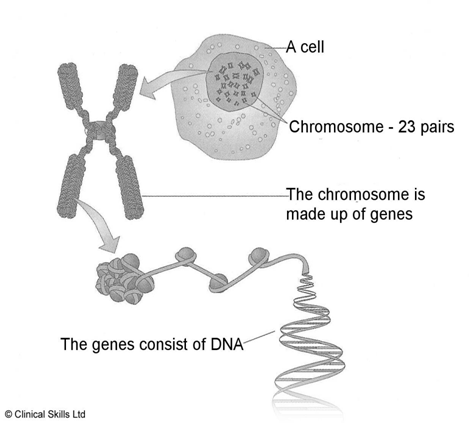
We have so many thoughts about life. For example, we often hear comments like “The boy is just like his father,” or “The girl’s intelligence is just like her mother’s,” and we even see this in reality. But how are parental traits transmitted to a child? The branch of science that deals with this question is called genetics. From generation to generation, these characteristics are transferred through certain materials known as hereditary substances. The main component of hereditary material is the chromosome. Let us discuss chromosomes for a bit. The human body is made up of countless cells. Each cell has a nucleus. Inside the nucleus are chromosomes, arranged in pairs. Chromosomes are threadlike, pigment-bearing, nucleoprotein bodies inside the cell nucleus capable of replication, and they play a crucial role in heredity. Chromosomes can also be found outside the nucleus in the cytoplasm. Each nucleus contains a fixed number of chromosomes according to the species. Primitive cells with no well-defined nucleus do not have well-formed chromosomes either. Chromosomes are visible only during the metaphase stage of cell division under a microscope. The structure of a well-formed chromosome can be divided into the following parts:
I. Pellicle
II. Matrix
III. Chromatid
IV. Chromonemata
V. Centromere
VI. Secondary constriction
VII. Satellite and
VIII. Telomere
Among these physical structures, telomeres are currently under deep research. Scientists believe that by controlling telomeres, it may be possible to fix the lifespan of an organism at a certain limit. Telomeres are the unique regions located at both ends of a chromosome where the DNA is single-stranded. In normal cells, telomeres shorten with each cell division, and when the telomere’s length becomes critically short, the cell dies. Telomeres are regulated by the enzyme telomerase, and for this reason, scientists are quite optimistic—through this, perhaps we will be able to set our biological clock within a certain period in the near future. Now, let’s briefly mention the chemical structure of chromosomes: their chemical components include DNA, RNA, non-histone proteins, other complex proteins, lipids, enzymes, and various ions. Until now, we discussed only the structure of chromosomes, but not their function. Chromosomes are called the bearers and carriers of heredity because they determine the traits of living beings, assist in cell division, and house genes. For these reasons, chromosomes are considered the foundation of life.
I. Adenine (A)
II. Guanine (G)
III. Cytosine (C)
IV. Thymine (T)
Similarly, each RNA molecule has four types of bases, but instead of Thymine, there is Uracil (U). Although Thymine and Uracil are similar, they have significant differences. In the chemistry of life, even a small difference can have vast implications—so that’s why they are distinct from each other. There are two more components in the structure of the DNA molecule: phosphoric acid and deoxyribose sugar. These two form the backbone of the DNA molecule, because they create the double helix, while the nitrogenous bases are connected within this twisted helix by hydrogen bonds.








This comment has been sanitized for the English site.
This comment has been sanitized for the English site.
This comment has been sanitized for the English site.