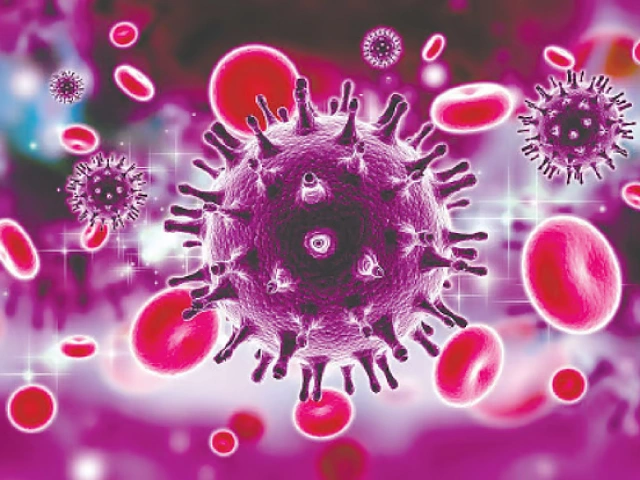
If you read in your school textbooks that a virus is neither a plant nor an animal, you learned correctly. Viruses are so tiny and structurally so simple (compared to other living things) that many scientists do not classify them as animals or plants. Viruses are even smaller than bacteria. Therefore, some people don’t even want to consider viruses as microbes. Regardless of their size or structure, people around the world wonder, how can such a tiny virus bring us to our knees?
In pictures of viruses, we see several spikes. These are made of protein. The spikes work a bit like keys. A virus cannot enter all our cells at will.
A virus doesn’t only attack humans; it can attack any living organism. When a virus attacks another animal, humans can also get infected by those animals. The biological composition and structure of viruses are not as complex or multifunctional as human cells. Our cells divide to create new cells. A virus cannot carry out cell division on its own. To create one virus from another, it needs a host cell. When a virus enters a body cell, it uses the mechanisms inside our cells. Imagine someone visiting your house, becoming a resident, and then causing you harm—the process is somewhat like that.
To understand how viruses overpower humans, it helps to have a basic understanding of human cells and know the names of their different parts. Our bodies are made up of countless cells. These tiny cells are the smallest units of the human body. You could compare body cells to the bricks of a multi-story building. Entire volumes could be written just on living cells. Anyway, inside each cell is a part called the nucleus. Inside the nucleus of a human cell are 23 pairs of chromosomes. To simplify: these chromosomes are actually coiled forms of a substance called DNA. The familiar term “gene” refers to a specific part of the DNA. Before a cell divides to create a new cell, a replica of the DNA is made from the existing set. This process is called replication in science. From DNA, RNA is created via a process called transcription. There are both similarities and differences in the structures of DNA and RNA. Their functions are different too.
RNA performs a very important job: it carries instructions for protein synthesis. Each RNA molecule carries the code for making a different kind of protein or polypeptide. RNA does this with the help of the ribosome. That’s why ribosomes are often called the protein-making machines. This ribosome is found outside the nucleus within the cell. So, although RNA is produced inside the nucleus, it exits and interacts with ribosomes. But DNA never leaves the nucleus. In short: DNA stays in the nucleus, RNA is made from DNA via transcription, and then outside the nucleus, many types of proteins are made from RNA through translation with the help of ribosomes. These proteins play vital roles in the body’s numerous essential functions.
The fact that every cell in the human body has a nucleus, DNA-RNA or ribosomes, and synthesizes proteins, shows just how many actions are taking place inside each cell, and how complex yet well-organized and structured they are. On the other hand, viruses contain only DNA or RNA. These cannot replicate themselves. Viruses lack ribosomes, so they also cannot make proteins. For one virus to produce another, it must utilize the mechanisms of its host cell.
In images of viruses, we see several spikes. These are made of protein. These spikes function much like keys; a virus cannot simply enter all our cells. This is because there are match/mismatch factors at the cellular surface. On the outer layer of our cells are receptors, and their structure differs depending on cell type. If the spikes (capsid) of a virus match the receptors of the cell, entry becomes easier. Once inside, the virus’s DNA or RNA is replicated over and over. This is because the replication mechanism of our cells gets involved with the viral DNA or RNA. Additionally, the viral RNA combines with our cell’s ribosomes to produce the proteins needed by the virus. That’s how it starts. From one virus comes a hundred, a thousand, a million, or even hundreds of millions, which gradually enter countless cells and disrupt the cell’s normal functions. We then fall ill.
Just because you feel healthy doesn’t mean your body isn’t being invaded by viruses. Numerous viruses enter your body every day. Thanks to the immune system, we don’t notice this. Only when the immune system is weakened do we get sick. Substances known as antibodies act as a defense force. Whenever an unfamiliar microbe enters the body, the antibodies get busy destroying it. Unfortunately, those with weak immune systems—like children, the elderly, the sick, or pregnant women—are easy targets for viral infections. Antibiotics don’t work against viral diseases, as they are remedies for bacterial diseases. For viral diseases, antiviral drugs or vaccines are used.
Recently, with the spread of coronavirus in China and other countries, there has been much worldwide concern. But such viral pandemics are not new. Remember AIDS? In the 1990s, awareness posters about AIDS even reached remote villages in Bangladesh. BTV gathered all the country’s popular artists to create AIDS awareness songs. Internet access wasn’t widespread in the 90s, yet there was global commotion. With caution, awareness, and the efforts of scientists, HIV is now under control. Now, World AIDS Day is hardly remembered. In fact, chickenpox, caused by the much deadlier VZV virus, claimed many more lives than the AIDS virus. More people have died worldwide from chickenpox than in the First and Second World Wars combined. Yet, do you know which disease has been eradicated from the earth?—Chickenpox! The WHO, with its 10-year ‘Target Zero’ project, eradicated chickenpox globally. Now, no one dies from chickenpox anywhere in the world! The bright side is that human intelligence and effort have helped overcome one disease after another. It is not an exaggeration to say that coronavirus will also be eliminated soon.
Awareness and Prevention
Different viruses attack different parts of the body. For example, the recent coronavirus attacks the human respiratory system. The hepatitis B virus attacks the liver and gradually destroys its function. Some viral diseases are highly contagious and spread easily through contact. In such cases, besides vaccines or antiviral drugs, personal awareness plays a key role in preventing the spread of viruses. For example, hepatitis B is not highly contagious, but flu, coronavirus, norovirus, etc., are very contagious. If you catch the flu virus and sneeze, countless viruses spread around you. When others breathe in, these viruses enter their bodies. That’s why you should cover your mouth with your hand or a handkerchief when sneezing. If you are sick with a contagious virus, stay home to reduce the risk of spreading it to others. Everyone infected with a virus should avoid urinating or defecating in public places. In case of viral infection, one should wash hands frequently and it is also advised to drink plenty of water.
For viruses that have vaccines, you should get vaccinated on time. This reduces the risk of being attacked by those viruses. For example, hepatitis B is a viral disease for which a vaccine exists. So, if you are vaccinated, your chance of getting the disease is very low.
References:
This article is adapted from an essay published in the January 2018 issue of Biggan Chinta magazine. Author: Dr. Rauful Alam, Researcher, University of Pennsylvania, USA.