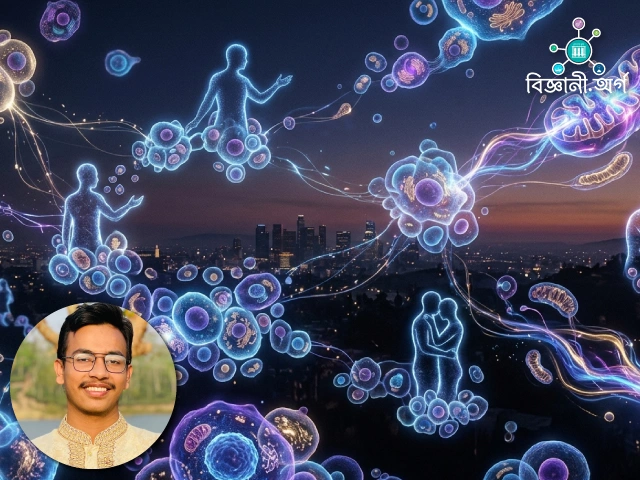
That afternoon, I was sitting in a quiet corner of the city, the steam from my cup of tea slowly fading into the sky. A few familiar faces around, the conversations were quite ordinary. Just then, someone tossed a rather unusual question—a question that, beneath its layer of curiosity, hides one of science’s deepest mysteries.
He said, humans can assemble atoms and molecules to create various substances. So, if we could combine many living cells, wouldn’t it be possible to form a complete body? And if both sperm and eggs are produced in the human body, then isn’t humanity itself initiating the “beginning of life”? If mitochondria inside cells are the source of energy, doesn’t that mean humans are, in some sense, creating “life”?
The first feeling that arose on hearing the question was that this is not just a biological question; rather, it is a profound inquiry into the fundamental structure of existence, the boundary between life and non-life, and the limits of human capability.
Humanity learned to manipulate atoms and molecules long ago. We know how to mix specific elements in certain ratios to create new substances. A table, a pill, or a complex machine—all are ultimately the result of arranging matter. At this stage, humans work within the understanding of nature’s rules. But when we try to apply this mastery to life itself, the matter becomes complex.
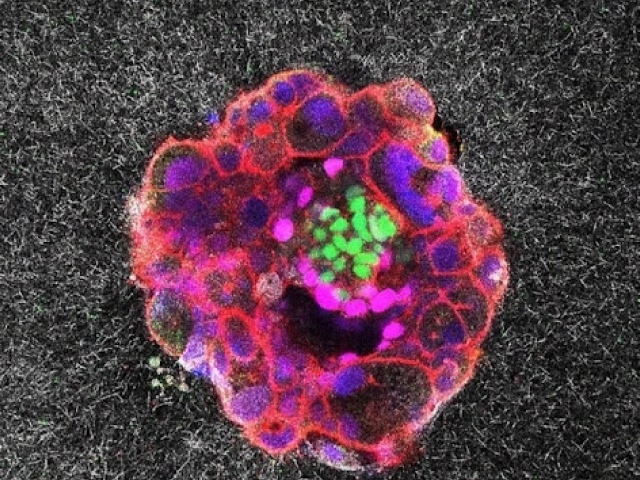
Life is not just a sum of its components; it is a specific arrangement, a continuously changing and self-regulating system. Inside a cell, thousands of chemical reactions occur simultaneously, each one intricately coordinated with the others. If this coordination is disrupted, the cell ceases to be “alive”, even though its components may still be present. Here we see that life doesn’t mean just “what is there,” but “how everything works together.”
So if we were to assemble many living cells, why doesn’t a complete body form?
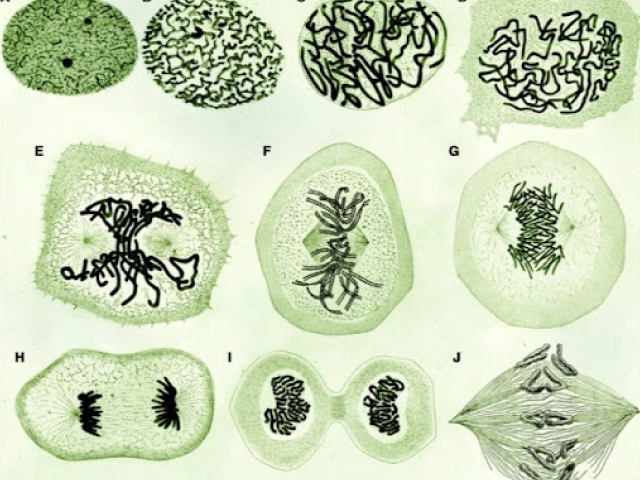
Because a body is not simply a collection of cells; it is an organized structure where each cell knows its position, role, and future. During embryonic development, cells don’t just divide—they gradually take on different identities: some become nerve cells, others muscle cells, others blood cells. This differentiation occurs through a complex coordination of genetic information, cellular signals, and environmental influences. While we have understood many parts of this process, humans are still unable to fully control it.
Modern science has made progress in cloning, stem cell research, and even in creating tissues or organs in the lab. But creating an entirely new human being artificially from start to finish remains beyond our reach. We know the components and some of the processes, but we have yet to fully grasp that overall “blueprint” and its dynamism.
The question becomes even more subtle when it comes to sperm and eggs. These two cells are not complete living beings on their own, but their union initiates a new life. At the moment of their fusion, a zygote is formed, which gradually becomes a complete organism. Here, humans take part in the process of reproduction, but exactly how the “beginning of life” happens is still not fully clear.
Many believe that since mitochondria inside cells produce energy, life must come from there. But energy and life are not the same thing. Mitochondria supply energy to the cell, but that energy is only meaningful when the cell functions as part of an orderly living system. Even in a dead cell, the energy-production processes can continue partially for a short time, but we don’t call that cell alive. Life is a state where energy, information, and organization combine to create a self-sustained, responsive, and developing system.
In this context, the expression “giving life” is scientifically metaphorical. Humans can create cells, edit genes, and even assist in the development of embryos, but creating a living being entirely from scratch, where no living system existed before, has not yet been possible. This is called abiogenesis, and it remains a major unsolved field of research.
Yet the question doesn’t end here. Will humans be able to cross this boundary in the future?
Science continues to advance—synthetic biology, artificial cells, lab-grown embryos—all indicate that we are becoming more adept at mimicking the structure of life. But imitation and creation are not the same. There is a subtle but profound difference between reconstructing a system and “starting it up” entirely anew.
As dusk slowly faded, that person said nothing more. There was curiosity in his eyes, but it was mixed with a kind of silent realization. Perhaps he understood that while humans have discovered many of nature’s rules and learned to control much, the deepest mysteries of life still remain beyond our complete grasp.
Perhaps this realization is the most important—
The life we touch every day is not just a result of chemical reactions; it is something complex, finely tuned, and still, in many ways, an unknown wonder.
Md. Iftakhar Hossain
MBBS 2nd Year, Cox’s Bazar Medical College, Bangladesh
Main fields of interest: behavioral science,
neuroscience, and habit science.