


{mosimage}
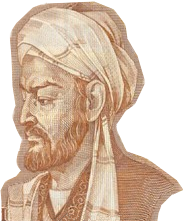
One of the important branches of science is medical science. And within this field, there was a scientist who gained worldwide fame. His written medical treatise, “Al Qanun fil-Tibb,” was considered for a long time in Europe as an unrivaled and reliable reference in the practice of medicine. The information he provided about human anatomy and physiology was followed by physicians across the world until the end of the seventeenth century. It can be said that his timeless contribution to surgery remains highly significant. This renowned scientist is Abul Ali Ibn Sina. He is better known as Ibn Sina.
Unforgettable Events in the Scientist’s Life
A remarkable fact is that Ibn Sina memorized the Holy Quran by the age of just ten. He gained access to the library and began studying in earnest, eventually memorizing all the books in the library. By the age of nineteen, he had acquired exceptional mastery in science, philosophy, history, economics, politics, mathematics, geometry, logic, theology, medical science, poetry, and literature. At the age of twenty-one, he composed an encyclopedia named “Al Mujmu’a,” in which he recorded all subjects except mathematics.
Brief Profile of the Scientist
Let’s now get to know a brief profile of this scientist:
Name – Abul Ali Ibn Sina.
Born – Approximately September 980 AD; Died – 10 December 1037.
Residence – The village of Afshana, near the renowned city of Bukhara in Uzbekistan.
Education – In childhood, Ibn Sina was extremely talented and had a remarkable memory. By the age of just ten, he had memorized all 30 sections (paras) of the Holy Quran. He also began studying theology, law (fiqh), Quranic commentary (tafsir), mathematics, philosophy, logic, and even geometry under three private tutors. In this way, by the age of seventeen, he had acquired all the knowledge available at the time. It is said that Ibn Sina became proficient in literature, theology, Euclidean geometry, Aristotelian philosophy, astronomy, and algebra. At his father’s wish, after studying law, he took up studies in mathematics and medical science at the age of eighteen, in which he achieved great distinction. He also studied philosophy. At that time, he was honored with the title ‘Hakim,’ meaning sage or wise man.
One of the notable events in Ibn Sina’s life: Sultan Mahmud of Bukhara once contracted a serious illness, and many renowned physicians came to treat him. Yet, none could diagnose his disease. At this critical moment, the young Ibn Sina volunteered to go to the royal court and requested permission to treat the king. He soon received permission. Thanks to Ibn Sina’s medical skills, Sultan Mahmud recovered in a short time. The sultan was pleased with Ibn Sina and wished to reward him. At this, Ibn Sina expressed his desire to study in the sultan’s favorite grand library. Instead, the sultan entrusted him with responsibility over the entire library.
One day, a sudden fire broke out in the library, destroying all the books. Opponents went to the sultan and claimed that Ibn Sina was responsible, saying that he had memorized all the books and then deliberately set the fire. The gullible sultan believed them, and Ibn Sina was exiled. At that time, the Middle Eastern countries were divided into many small kingdoms. The rulers of these small states were becoming increasingly interested in the pursuit of knowledge and science, and they aspired to have eminent scholars in their courts. Thus, Ibn Sina did not face much difficulty; he left Bukhara and went to Khwarazm, where the sultan there appointed him as a royal physician.
In the royal court of Khwarazm, there were many distinguished individuals. The famous historian, scientist, and philosopher Al-Biruni, who had traveled to India with Sultan Mahmud and documented the history of contemporary India, was among them. One day, news of the renown of scholars like Ibn Sina and Al-Biruni reached Sultan Mahmud. He demanded that Khwarazm’s sultan send these scholars to his own court. Unable to ignore Mahmud’s demand, the ruler of Khwarazm agreed and sent the scholars. However, Ibn Sina felt a sense of disdain and cleverly escaped from there.
After remaining out of sight for some time, Ibn Sina eventually appeared at the royal court of Iran. The sultan there was delighted upon learning of his identity and appointed him chief scholar of the court. Meanwhile, Sultan Mahmud was not one to give up easily. Having received word from his spies, he ordered Ibn Sina to be captured and brought to him.
– Saad Abdul Wali, adapted from the forthcoming “Young Minds in Science”








Excellent Endeavor. Many thanks Saad!
This comment has been sanitized for the English site.
Thanks, no comment.