


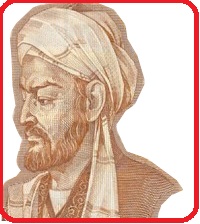
Medical Scientist Ibn Sina
[980–1037]
Medicine is one of the most prominent branches of science. In this field, there was one scientist who earned worldwide renown. His book on medicine, ‘Al-Qanun fi’l-Tibb’, was considered an unrivaled and reliable text in Europe for a long period. The information he provided about human anatomy and physiology was followed by doctors in every country until the late 17th century. It can be said that his timeless contributions in the field of surgery are remarkable. This illustrious scientist is Abul Ali Ibn Sina, commonly known as Ibn Sina. He is also regarded as the father of modern medical science in the world.
Unforgettable Events in the Scientist’s Life
A remarkable fact is that Ibn Sina was able to memorize the entire Holy Quran by the age of just ten. Gaining access to the library, he began dedicated study and eventually memorized all the books there. By the age of 19, he had achieved extraordinary mastery in science, philosophy, history, economics, politics, mathematics, geometry, logic, theology, medicine, poetry, and literature. At 21, he compiled an encyclopedia titled ‘Al-Majmu’a’ where he diligently recorded all subjects except mathematics.
Scientist’s Brief Profile
Now let’s get to know the brief profile of this scientist:
Name: Abul Ali Ibn Sina.
Born: Estimated September 980 CE, Died: December 10, 1037.
Place of Residence: Afsana village near the famous city of Bukhara in Uzbekistan.
Nationality: Persian.
Education: In his childhood, Ibn Sina was extremely talented and possessed a sharp memory. By the age of ten, he had memorized all 30 parts of the Holy Quran. Additionally, he began studying theology, Fiqh, Tafsir, mathematics, philosophy, logic, and even geometry under three private tutors. In this way, he acquired all the traditional knowledge available by the age of 17.
At just 17 years old, Ibn Sina began his career as a physician. During this period, he served as the personal physician to the Samanid Sultan Nuh ibn Mansur (976–997) of Bukhara.
He was deeply devoted to the pursuit of knowledge. He also studied the works of scientists such as Euclid and Ptolemy. Later, he studied Aristotle’s ‘Metaphysics’. In fact, the philosophy of Aristotle was a central point of his interest.
It is said that Ibn Sina achieved proficiency in literature, theology, Euclidean geometry, Aristotelian philosophy, astronomy, and algebra. Essentially, at his father’s request, he completed his studies in law and then, at the age of eighteen, began to study mathematics and medicine. His accomplishments in these fields were noteworthy. Besides, he also studied philosophy. In those days, he was honored with the title ‘Hakim’, meaning sage or wise man.
A significant event in Ibn Sina’s life: When Sultan Mahmud of Bukhara fell seriously ill, many renowned doctors tried unsuccessfully to diagnose his disease. At that moment, the young Ibn Sina volunteered to go to the royal court to seek permission to treat the king. He received approval immediately. Thanks to Ibn Sina’s medical skill, the Sultan soon recovered. The Sultan was pleased and wanted to reward him. In response, Ibn Sina expressed his desire to study at the Sultan’s vast library. The Sultan instead entrusted him with the responsibility of the entire library.
Suddenly, one day, a fire broke out in the library and destroyed all the books. Opponents accused Ibn Sina before the Sultan, claiming that he had set the fire himself after memorizing the books. The Sultan, swayed by their words, believed them and exiled Ibn Sina. At that time, the countries of the Middle East were divided into many small states whose rulers were eager to promote the pursuit of knowledge and wanted to attract renowned scholars to their courts. Thus, Ibn Sina did not face much hardship—after leaving Bukhara for Khwarezm, he was appointed court physician by the Sultan there.
There were many distinguished individuals present at the Khwarezm court. Among them was the famous historian, scientist, and philosopher Al-Biruni, who had accompanied Sultan Mahmud to the Indian subcontinent and recorded the history of then India. One day, news of the scholarly reputation of Ibn Sina, Al-Biruni, and others reached Sultan Mahmud. He requested the Sultan of Khwarezm to send these learned men to his court. The ruler of Khwarezm could not disregard Mahmud’s demand, so he sent them to him. However, Ibn Sina, feeling somewhat indignified, managed to deftly escape.
After remaining incognito for some time, Ibn Sina one day appeared at the court of Iran. The Sultan, learning his true identity, was pleased and appointed him as chief scholar. However, Sultan Mahmud was not one to give up easily. Upon hearing from spies, he ordered Ibn Sina to be captured and brought to him.
Once again, Ibn Sina escaped, this time to Hamadan. There, he became the chief vizier, living in comfort and prosperity. But this happiness did not last long. Seeing a foreigner in such a position, the royal officials became jealous and plotted against him. Disheartened, Ibn Sina resigned as vizier and left for Isfahan.
By the age of 21, Ibn Sina started writing books on various significant topics. His renowned medical work, ‘Al-Qanun fi’l-Tibb’ (The Canon of Medicine), is divided into five volumes. In addition, he wrote 15 more books on this subject. Ibn Sina’s ‘Al-Qanun fi’l-Tibb’ is regarded as a highly influential work in both the East and West. From the 11th to 17th century, the Latin translation of this book was taught as a textbook in many European universities and medical institutes. Its contribution to Unani medicine is noteworthy. Ibn Sina was the pioneer of holistic medicine. He described the correct anatomy of the human eye and was the first to identify meningitis. Another of his famous works is ‘Kitab al-Shifa’ which spans 20 volumes. His masterpiece is ‘Kitab al-Isharat’.
About Ibn Sina’s ‘Al-Qanun fi’l-Tibb’, A.C. Crombie says: “It say many Latin editions, fifteen during the last thirty years of the fifteenth century and farther twenty during the sixteenth century. Several more were printed in seventeenth century.” The Canon is often called the Bible of Medicine. As has been noted, “Canon remained a Medical Bible for a longer period than any other work.”
In the second volume of this famous treatise, Ibn Sina collected and described 750 medicinal substances of plant, animal, and mineral origin by synthesizing the essence of Greek, Roman, Indian, and Chinese systems of medicine. Many of these medicines are still widely used today. The 800 sections of the fifth volume provide detailed information about each medicine, including identification, dosage, efficacy, diseases they are used for, alternative medicines, etc. Notably, the first volume discusses principles of physiology and hygiene. The third volume covers diseases of each organ, their symptoms, diagnosis, prognosis, etiology, and treatment. The fourth volume covers fevers, constipation, diarrhea, dietary disorders, anger, fear, pain, inflammation, putrefaction, body fluid imbalance, epidemics, smallpox, tuberculosis, boils, leprosy, wounds, fractures, ulcers, hair, nails, skin, etc. In short, all diseases are discussed in detail in this book.
Ibn Sina’s influence in medical science in Europe is exceptional. In the Encyclopedia Britannica, Thomas Clifford states that Ibn Sina’s ‘Canon’ surpassed the achievements of Hippocrates and Galen. For several centuries, this book played a key role in the medical science of Europe.
Some of His Notable Contributions:
1. His renowned medical book ‘Al-Qanun fi’l-Tibb’.
2. His timeless contributions in the field of surgery.
Ibn Sina spent the last days of his life in Isfahan. He wrote 450 research works on various subjects. Although he made fundamental contributions to many fields of science, his greatest reputation and renown spread through medicine. The Arabs regarded him as Al-Shaykh al-Ra’is, meaning the chief among scholars. During his lifetime, he was also recognized as the greatest philosopher and statesman of his time.
This article is excerpted from the author’s upcoming book ‘100 Greatest Scientists of the World’, Saad Abdul Wali, to be published at the upcoming Ekushey Book Fair.
Official page for the book: Link
References included in the book:
1. The Lives of the 100 Most Influential People, Original: Michael H. Hart, Memory Publications.
2. Contributions of Muslims to Science, Muhammad Nurul Amin
3. Wikipedia site – https://www.wikipedia.org/
4. Website on the lives and works of famous scientists – https://www.famousscientists.org/
5. A notable site with historical articles and videos – https://www.history.com/
6. Encyclopedia Britannica site – https://www.britannica.com/
7. Historical and celebrity profile-based site – https://www.biography.com
8. Online dictionary and encyclopedia site –
9. Best global education information portal –
10. Official website of the Nobel Committee – https://www.nobelprize.org/











Leave a comment