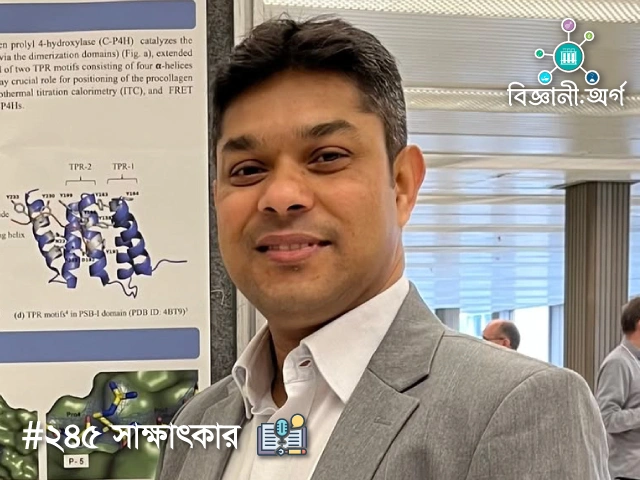
In this interview series with the new generation, we had a conversation with Pallab Bhattacharya. He is currently serving as a Senior Research Officer at Projonom Research Foundation, a private research organization in Bangladesh. Read his interview below:
First, we would like to know about you.
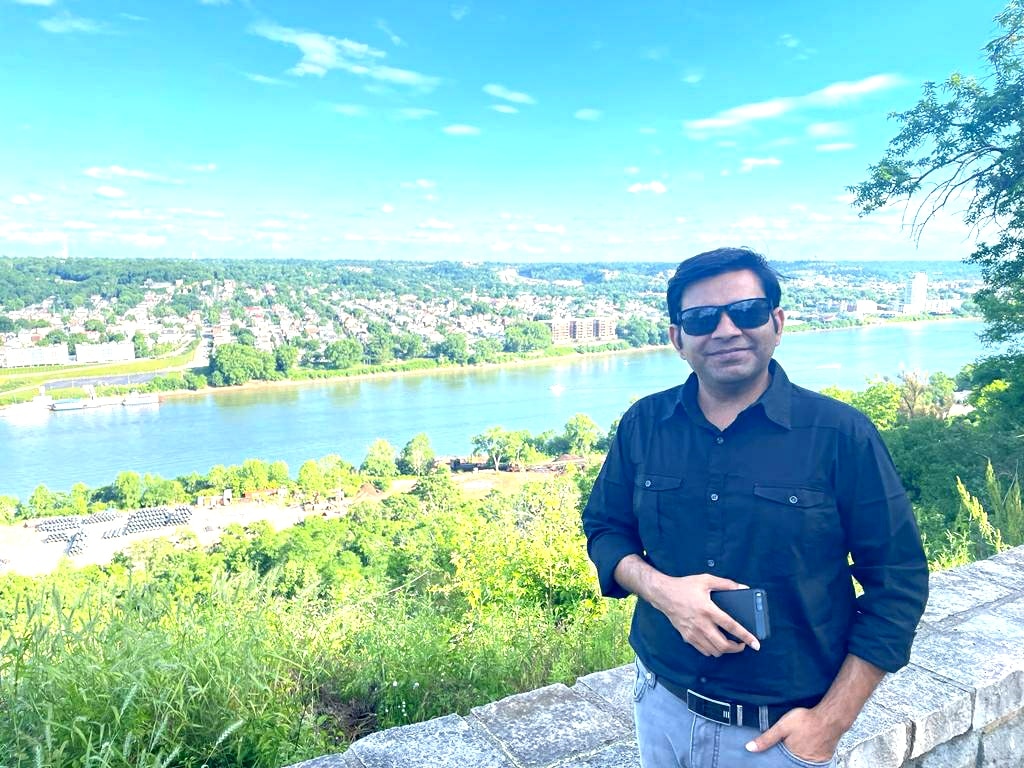
I am Pallab Bhattacharya, currently serving as a Senior Research Officer at Projonom Research Foundation, a private research institution in Bangladesh (run in partnership with Johns Hopkins University, USA).
From an early age, I aspired to be a good scientist and developed a deep interest in biology. In 2011, I enrolled at Sylhet Agricultural University (SAU) and completed my Bachelor’s degree in Agricultural Science in 2014. The ample opportunities, dedicated faculty, and comprehensive curriculum in various branches of biological sciences at SAU helped to strengthen my foundation in biology.
In 2017, I obtained my Master’s degree in Biotechnology from the Institute of Biotechnology and Genetic Engineering at Bangabandhu Sheikh Mujibur Rahman Agricultural University (BSMRAU). Later, as a GSCAAS scholar, I went to Beijing, China in 2018, and completed my PhD in 2021 at the Mycovirus Lab, Institute of Plant Protection, Chinese Academy of Agricultural Sciences (CAAS), Beijing.
What is the focus of your research?
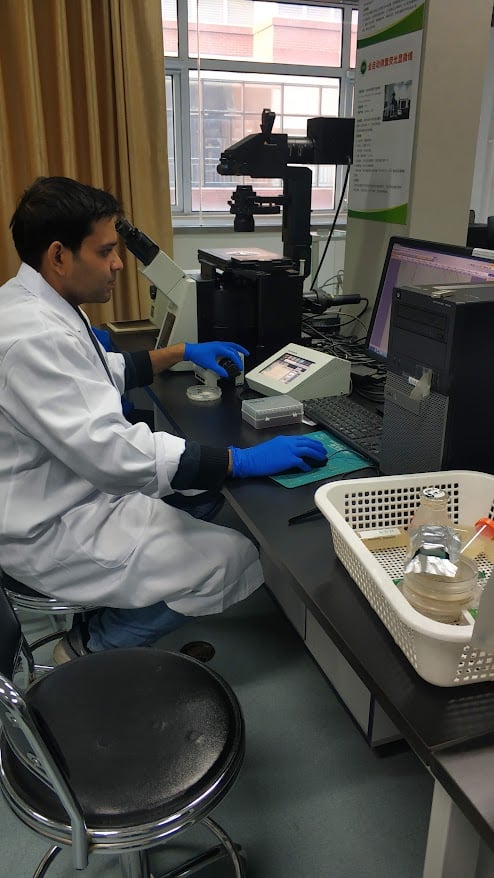
The field of my research can be described as somewhat multidisciplinary. During my Master’s at the Institute of Biotechnology and Genetic Engineering at Bangabandhu Sheikh Mujibur Rahman Agricultural University (BSMRAU), I worked on identifying and tracing the genetic origins of wheat blast (a disease caused by the fungus Magnaporthe oryzae) in Bangladesh. Our research team applied field pathogenomics and open data sharing approaches (www.wheatblast.net). Notably, such an open data sharing method was previously used only in the United States for tackling the Zika virus outbreak. Additionally, I have worked as a research assistant on several projects funded by the Ministry of Science and Technology of Bangladesh.
For my PhD research, under China’s National Key R&D Program, I worked as a research assistant on the project “Sequence Analysis of Mycoviruses Infecting Fusarium sibiricum Strain AH32.” My primary research focus was on biological control—using specific viruses to control Fusarium sibiricum, a pathogenic fungus responsible for Fusarium head blight in wheat. This is a fascinating area of research that is not widely known in Bangladesh. Among the conventional biological control methods for fungal diseases in plants is the use of beneficial bacteria (often known as probiotics). However, mycoviruses (viruses that infect fungi) can also play a significant role in combating fungal diseases. In my PhD, I discovered a novel RNA mycovirus (FsCV1) and a unique multi-component single-stranded DNA virus (FsGMTV1) from Fusarium sibiricum strain AH32. Significantly, my research was the first to report the outbreak of Fusarium head blight in wheat caused by Fusarium sibiricum, which was later published in the journal of the American Phytopathological Society.
Currently, as a Senior Research Officer at Projonom Research Foundation, I am working on two FDA-regulated clinical trials in collaboration with Moderna and GSK. Alongside, I am assisting in the management of the AMANHI Biobank, coordinated by the Bill & Melinda Gates Foundation and the World Health Organization. As part of this project, I work with a research team that utilizes multi-omics approaches for biomarker development and is researching the human gut microbiome using 16S metagenomics. To enhance my research skills, I received practical training in bioinformatics and genomic analysis from the Department of Human Genetics at Cincinnati Children’s Hospital Medical Center, Ohio, USA.
So far, I have made significant contributions to several research and review publications, which have received a notable number of citations (total citations nearing 700 according to Google Scholar). In addition, some of my research articles will soon be published.
How are your research activities benefiting or will benefit us?
My research can directly and indirectly benefit society in the fields of agriculture, healthcare, and biotechnology. Fungi are a large and diverse group of microorganisms involved in nearly two-thirds of all infectious plant diseases. Interestingly, almost all fungal species can be infected by viruses to varying degrees, which highlights the importance of studying the role of mycoviruses in controlling plant diseases.
The use of mycoviruses in plant disease management is an environmentally friendly alternative to chemical pesticides and can help achieve sustainable production in agriculture. As a result, crop yields may increase, costs for farmers could go down, and the harmful environmental effects are likely to decrease as well. My research on controlling diseases like wheat blast will help promote food security—crucially important for an agriculture-based country like Bangladesh.
Additionally, I am currently a member of a research team working on clinical trials, human gut microbiome studies, and biomarker development. These experiences have given me the opportunity to work with various research methodologies and approaches that will enrich my future work.
What qualities do you believe a scientist should possess?
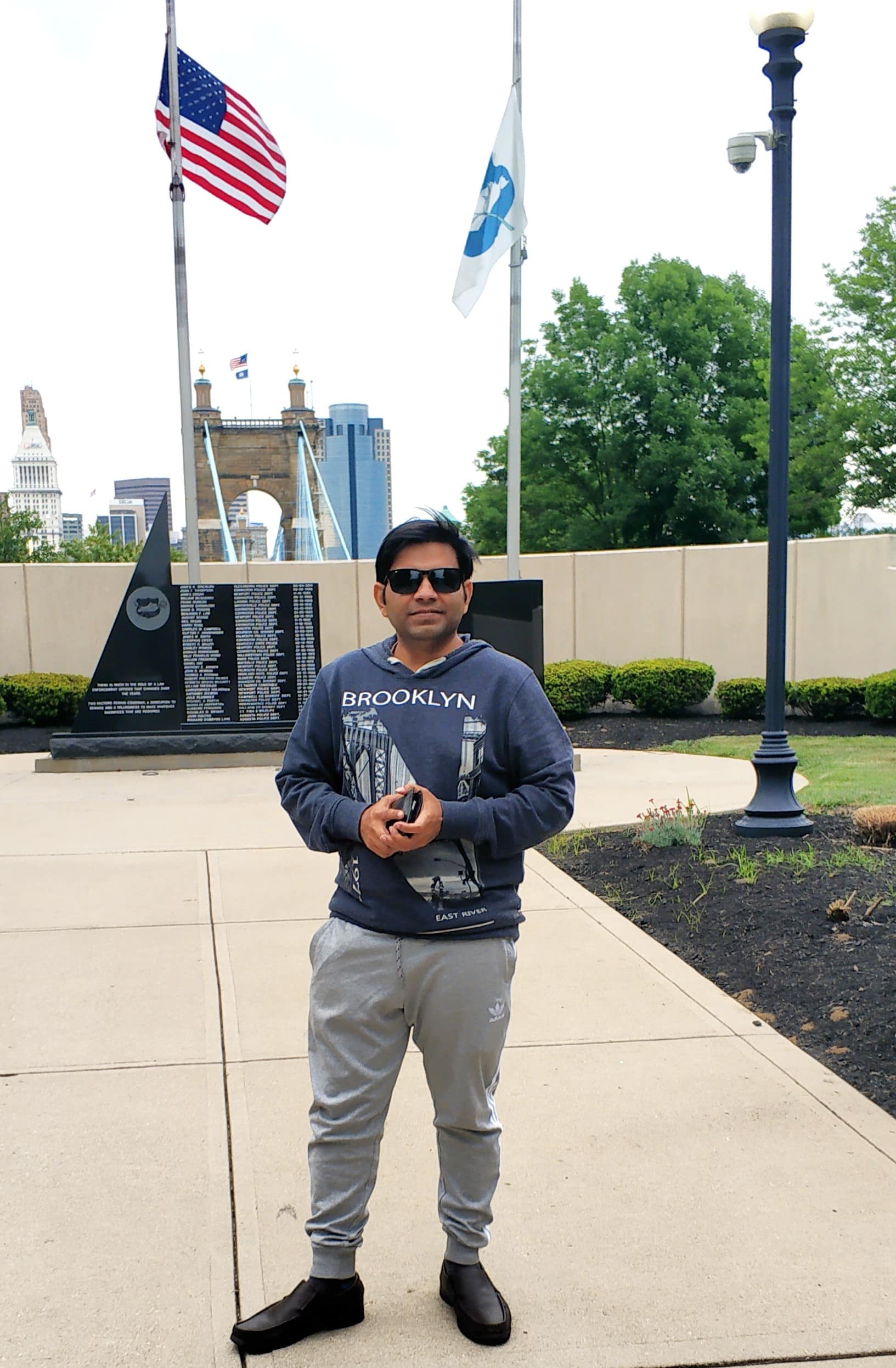
I believe there are certain essential qualities a scientist should have—qualities that not only help them succeed but also inspire them to advance science.
First, a curious mindset is extremely important. A scientist should always have the tendency to ask questions. Curiosity about why and how certain events occur in the world or in nature drives the pursuit of new knowledge.
Second, scientists must be objective and logical in their decisions and analyses. They should rigorously verify the accuracy of data and carefully examine all potential explanations. Maintaining impartiality before making any conclusion is vital to ensure the research process stays on track.
Third, research is a long-term process that requires immense patience and relentless perseverance. Even in the face of repeated failures, a scientist must continue trying without losing heart. The road to success is often paved with failures.
Also, commitment to honesty and ethics in research is essential. Maintaining accuracy at every step and ensuring the reliability of results are crucial.
Finally, science is often the result of teamwork. Therefore, the ability to collaborate with others and communicate one’s ideas clearly and effectively is extremely important. Scientists should possess communication and team-working skills, as solving major challenges usually requires collaborative efforts.
These qualities not only help a scientist achieve success in research but also enable them to play a vital role in the progress of science.
Would you like to share any special experiences from your research work?
I would like to share some notable early experiences from my research that have deeply influenced my life. On July 23, 2015, I joined Professor Dr. Islam’s renowned research group “Dream Team” at BSMRAU. After joining my Master’s research under Professor Islam’s supervision, I became involved in several pioneering projects, which marked the beginning of a rewarding journey in research.
On March 2, 2016, a significant moment arrived in my academic journey. Along with my friend Shahid Hossain, I visited Professor Islam’s office to discuss possible research topics. That morning, Professor Toffazzal Islam informed us that wheat fields in eight districts had been struck by an unknown disease. He said this type of disease had never been documented in Asia before and neither he nor his colleagues had any prior knowledge about it. Professor Islam stated, “This is a PLANT HEALTH EMERGENCY and a grave threat to national food security.”
Recognizing the urgency, Professor Toffazzal Islam gave us a research plan to identify the cause of the disease. He instructed us to collect samples from Kushtia, Meherpur, Chuadanga, and Jashore. We were given only 30 minutes to prepare, thus beginning our critical mission against an unknown disease. Upon returning, Professor Islam quickly coordinated with his international collaborator Professor Sophien Kamoun in the UK to send samples to The Sainsbury Laboratory, where we were able to analyze the pathogen using transcriptomics.
Back in the lab, he guided us through executing pathogen isolation and Koch’s postulates to identify the disease. During this complex process, the available genome sequencing data was limited and insufficient. Facing such challenges, Professor Toffazzal Islam and Professor Sophien took a major step—by launching the “Open Wheat Blast” website, where all sequencing data was made public.
Their efforts led to a global press release that garnered widespread attention. This model of data sharing and international collaboration set a new benchmark for rapid response to plant health emergencies. I am proud that I wrote my MS thesis on this historic experience, which later became one of the most cited research papers published in BMC Biology.
Do you have any messages for young Bangladeshi students who wish to pursue science?
Science is a blend of curiosity and perseverance. Always ask questions, embrace challenges, learn from failures, and never stop trying. Improve yourself by using technology wisely and verifying the authenticity of information, and remain steadfast in your role to promote scientific research in Bangladesh.
Your email address: [email protected]
Your LinkedIn profile address: https://www.linkedin.com/feed/
On behalf of Biggani.org, we wish Pallab Bhattacharya ever greater success. He is a remarkable example for our budding researchers.