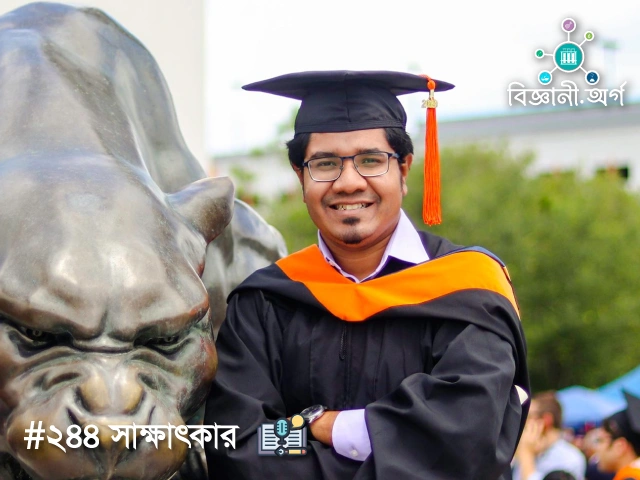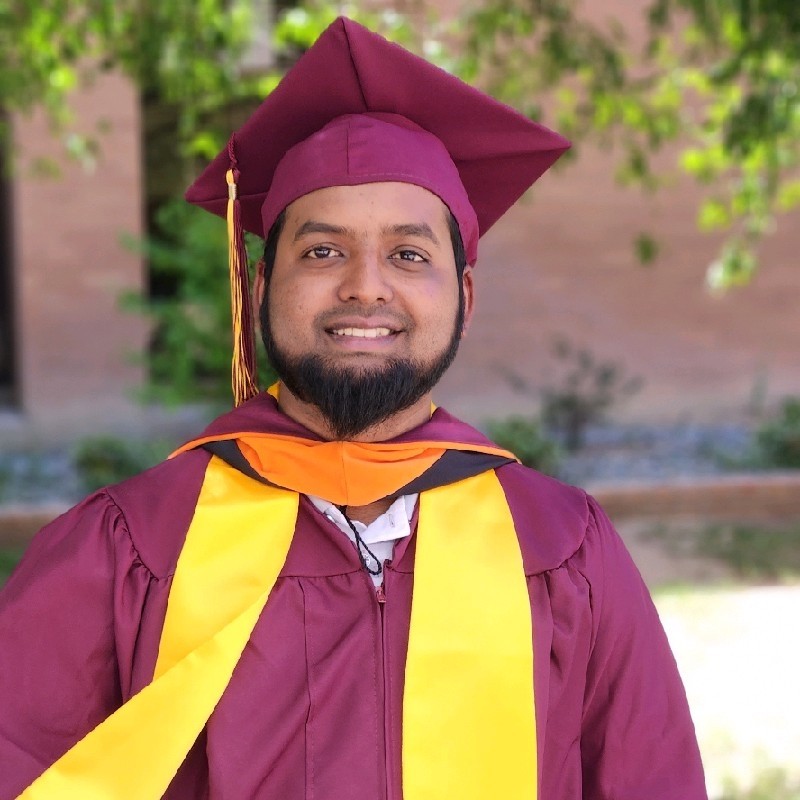
In this edition of our interview series with the new generation, we interviewed Md. Ragib Shaharear. He is currently pursuing a PhD in the Department of Electrical and Computer Engineering at Johns Hopkins University, USA. There, he is working on embedded machine learning (ML), artificial intelligence (AI), and the development of energy-efficient devices. Read his interview below:
First, we would like to know about you ?
I am currently pursuing my PhD in the Department of Electrical and Computer Engineering at Johns Hopkins University, USA. Here, I am working on embedded machine learning (ML), artificial intelligence (AI), and the development of energy-efficient devices.
Previously, I completed my MS in Electrical Engineering (Mechatronics, Robotics, and Automation) from Arizona State University, USA in May 2023. There, I worked on autonomous robotics and device design, data processing, and machine learning.
I obtained my BSc degree in Electrical and Electronic Engineering from Shahjalal University of Science and Technology. My work there included participating in and conducting research for various national and international competitions in the robotics lab. I was the president of the robotics organization ‘RoboSUST,’ and as a team, we became national champions three times in robotics competitions and received some awards at the international level. During my undergraduate studies, I had the opportunity to work on robotics, circuit design, and various electronic systems.
After finishing my undergraduate studies, I worked for three years as a Process Development Manager at Walton Digi-Tech Industries, where I focused on PCB analysis, SKD and SMT process development, and robotic control.
What is the topic of your research?
The main goal of my research is to develop energy-efficient and effective computing methods using artificial intelligence (AI) and machine learning (ML) technologies, especially for embedded systems and resource-constrained devices. Currently, machine learning and deep learning models require a lot of energy and processing power, which makes it difficult to run them on devices with limited resources. In my research, I am developing technologies that will enable the successful implementation of such advanced models on low-power devices.
To this end, I am working on a special model called Vision Transformer, which is a specific type of neural network. To further optimize the architecture of this model, I use ‘regression-based neural architecture search,’ which helps to achieve the best results using limited device capabilities. Essentially, this is an automated design process that can select the best design among various models.
What qualities do you think a scientist should have?
Speaking about the qualities of a scientist, first and foremost, they need to have curiosity and a spirit of inquiry. Science is ever-changing, and new discoveries and innovations continuously modify previous understandings. Therefore, a scientist should always have a passion for learning new things and the courage to question established theories and evidence.
Second, a scientist must be patient. The process of research and discovery is often time-consuming and can involve encountering failures. If a scientist cannot accept failure as part of the learning process, it will be difficult to move forward on the path to success.
Third, creativity and problem-solving skills are crucial for a scientist. Creative thinking and the ability to step beyond conventional methods help to discover new paths and tackle challenges.
Do you have any message for young Bangladeshi students who want to work in science?
My message to young students in Bangladesh is that if you want to contribute to science and technology, you should move forward with courage. There are endless possibilities to solve any problem through science and technology in today’s world. For this, you must keep your curiosity alive and prepare yourself to tackle difficult problems.
There is no substitute for hard work and patience when it comes to practicing science. In research, you may face failures repeatedly, but you must treat failure as part of the learning process. Learning from every mistake and moving forward is the true path of a scientist.
Your email address: [email protected]
Your LinkedIn: https://www.linkedin.com/in/md-ragib-shaharear-4b1b8b136/
On behalf of Scientist Org, we wish Md. Ragib Shaharear continued success. He is a remarkable example for our young researchers.