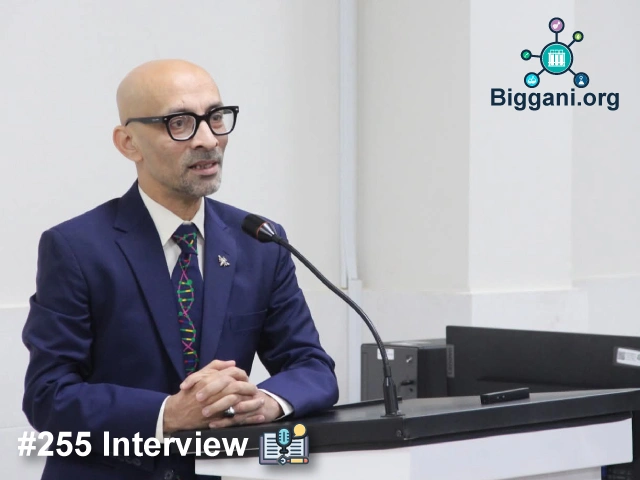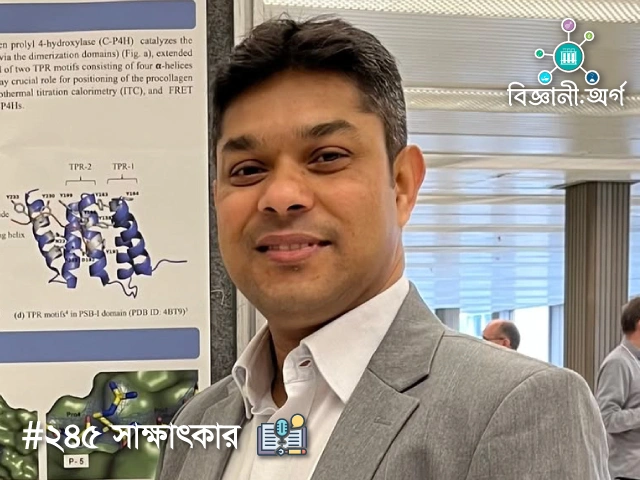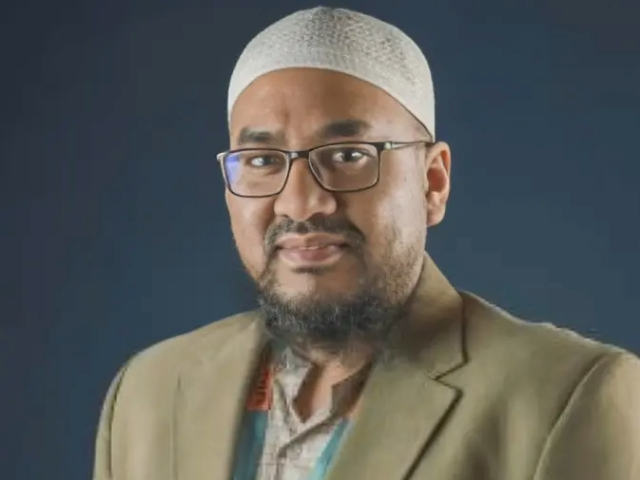
In this episode of our interview series, we spoke with Al-Sakib Khan Pathan. He is currently serving as a Professor in the Department of Computer Science and Engineering (CSE) at United International University (UIU), Bangladesh. He discussed many crucial topics for our new generation of researchers. Read his interview:
First, we would like to know about you ?
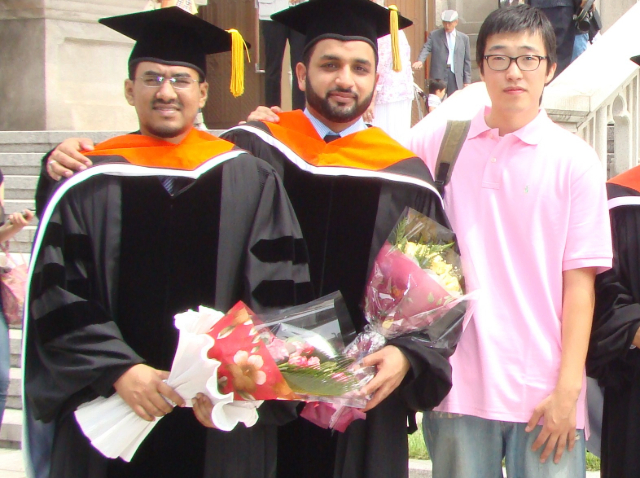
I am currently working as a Professor in the Department of Computer Science and Engineering (CSE) at United International University (UIU), Bangladesh. Previously, I served in the CSE Department at Independent University, Bangladesh (IUB) during 2020-2021, at Southeast University (SEU) CSE Department from 2015-2020, at the Computer Science Department of IIUM, Malaysia from 2010-2015, at BRAC University, Bangladesh from 2009-2010, and at North South University (NSU), Bangladesh from 2004-2005. I also conducted research at the Networking Lab at Kyung Hee University, South Korea, where I completed my MS and PhD in Computer Engineering. My BSc degree is in Computer Science and Information Technology (CSIT) from the Islamic University of Technology (IUT), Bangladesh. I am involved with several high-quality journals and conferences as an editor and committee member.
What are your areas of research?
My research areas include wireless sensor networks, network security, cloud computing, and e-service technologies. Currently, I am working on several multidisciplinary topics such as artificial intelligence, applications in agriculture, electric vehicles, energy internet, linguistics, and quantum issues. My research is mainly divided into fundamental and applied areas. I am particularly interested in fundamental research that can transform technology and ways of thinking in the future, even if it does not show immediate impact.
Why did you return to Bangladesh, and how are your research efforts benefiting or likely to benefit us?
I often encounter this question. After completing my PhD in 2009, I returned to Bangladesh mainly for my parents, and this question was raised in some interviews! Later, I left Bangladesh and worked at IIUM Malaysia from 2010-2015. In 2015, at my parents’ request, I returned to Bangladesh again, and the same question was asked. I have been working here since then. In response, I’d say that research is not always meant for our immediate benefit, because the nature of research needs to be understood. There are two main types of research—applied research, which can have direct practical benefits, and fundamental research, which can change the flow of thought and future technology. The effects of fundamental research may be felt 5, 10, or even 20 years later. Bangladesh, or we, are not separate from the world technologically, so the outcomes of fundamental research will eventually impact our daily lives. A classic example of fundamental research is the invention of electricity, which initially had no defined use, but has become essential in many fields; similarly, I can mention the equation E=mc^2, which simply expresses the relationship between energy, mass, and the speed of light, but its impact can be found in many fields and is not limited to just our or others’ direct benefit!
Still, if I am to address how it benefits us, I believe my students can learn different ways of approaching problems, contribute themselves, and perhaps make an impact in the global scientific community. Or, at the very least, interviews like this help transfer knowledge to others, encouraging positive activities in academia and helping students and teachers break away from the toxic trends of academic politics that we have witnessed in Bangladesh’s history for more than half a century. At the very least, this helps bring real professional focus to academics, create a healthy competitive environment, and fosters engagement in genuine academic practices, especially since we have recently seen widespread favoritism, unethical relationships, and suppression of talented individuals in favor of those with political connections and influence.
What is your message for young students in Bangladesh?
Maintaining honesty and truthfulness in your professional life is extremely important. In our country, professional integrity is often lacking. Many people use shortcuts and personal networks to reach high positions quickly, which can speed up their rise. However, rather than always chasing after titles and ranks, you should focus on your work.
When I returned to the country for the second time in 2015, I saw that some people in my own field, who did not have real merit or measurable impact, held full professor positions. If you want to make real contributions and truly grow as a scientist, it is often better to avoid obsessing over top positions and titles. This is especially true in Bangladesh’s academic environment, where these issues are still present.
Yes, it can be uncomfortable to see some of your previous colleagues, who were behind you five years ago, now in full professor or decision-making roles. But by following this so-called “track to success,” they have lost the chance to become truly skilled and accomplished scientists in their professional lives.
What qualities do you think a scientist should have?
The answer to this question can vary, and a famous scientist may have many different perspectives. However, in my opinion, honesty and truthfulness are essential in professional work. Sometimes people reach high positions using false data or claims, and if those go undiscovered, they might even be rewarded! It is not unusual for some powerful people to promote certain scientists for their own benefit while pushing others down. However, in the end, these two qualities—honesty and truthfulness—bring you inner satisfaction and the courage to stand firm against any adversity.
Your Email: [email protected]
Your LinkedIn : https://www.linkedin.com/in/al-sakib-khan-pathan-6173838/
Your Website or Research Link : https://sites.google.com/site/spathansite/
On behalf of the Biggani Org, we wish Al-Sakib Khan Pathan continued success. We are delighted to have had the opportunity to interview him. He truly serves as an inspiration for our early-career researchers.
First, we want to know about you ?
I am currently a Professor at the Computer Science and Engineering department, United International University (UIU), Bangladesh. Previously, I was with the CSE Dept., Independent University, Bangladesh (IUB) during 2020-2021; CSE Dept., Southeast University (SEU) during 2015-2020; Computer Science department at IIUM, Malaysia during 2010-2015; BRAC University, Bangladesh during 2009-2010, and NSU, Bangladesh during 2004-2005. I also worked as a Researcher at Networking Lab, Kyung Hee University, South Korea from September 2005 to August 2009 where I completed my MS leading to PhD in Computer Engineering. My B.Sc. degree was in Computer Science and Information Technology from Islamic University of Technology (IUT), Bangladesh. I am associated with some highly-valued journals and conferences as an editor and committee member.
What is your research topic?
My research interests include wireless sensor networks, network security, cloud computing, and e-services technologies. Currently, I am also working or studying some multidisciplinary issues like quantum issues, agricultural applications, AI, electric vehicle, energy internet, linguistics, and so on. Research in my field can be broadly classified as Fundamental and Applied like many other scientific fields. My inclination is more towards the fundamental research that requires contribution to the body of knowledge, dealing with theory that may have wider implications in future, and perhaps, not immediate effect!
How is your research work or will it benefit us?
Before answering this straight, let me make it clear that this is not the first time I have been asked this question. I came back to Bangladesh immediately after my PhD in 2009, mainly for my parents living here and this question was asked even in some interviews! Then, I left Bangladesh soon after, and worked in IIUM, Malaysia for five years (2010-2015). When I came back again in 2015, once again due to my parents’ call, the same question was asked. Since 2015, I have been working here within Bangladesh. The response to this question is, research works must not be always associated with “our” benefit with immediate effect or expected direct impact like that. Because, the nature of research needs to be understood. I have already mentioned the major two categories of research. While applied research may have practical relevance with immediate impact, the fundamental type basically changes the course of thoughts and future technologies. The impact of that could be on various fields, even after 5 or 10 or 20 years or so. As Bangladesh or “we”, are not separated from the rest of the world in terms of technology’s reach or its usage, eventually, fundamental research works would have impact on our daily lives. A classic example of fundamental type research could be like the invention of electricity for which the application scenario is not defined but it has relevance and use in many other fields; again take for instance, an apparent simple equation like E=mc^2, which is just a theoretical understanding of the relationship between energy, mass, and speed of light but the impact of that could be in practical other fields and it is not confined to just “our” or “their” benefit!
Still, to respond to this question as “our” benefit, I would opine that my students can also learn some ways to think about solutions to the same problem in various ways, perhaps, they can get inspired for their own contributions to the field and make our scientists’ impact known to the global community. Or, at the minimum, perhaps, such kinds of interviews are taken to pass knowledge to others and this can encourage people in contributing to positive activities in the academia instead of losing focus and wasting time with disturbing trends of teachers’ and students’ politics of nasty nature that we have witnessed for more than half of a century in the history of Bangladesh, i.e., “us”. This is the minimum it can do to engage the minds and brains in genuine professional works in the academia, create a healthy competitive environment, and help them get out of the cycle of that kind of pollution in the academia which showed even from the parts of the faculty members, clear sycophantic behaviors, quid pro quo activities, nepotism, climbing ladder without merit just because of certain power-holding political party’s affiliations and links, and suppressing the genuine brains even in the recent past.
What qualities do you think a scientist should have?
This answer could vary and there are too many possible answers as a notable scientist may perceive. However, to me, honesty and truthfulness are a must in the professional works. It is possible to gain heights even with fake data, fake claims and things and sometimes, those may not be caught or even could be awarded! It is not at all uncommon as some power-holders raise some scientists for their own advantage and put down some others. But, at the end, those two qualities even for professional works, would give one his own mental satisfaction and courage to stand against all odds.
What is your message for the young students of Bangladesh who want to work in science?
Be honest and truthful even in the professional arena. What lacks in many in Bangladesh is the professional integrity. Indeed, many try to climb fast with short-cut with links and ties that could rapidly take them to higher positions. Don’t always hanker after for ranks and positions. When I came back in 2015 for the 2nd time, I found too low qualified people with no trace in the actual indexes and impacts anywhere in the field were holding full Professor positions in my own field. Avoiding top roles and positions may be better for you if you would like to make an impact as a scientist in your own field while working within Bangladesh; especially in an environment that still is nurtured in Bangladeshi academia (in most of the places). Yes, it may give you some unease to see some back-benchers that you saw got promotion 5 years before your rank rose to full Professor or they may have taken chairs and decision making positions but with that track of gaining “success”, they also lost any chance of their becoming a genuine caliber scientist in the professional field.