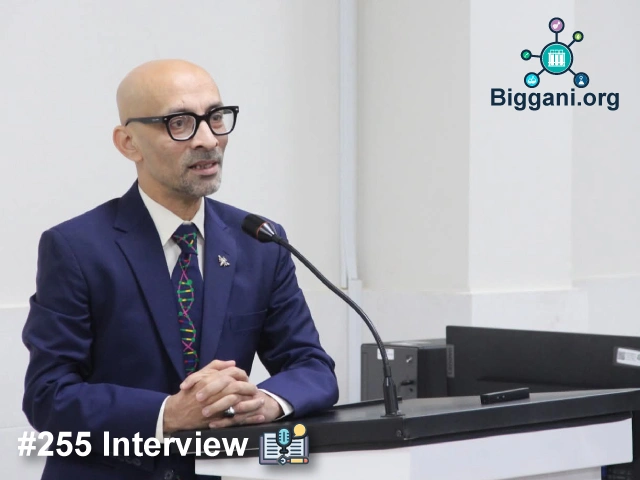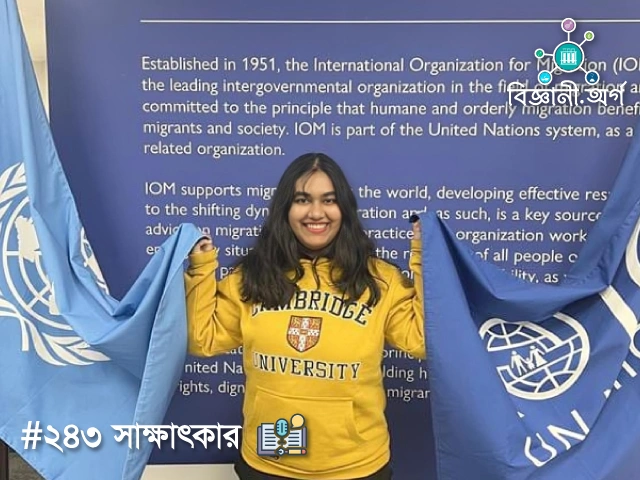
The life story of Qazi Shafayetul Islam, who works tirelessly for public health, reflects perseverance, the pursuit of knowledge, and a commitment to meaningful change. From earning his MBBS degree in Bangladesh to his community-based work in Canada, his career demonstrates the power of research and community-driven solutions.
From BRAC to Canada: The Journey of a Researcher:
Qazi Shafayetul Islam’s academic foundation is as rich as his career. He completed his MBBS from Sir Salimullah Medical College, and earned Master’s degrees from both University of Dhaka (MSc) and a university in Belgium (MSc). Additionally, he completed diplomas in Gerontology and Academic English from George Brown College, Toronto.
He began his career at one of the world’s leading nonprofit organizations, BRAC, where he spent a decade working in the Research and Evaluation Division, first as a junior researcher and later as a research fellow. This period solidified his commitment to evidence-based research for solving real-world problems.
Currently, he is the coordinator, program lead, and researcher at Bangladeshi-Canadian Community Services (BCS) in Toronto. He also works at a dementia care home and is involved as a health speaker on a local TV channel.
Research to Rebuild Health Systems:
Qazi Shafayetul Islam’s research is dedicated to addressing gaps in healthcare access and solving critical community health issues. He says, “I prioritize the well-being of the elderly,” highlighting the importance of specialized health programs. His initiatives include non-pharmacological approaches across six key areas—social, physical, emotional, intellectual, spiritual, and occupational—to meet the diverse needs of older adults.
Currently, Qazi leads programs that connect seniors with healthcare systems, especially those facing barriers such as language challenges, limited mobility, and lack of support to reach medical facilities. Through ongoing qualitative and quantitative research, he has developed a healthcare model that ensures seniors can access formal healthcare anywhere in their communities.
“Ongoing research enables me to create innovative solutions for these challenges,” he mentions, expressing his commitment to making healthcare more accessible and inclusive.
His earlier work also involved pioneering research on communicable and non-communicable diseases. Notably, his efforts to address cultural misconceptions about tuberculosis (TB) in Bangladesh and Afghanistan played a vital role in public health awareness campaigns and helped change long-standing social perceptions.
Qazi’s innovative healthcare methods and unwavering commitment to system improvement not only enhance the quality of life for seniors, but also set an example for community-based healthcare solutions worldwide.
Field Insights: Tackling Research Challenges:
Qazi Shafayetul Islam’s research demonstrates how field insights can pave the way for groundbreaking public health initiatives. One notable project was a comparative study on tuberculosis (TB) in Bangladesh and Afghanistan, which revealed deep-rooted cultural perceptions concerning health behaviors in both countries.
In Bangladesh, his research found that the TB detection rate among men was significantly higher than among women. According to cultural beliefs, this difference was attributed to the association of TB with men’s outdoor work, prolonged exposure to sunlight, and smoking habits. In contrast, Afghanistan showed the opposite trend—women had a higher TB detection rate than men. This was based on the idea that women, mainly staying at home, were seen as more likely to contract and spread the disease, while men, working outside or in conflict zones, were considered comparatively less at risk.
Qazi’s research delved deep into these social misconceptions and highlighted the need for targeted awareness campaigns. Based on these findings, he worked with the National TB Control Programs in both countries to initiate awareness initiatives. These campaigns focused on dispelling gender-based misconceptions about TB and spreading the message that anyone—man or woman—can be affected by tuberculosis. As a result, people became more encouraged to seek healthcare in a fairer and more equitable manner.
The impact of these campaigns was profound. Although changing long-standing cultural beliefs takes time, Qazi has observed that community behaviors are slowly changing. Now, both men and women are becoming more active in TB diagnosis and treatment.
This research demonstrated how culturally sensitive approaches can bring about positive public health outcomes. By identifying and addressing gender-based misconceptions, Qazi not only increased TB awareness, but also proved that context-based research can make communities more confident about seeking healthcare.
His efforts present a fundamental lesson in public health: solutions must align with the cultural realities of the communities for whom they are designed. Through patience, dedication, and direct community engagement, Qazi continues to create sustainable solutions to unaddressed health issues.
The Path of Challenge: Lessons from Field Experience:
Conducting research in diverse contexts is always challenging, and Qazi Shafayetul Islam experienced this firsthand in his studies. While researching tuberculosis (TB) and maternal health in Afghanistan, he faced a significant language challenge: creating accurate questionnaires in Dari.
Initially, the questionnaires were translated from English to Dari. But after retranslating them into English, Qazi discovered that 60% of the content had lost its original meaning. This experience gave him a newfound appreciation for the importance of precise translation in cross-cultural research and the necessity for research teams to adapt to the linguistic and cultural contexts they work in.
The logistical challenges were significant as well. Conducting research in remote areas with limited transportation was challenging. He visited these areas repeatedly to understand the communities’ cultural and geographical realities. Though these trips were demanding, they were extremely valuable. Inspired by BRAC’s community-driven approach, Qazi emphasizes getting out of the office and engaging directly with communities, where researchers can gain deep insights by direct interaction with participants.
He says, “Research isn’t just about collecting data—it’s about understanding the lives and stories behind the data.”
Two Key Lessons for Research:
Qazi’s experience highlights two key points for researchers:
1️⃣ Cultural and Contextual Sensitivity: Every community is unique, so research tools must be tailored accordingly. Ensuring proper translation and understanding the cultural context plays an important role in improving data quality.
2️⃣ The Value of Engagement: Direct engagement with the community builds trust and uncovers insights that desk-based research may miss. This hands-on approach not only enriches the research process but also increases its relevance and impact.
Building Research Skills: The Foundation of Success:
Qazi Shafayetul Islam believes the foundation of successful research is curiosity, preparation, and adaptability. For new researchers, he offers several important steps:
- In-depth Study: Closely study various methods, designs, and presentation styles. He says, “A good knowledge base allows researchers to address issues more deeply and with confidence.”
- Reflective Thinking: Carefully consider a topic’s significance before starting. Assess its potential impact and explore it from different perspectives to generate new and meaningful insights.
- Clear Communication: Data collection tools should be effective but straightforward. Using simple, precise language ensures that respondents and researchers can use the tools easily, producing richer and more accurate information.
- Continuous Review: Once results are available, focus on identifying the most important insights. Reviewing results repeatedly helps guide policymakers and target audiences more effectively.
A Vision for Future Researchers: Making Research Count:
For Qazi, research isn’t limited to journal publications or academic achievements—it’s about real-world impact. He encourages young minds to think beyond academic boundaries:
- Focus on Real Problems: Engage with issues relevant to society’s needs and design innovative, practical solutions.
- Be Purposeful: Set clear objectives and stay committed to achieving them despite obstacles.
He advises researchers to work purposefully. “Ask yourself: How will this contribute to society? Research is not just about publishing—it’s about creating change and solving real problems.”
By balancing skills, determination, and vision, Qazi hopes to empower future researchers to drive progress and contribute meaningfully to the world.
A Life Dedicated to Creating Impact:
Qazi Shafayetul Islam’s story proves that research has transformative power. His work—from developing healthcare initiatives for seniors in Canada to raising TB awareness in South Asia—inspires lasting change.
📩 Contact:
✉️ Email: [email protected]
📄 Publications: Plos One | BMC Journals