Professor Dr. Moha: Yamin Hossain
University of Rajshahi
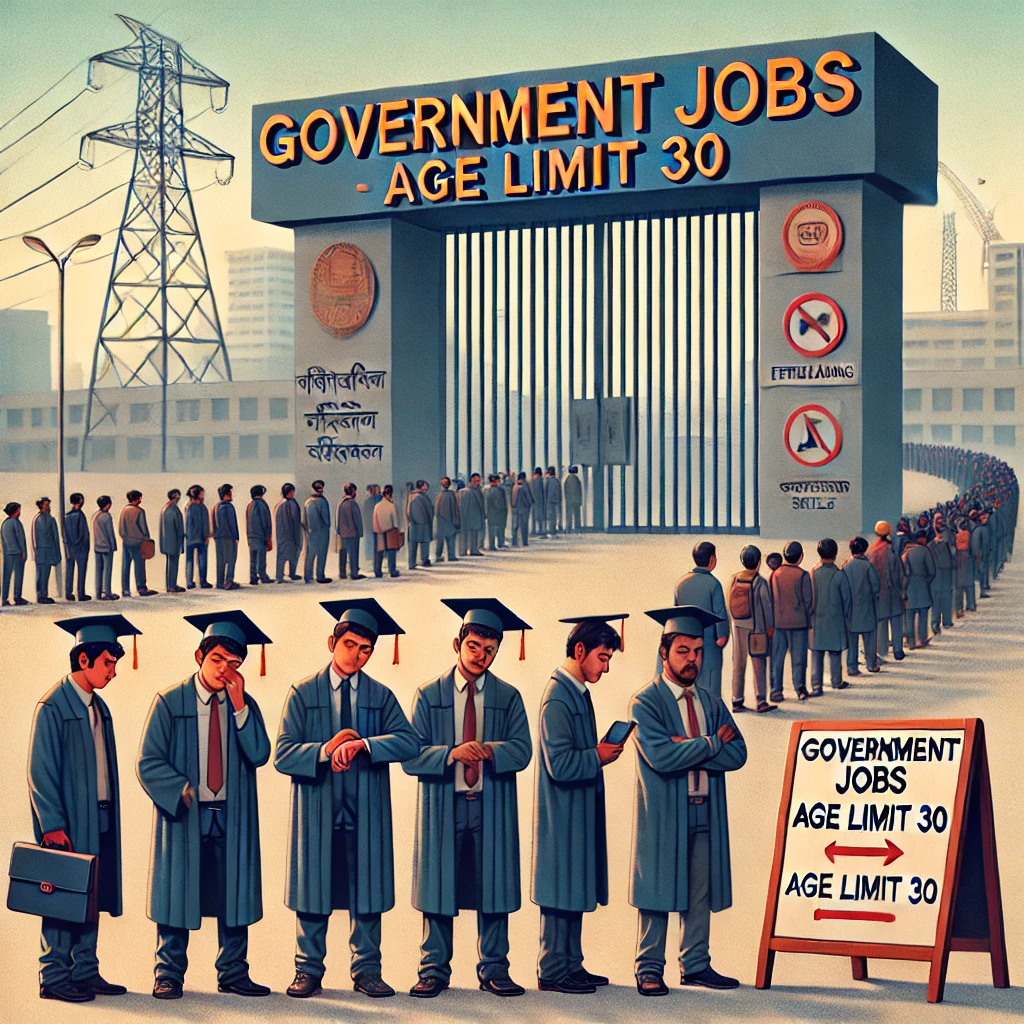
In Bangladesh, the maximum entry age for government jobs is 30 years, while the retirement age is 59 years. This regulation has been in place for a long time and has now become an important topic of discussion. Especially given the country’s current circumstances—particularly due to the COVID-19 pandemic and political instability—the job market crisis has intensified. As a result, the number of highly educated unemployed has risen sharply. Many are demanding that the maximum entry age be raised to 32, 34, or even 35 years. However, before taking such steps, it is crucial to deeply consider the potential long-term damage that raising the entry age limit may cause to the country and its people.
Analysis of the Problems and Context
1. Crisis of Highly Educated Unemployment:
Every year, not thousands but hundreds of thousands of students graduate from universities with bachelor’s and master’s degrees. However, enough employment opportunities are not being created in either the government or private sectors. Many of these unemployed people wait for government jobs, where the entry age is 30. As they grow older, they lose eligibility to sit for government job exams, leading to increased frustration and an uncertain future.
2. Impact of the COVID-19 Pandemic:
Due to the COVID-19 pandemic, many job exams and recruitment processes were postponed or cancelled in recent years. This has been especially problematic for those nearing the age limit for job applications. The pandemic has severely affected not just the health sector but also the economy, contributing to a further rise in unemployment rates.
3. Political Instability:
Political instability and lack of transparency in different sectors of the country are also major causes of unemployment. Often, due to political patronage, qualified candidates lose opportunities in recruitment exams, worsening the unemployment crisis.
4. Problems with the Proposal to Increase the Entry Age Limit for Jobs:
Raising the entry age limit for jobs to 32 or 35 years might only serve as a temporary fix. This would keep even more students waiting for government jobs, delaying their entry into other fields. In the long run, this would increase the number of people waiting for government jobs, further exacerbating employment shortages. Moreover, increasing the age limit may also create an efficiency problem, as older candidates may have lower physical and mental capabilities compared to younger ones.
Actionable Solutions:
1. Temporarily Increasing the Age Limit:
Considering the effects of the pandemic, the entry age for jobs may be extended by 2 to 3 years as a temporary measure. However, this is not a long-term solution but rather an emergency response. While raising the age limit may temporarily reassure the unemployed, long-term policy changes are also needed.
2. Expanding Employment Sectors:
Since opportunities in government jobs are limited, initiatives must be taken to increase employment in the private and entrepreneurial sectors. The younger generation should be trained and encouraged to become entrepreneurs in various fields. Sectors such as information technology, freelancing, agriculture, and manufacturing need further development. For this, the government should provide policy support, loan facilities, and other incentives.
3. Emphasizing Technical and Vocational Education:
Instead of focusing solely on higher education, more emphasis should be placed on technical and vocational training, so students can acquire various skills and enter the private sector without depending only on government jobs. By increasing competency, skilled workers can be produced in different sectors, contributing to the growth of the country’s production industry.
4. Development of Startup and Entrepreneurship Culture:
To encourage youth to become entrepreneurs, more investment is needed in the startup sector. Both the government and private sector can collaborate to support the formation of startups, creating new employment opportunities. Becoming an entrepreneur means not just creating employment for oneself, but also generating jobs for others.
5. Ensuring Transparency in Job Examinations:
Transparency, impartiality, and fairness must be ensured in government recruitment exams. Political interference, corruption, and patronage-based hiring must be prevented. This would allow qualified candidates to fairly access job opportunities, reducing unemployment.
6. Career Counseling and Job-Oriented Training:
Students need career counseling and job-oriented training so they become adept at seeking jobs alongside their academic pursuits. Career counseling cells can be established at the university level to guide students in the right direction.
Conclusion:
Bangladesh’s unemployment problem cannot be solved simply by raising the age limit. What is needed instead is a long-term and integrated action plan. Expanding employment opportunities, skill development, incentives for entrepreneurship, and the spread of technical education can provide an effective solution to this problem. For the development of the country and the greater welfare of the nation, the government should consider this matter deeply and take pragmatic action.
Note: Collected from Facebook:——–
https://www.facebook.com/share/p/1PJMzziHgF/