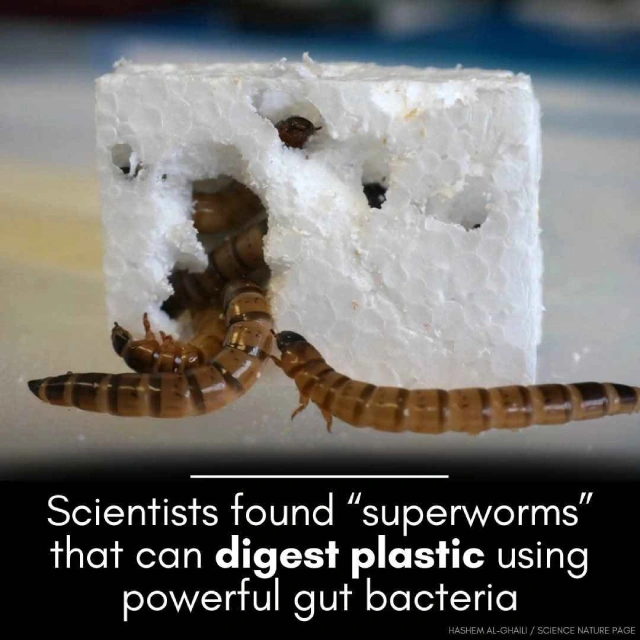
“Grandpa, how does plastic break down?” — Upon hearing Russell’s question, his grandfather stayed silent for a moment. Then he replied, “Plastic decomposes very slowly, sometimes taking hundreds of years! But now, scientists have found an amazing solution.“
Russell asked in surprise, “What solution, Grandpa?”
Grandpa smiled gently and said, “A type of worm that can eat plastic!”
Plastic Waste: A Global Crisis
Currently, about 400 million tons of plastic are produced worldwide each year, and over 90 percent of this is not recyclable. According to a United Nations report, by 2050 there could be more plastic in the oceans than fish. Plastic pollution is a major issue in Bangladesh as well. According to data from the Department of Environment, 850 tons of plastic waste are produced daily in Dhaka alone.
Plastic-Eating Worms: A Natural Solution
Researchers at Singapore’s Nanyang Technological University (NTU) have recently studied a type of worm that can consume plastic. This worm is known as the Zophobas atratus or superworm. Research has shown that the gut of this worm contains certain bacteria that can break down plastic and digest it as food.
Researcher Dr. William Chen stated, “We have found that these worms can even digest hard plastics like Styrofoam. However, the problem is that we can’t increase their numbers on a large enough scale. That’s why, with the help of technology, we are trying to mimic the digestive process of these worms.”
Artificial Guts: A Solution to Plastic Waste?
To overcome the limitations of worms, NTU researchers have created an artificial gut that can break down plastic much more quickly.
Dr. Chen says, “We have isolated the enzymes found in the worm’s gut and produced them artificially. As a result, we can now destroy plastic without relying on live worms.”
This biological recycling technology is much more environmentally friendly than chemical recycling methods. Conventional plastic recycling processes release toxic gases by melting plastic at high temperatures. But this new biological technology can destroy plastic just like nature does.
Impact in Bangladesh
The problem of plastic waste in Bangladesh is becoming more severe every day. According to the environmental organization WBB Trust, only 36% of plastic used in Bangladesh is recycled; the rest accumulates in the soil or rivers.
If this technology can be implemented commercially, it could be a major solution for Bangladesh. Researchers believe it could play a crucial role in reducing the plastic waste piling up in landfills and rivers.
Future Prospects and Challenges
This research is still in its early stages. However, scientists hope that it will be possible to implement it on an industrial scale within the next five years.
Bangladeshi environmental scientist Dr. Abdul Hakim says, “If this reaches the stage of commercial use, a new era in waste management will begin in our cities. However, our policymakers should allocate more funds for further research on this technology.”
Conclusion
Grandpa explained to Russell, “When scientists learn from nature, amazing new technologies are born. Maybe in the future, kids like you will improve this technology even more!“
Russell exclaimed in awe, “I want to be a scientist when I grow up, Grandpa! So I can invent something like this too!”
This is the beauty of science—innovation born from inspiration and the search for a new future.
To learn more and watch the research video:
https://www.channelnewsasia.com/watch/ntu-scientists-use-superworms-digest-plastic-4203591