1. Introduction
Let’s start with a question
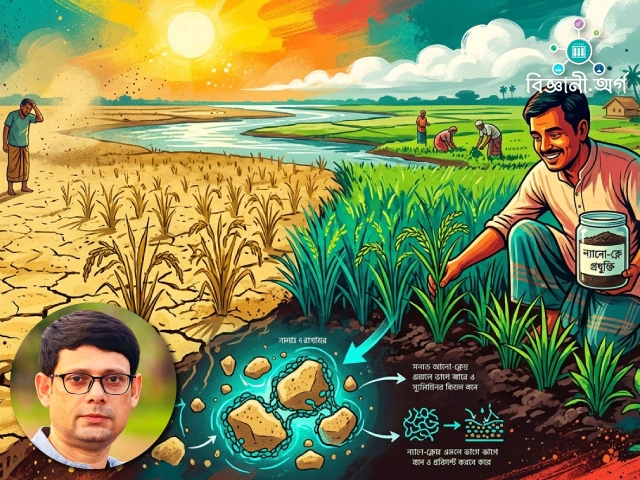
In the sandy soils of Bangladesh’s char lands, where water cannot be retained and fertilizers don’t last—
is sustainable agriculture truly possible there?
This is not just an agricultural question; it is directly a question of food security, climate adaptation, and future development.
In pursuit of an answer, science is now turning to a new technology: “nano-clay”.
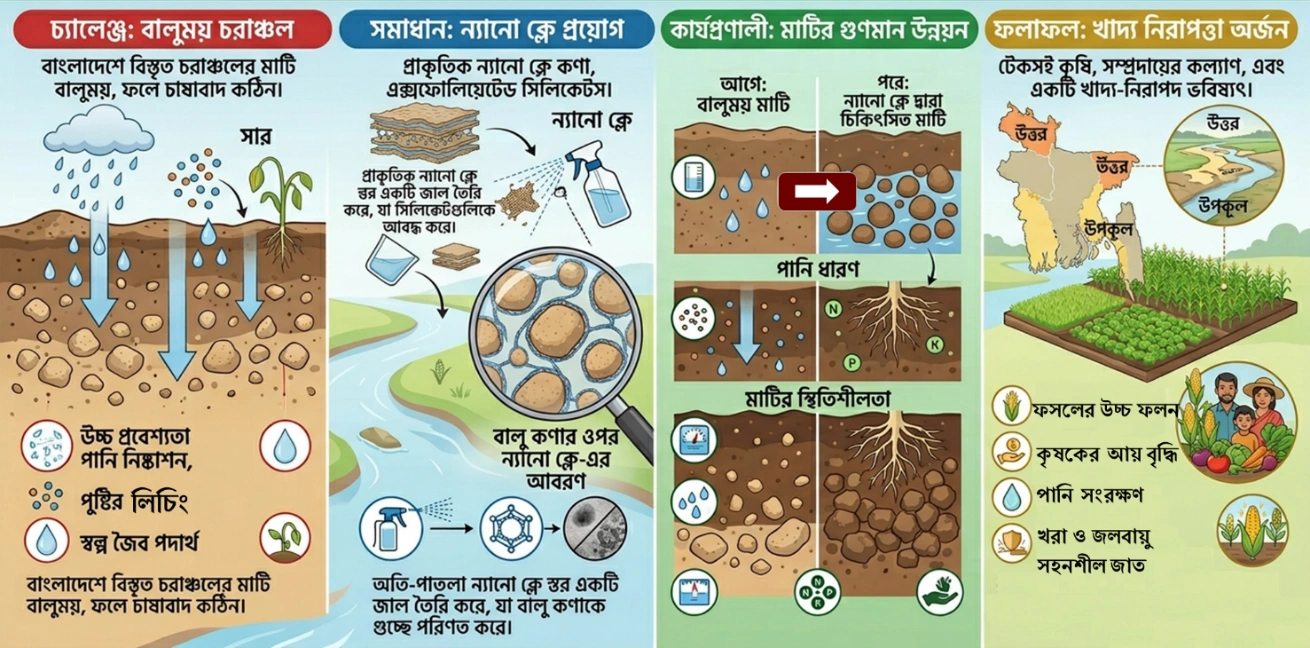
Figure 1: Nano-clay technology enhances the water and nutrient retention capacity of sandy soils, making agriculture sustainable
2. The Root of the Problem: The Science Inside Soil
Though the limitations of char lands’ soil are visible, the real reasons lie within its physical and chemical composition.
In sandy soil—
- Large particle size → High pore space
- Water drains rapidly → High percolation
- Cannot hold nutrients → Low CEC (Cation Exchange Capacity)
The outcome is clear:
The more input a farmer provides, the less efficient it becomes
This is a “Resource-Inefficient System” which is not sustainable in the long run.
3. Nano-clay: How Does the Technology Provide a Solution?
Nano-clay technology fundamentally alters the structure of the soil.
The fine clay particles used in this technology—
- Form a coating around sand grains
- Reduce soil pore size
- Increase the soil’s ability to retain water and nutrients
This is essentially “Soil Engineering at the Nano-Scale”
The key point here is—
nano-clay is not just a material, but a process that changes soil behavior.
4. International Experience: From Concept to Reality
Arid and desert countries around the world have already begun experimenting with this technology, for example—
- United Arab Emirates’ initiatives to turn desert sand into arable land
- Implementation in Saudi Arabia and Egypt to save water
- Research trials in China and Pakistan
Studies indicate:
– Water usage can be reduced
– Agricultural production can be stabilized
In other words, this is not just a lab-based concept but a technology suitable for practical application.
5. Potential in Bangladesh: From Char Lands to Productivity
Observations in the northern char regions of Bangladesh suggest—
- Irrigation needs could decrease by 30–40%
- Yield of maize and peanuts could increase by about 25%
- Pressure on groundwater can be lessened
This impacts not just agriculture—but also water resource management
In this context, nano-clay technology is a “Dual Benefit System”
✔ Saves water
✔ Increases production
6. Connection with Climate-Smart Agriculture
Agriculture is now facing uncertainty due to climate change.
Nano-clay provides three key advantages here:
- Increases water buffering capacity → Drought resilience
- Enhances nutrient retention → Stable yields
- Improves soil structure → Reduced erosion
It is essentially a resilience-enhancing technology
7. But is everything that simple?
The greater the potential of a technology, the greater or more important its limitations.
- Excessive use may reduce soil porosity
- Could affect the microbial ecology of the soil
- Long-term field validation is still limited
That’s why we need
“Controlled Adoption + Scientific Monitoring”
8. Policy and Implementation: Which Path Will Bangladesh Take?
To effectively utilize nano-clay technology, action is needed on three levels:
8.1 Science
- Applied research
- Crop-specific validation
8.2 Policy
- Nanotechnology guidelines
- Alignment with Delta Plan 2100
8.3 Field Level
- Demonstration plots
- Farmer training
The most important aspect here is:
Technology Transfer—From Lab to Land
9. A Comparative Illustration
| Feature | Sandy Soil | Nano-Clay Soil |
| Water retention capacity | Low | High |
| Nutrient retention | Poor | Improved |
| Irrigation | High | Low |
| Yield | Limited | Increased |
10. Conclusion: A Silent Technological Revolution
Nano-clay technology is not creating a major buzz in agriculture, but its impact could be profound.
This teaches us—
– The problem is not just the land, but the inner structure of the soil
– And the solution lies there too
In a country like Bangladesh, where every inch of land is valuable, nano-clay could be—
A silent scientific revolution transforming char lands into productive assets.