Special Correspondent
— “Did you hear? Another billionaire just returned from space yesterday!” said a young man excitedly at the tea stall.
— “Yeah, the rich have such eccentric hobbies! But is any of this actually useful?” replied another, sitting beside him with a skeptical tone.
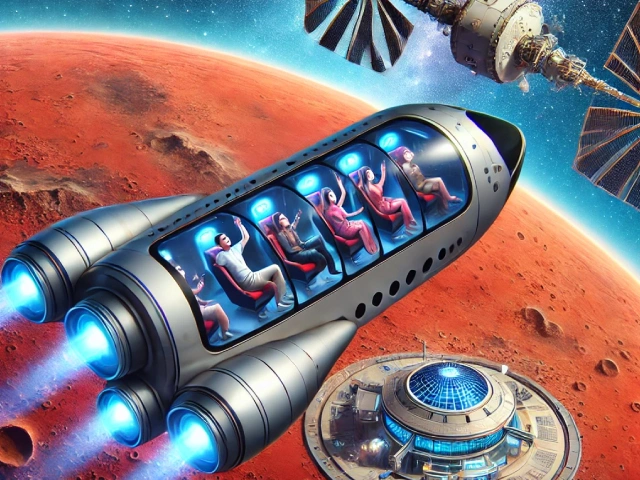
— “Oh, who knows! Maybe in the future, we’ll all get to travel to space! I’ve heard there are plans to send people to Mars!” an elderly man said, sipping from his coffee cup.
In the midst of this debate, a question arises—Is space travel merely a luxury for the wealthy, or essential for the future of humankind? In today’s report, let’s look for answers to how realistic the possibilities and challenges of space travel really are.
Space Tourism: A New Era or Unnecessary Luxury?
Over the past decade, companies like SpaceX, Blue Origin, and Virgin Galactic have made personal space travel possible. But ordinary people are left wondering—is this just entertainment for the rich, or will it eventually become accessible to all?
The history of technology shows that while new inventions may start off exclusive to the wealthy, they eventually reach the masses. For example, air travel was once a luxury for only the rich, but today, traveling the world has become affordable for many.
Is the Future of Humankind in Space?
Many scientists believe that establishing settlements in space is essential for the long-term survival of humanity. Why?
- Earth’s resources are limited – We’re quickly depleting natural resources, and one day, we may need to look to other planets.
- Environmental disaster and climate change – If Earth becomes uninhabitable, we will have to search for another planet.
- Risk of asteroid collision – 66 million years ago, an asteroid led to the extinction of the dinosaurs. A similar event in the future could be catastrophic for humanity.
But Where Would We Go? Are There Really Habitable Places in Space?
1. Mars: Potential and Challenges
Currently, Mars is seen as the most promising destination. Elon Musk’s SpaceX is working on the “Mars Colony” project. However, some major challenges remain:
- Extremely cold environment – The average temperature on Mars is -63°C, which is not suitable for human habitation.
- Lack of oxygen – Mars’ atmosphere contains 96% carbon dioxide, so humans cannot breathe there.
- Strong solar radiation – Without a magnetic field like Earth’s, radiation levels are dangerously high.
- Water scarcity – Some ice has been found, but making it drinkable is very difficult.
2. The Moon: Close, but Unlivable
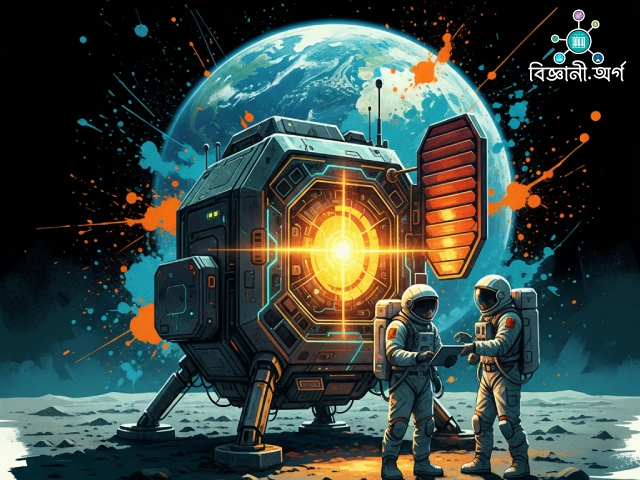
Scientists are also considering settling on the Moon, comparing its potential to that of Mars. The advantages of the Moon include:
- Travel is easier since it’s close to Earth.
- There’s potential for producing oxygen from the lunar soil.
However, the major challenges include:
- Extreme environment – Daytime temperatures reach 100°C, while at night it drops to -173°C.
- Lack of atmosphere – Surviving on the Moon long-term is very difficult.
3. Europa and Enceladus: Icy, Promising Moons
Jupiter and Saturn’s moons, Europa and Enceladus, are regarded as promising due to:
- There may be liquid water beneath their ice crusts.
- The potential for life has drawn scientific interest.
However, the main obstacles to going there are:
- Extreme cold environments.
- High risk of cosmic radiation.
4. Proxima Centauri b: A Distant Planet
This is a planet orbiting our nearest star, Proxima Centauri, and may have similarities to Earth.
But the issues are:
- It’s 4.2 light-years away, and at our current technology, it would take 50,000 years to get there.
- We still lack sufficient information about its environment.
What Are the Major Challenges of Space Travel?
There are several major challenges on the road to space travel:
- No habitable planet exists yet.
- Distances are vast, making it unreachable with current technology.
- Radiation, lack of atmosphere, and extreme temperatures are dangerous for human settlement.
Scientists are developing future “terraforming” technology, which could one day make other planets suitable for human life.
Conclusion: The Space Age of the Future
According to scientists, space travel is not just the extravagance of billionaires—rather, it is a crucial step on the path to humanity’s future. NASA reports that in 2024, the global space industry market has reached about $470 billion, and this is expected to double in the next decade.
Moreover, research aboard the International Space Station (ISS) is already significantly contributing to advances in medicine and technology—for example, microgravity has led to new perspectives in cancer research.
However, much more research and technological development are necessary, especially in space colonization, creating environment-friendly habitats, and finding sustainable energy solutions for long-term space missions.
Will we truly be able to build settlements on other planets one day? The answer remains uncertain, but advances in science and technology may eventually create a path for our survival in space.