Diabetes is actually a very old disease.
Even ancient Greek physicians made references to this illness. In our country, it was once known as the “excess urination disease.” Around the nineteenth century, diabetes became more prevalent in Europe and America. At that time, there was no effective treatment for the disease. Scientists still lacked a clear understanding of the causes of diabetes. Researchers from various countries around the world dedicated themselves to studying the causes and remedies of this condition.
It is necessary to provide a basic idea about diabetes.
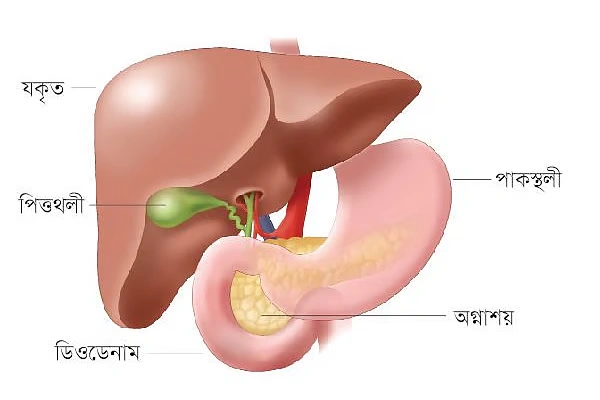
The food we eat daily contains protein, fat, carbohydrates, and more. The chemical structures of these components are quite complex. In different parts of the human digestive system, these food components are processed, transforming from complex chemical structures to simpler ones. Enzymes and hormones are used to regulate and convert these complex chemical structures into simpler forms. Various enzymes and hormones are secreted from different glands in the body. For example, there is a gland called the pancreas, which is located beside the stomach. Several hormones are secreted from the pancreas. Among them, one is called glucagon, and another is called insulin. These two hormones control the amount of glucose (blood sugar) in the blood. If the glucose level in the blood decreases, the hormone glucagon is secreted, which works to increase the level. On the other hand, when the glucose level rises, the pancreas secretes insulin, which works to reduce glucose in the blood. Both glucagon and insulin maintain blood glucose at a set level. When a person’s pancreas fails to secrete enough insulin, the glucose level in the blood rises, and there’s no hormone to control it. Eventually, the glucose level becomes excessively high. That is when we call it diabetes!
Right after World War I, diabetes became a widely discussed disease across the globe.
Scientists at that time confirmed that diabetes results from decreased insulin secretion. So, theoretically, if insulin could be administered to diabetic patients, it might be possible to control the disease. However, experimental evidence was needed to establish this theory. For that, pure insulin was required.
Many tried to isolate insulin from the pancreas but failed.
In this context, a young Canadian doctor named Frederick Banting was studying the pancreas. Banting was a doctor who had just returned from war. He had served in World War I, treating wounded soldiers on the battlefield. The bloodshed in the war deeply affected him. He resolved to dedicate himself to quietly serving humanity. While Banting was thoroughly studying the pancreas, he committed himself to doing something to cure diabetes. He focused on the right matter at the right time. He found out that several people before him had tried and failed to isolate insulin. However, Banting did not give up. The problem was, he had no laboratory. He approached Professor J.J.R. Macleod at the University of Toronto, who gave him access to a laboratory and assigned him a student assistant—Charles Best.
Banting and Best worked tirelessly day and night.
Eventually, they succeeded. They managed to extract insulin from the pancreas of dogs and calves. Now it was time to test the insulin. They injected the insulin into the bodies of diabetic dogs and observed them becoming healthy again. The same experiment was repeated. In science, experiments are repeated several times to confirm findings. This was the year 1922. Banting was about to make history.
Banting didn’t stop with experiments on dogs; he established a small clinic through his own effort.
He began treating diabetic patients there, closely observing them as insulin was administered. He saw the patients gradually recovering. The news of Banting’s success spread rapidly. The world-renowned pharmaceutical company Eli Lilly stepped forward, wishing to produce insulin on a large scale.
In 1923, Banting and Macleod were awarded the Nobel Prize in Medicine.
Banting was very surprised when the Nobel was announced, because Charles Best, who had assisted him closely, did not receive the prize. Macleod was honored with the Nobel simply for providing laboratory facilities. Banting even protested, but the Nobel announcement stood. Banting, however, made history by giving half of his Nobel prize money to Best. He rose even higher in stature by showing such magnanimity.
Insulin spread throughout the world.
Within a few months, it reached America and Europe. This invention was like a blessing for medicine in the post–World War I era. It relieved the suffering of countless people worldwide. Banting’s name entered the pages of history. Frederick Banting is still a hero in Canada. There is a special room in his memory at the Toronto Science Centre. A research foundation has been established in Toronto in his name. Banting died at the age of only 49—a rare individual. Yet, that hardly changes anything. People live on through their deeds.
References:
This article is adapted from an essay published in the January 2018 issue of Bigganchinta magazine. Author: Dr. Raufal Alam, Researcher, University of Pennsylvania, USA.