News Desk, Biggani.org | biggani.org
Today is a memorable day in the history of genetic science. On June 28, 2012, Dr. Jennifer Doudna and Dr. Emmanuelle Charpentier published a study in the journal *Science*, where they described a groundbreaking method—an extremely precise gene-editing technology known as CRISPR/Cas9. This discovery set off a revolution within the scientific community. As a result of this research, they were awarded the Nobel Prize in Chemistry in 2020.
Now, a decade has passed since that historic publication. In this time, CRISPR has moved beyond the laboratory—becoming an indispensable part of medicine, agriculture, and fundamental research.
CRISPR: The Meaning and Origin of the Term
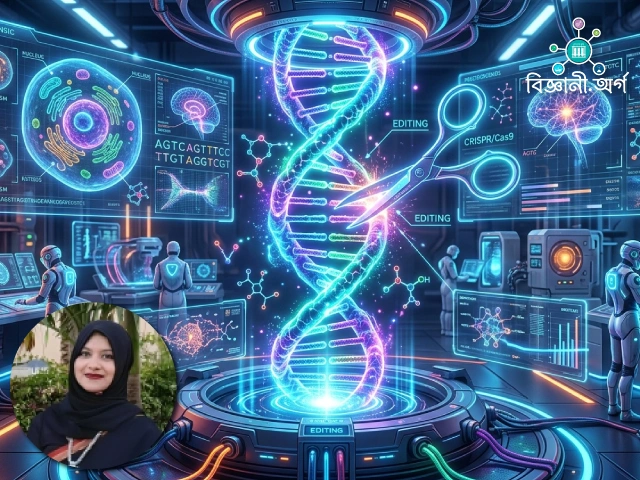
CRISPR (Clustered Regularly Interspaced Short Palindromic Repeats) is essentially a type of genetic structure found in bacterial DNA. Through this system, bacteria build a defense against viruses—a natural immunity mechanism. Cas9 (CRISPR-associated protein 9) is an enzyme capable of cutting specific parts of DNA.
In their 2012 research, Doudna and Charpentier demonstrated how this natural system could be harnessed for human gene editing—a kind of ‘genetic scissors’. Their main breakthrough was being able to precisely identify and cut a specific DNA section for targeted change.
How Do These “Gene Scissors” Work?
CRISPR technology has two main components:
- Guide RNA (gRNA) – Recognizes the target DNA segment.
- Cas9 enzyme – Cuts the DNA at that specific spot.
For example, if a disease is caused by a particular gene, researchers identify that gene and create a guide RNA targeting it. Cas9 follows this guidance to cut the DNA, and then either the DNA naturally repairs itself or researchers introduce new genetic information.
This entire process is simpler, more affordable, and much more precise than earlier gene-editing technologies.
A Revolution in Medicine
CRISPR’s most exciting use has been in the field of human medicine. Through research, the door has opened to the treatment of many genetic diseases, such as:
- Sickle cell anemia: A blood disorder primarily caused by genetics. Already, successful outcomes have been seen in some patients using this technology.
- Huntington’s disease, corneal blindness, and Duchenne muscular dystrophy—CRISPR may play an effective role in treating these and other rare diseases as well.
Additionally, this technology has expanded possibilities for cancer treatment, where patients’ immune cells can be engineered via gene editing to better recognize and destroy cancer cells.
A Turning Point in Agriculture
CRISPR has brought revolutionary changes in agriculture as well. Through gene editing in plants—
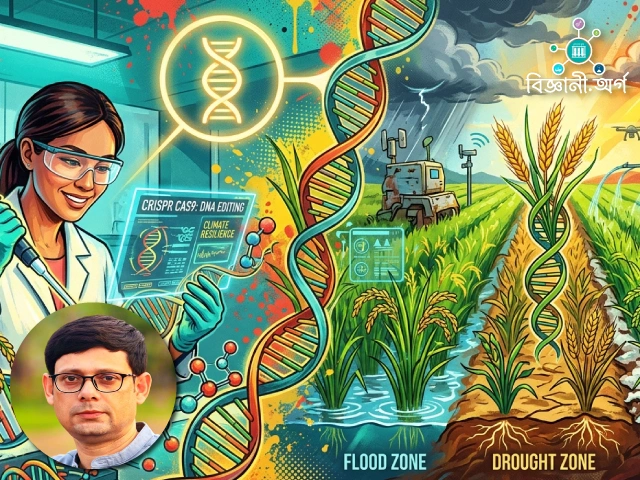
- Crops can be made resistant to pests or drought,
- Nutrient value can be increased,
- Shelf life can be improved.
For example, in China, CRISPR has been used to develop a rice strain that yields more grain with less nitrogen fertilizer. This technology is also being applied to tomato, wheat, maize, and other fruits and crops.
Ethics and Controversy
No matter how promising, CRISPR technology is not without controversy—especially regarding human embryo gene editing. In 2018, Chinese scientist He Jiankui used CRISPR on human embryos to create twin babies, sparking intense global criticism. Many scientists believe such a powerful technology, capable of changing the future of human life, must be subject to strict regulatory oversight.
Currently, policymakers and scientists are working toward developing international guidelines for CRISPR use.
CRISPR’s Potential in Bangladesh
In Bangladesh, the use of this technology is still at an early stage. However, agricultural research institutes like BARI (Bangladesh Agricultural Research Institute) and various BIDS centers are conducting research on gene technologies. In the future, advanced technologies like CRISPR could enable the cultivation of crops adapted to climate change.
In medicine, too, this technology could transform genomic research and the treatment of rare diseases in the country.
The Nobel Prize and Recognition
Since the 2012 publication, CRISPR has generated both awe and hope in the scientific community. Finally, in 2020, the Swedish Royal Academy awarded Dr. Jennifer Doudna and Dr. Emmanuelle Charpentier the Nobel Prize “for the development of a method for genome editing”.
This was the first time in Chemistry that two women scientists jointly received the prize—a milestone for science and women’s empowerment.
The Horizon Ahead
In the coming days, more advanced versions of CRISPR are emerging, such as:
- Base Editing: Where specific DNA bases can be changed without cutting the DNA.
- Prime Editing: Which can make even more complex changes to the genome with higher precision.
Efforts are also underway to use CRISPR as a diagnostic tool—for example, in the detection of infectious diseases. During the COVID-19 pandemic, this technology was used to rapidly develop test kits.
Conclusion
CRISPR technology proves how science can break the boundaries of humanity and open new avenues of possibility. From medicine to agriculture, from research to technology—its impact is being felt everywhere. However, responsible and ethical use of this powerful technology demands public awareness, research, and international collaboration.
That 2012 research was not just words on a page—it was the key to opening the door to the future.
On CRISPR’s birthday today, we pay tribute to the scientists and researchers who tirelessly strive to make our future healthier, more food-secure, and technology-driven.
📌 References:
Doudna, J.A., & Charpentier, E. (2012). A programmable dual-RNA-guided DNA endonuclease in adaptive bacterial immunity. Science
📌 Written and Edited by:
News Desk, Biggani.org
✉️ Contact: biggani.org