For humans, animals, and plants alike, the foundation that determines their characteristics is the genetic code. Our eye color, height, immunity, or a plant’s fruit size and taste—all depend on the information stored in DNA. With advances in modern biology and biotechnology, scientists now have the ability to alter this genetic code, ushering in a new era in the life sciences.
What is the Genetic Code and Its Role
The genetic code refers to the specific sequence of nucleotides in DNA that provides instructions for making proteins. These proteins regulate the structure, functions, and characteristics of living organisms. When there is any alteration or mutation in the DNA, the structure and function of the corresponding proteins can also change. As a result, there can be both internal and external changes in an organism’s traits.
Natural Genetic Changes and Evolution
Genetic changes naturally occur through evolution. Environmental pressures, radiation, chemicals, or errors during cell division can cause changes in DNA. While some of these changes are harmful for certain organisms, others can be beneficial and lead to new adaptations. Over long periods, this process has given rise to new species.
Gene Editing and Modern Technology
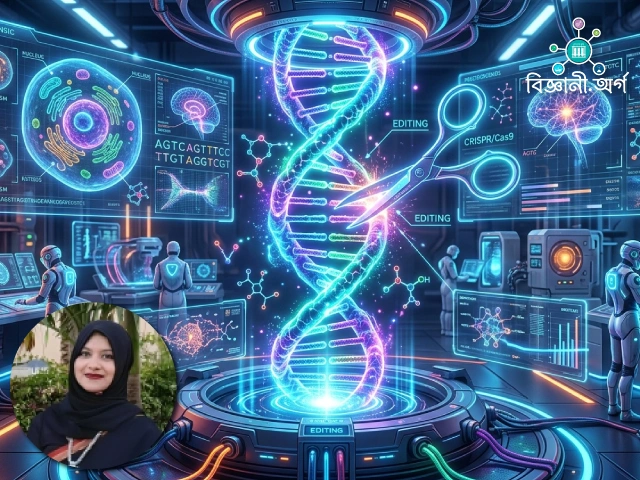
Today, scientists are using technologies to artificially alter genetic codes, such as gene editing. With CRISPR-Cas9 technology, it is possible to cut, modify, or add specific genes. This has opened up new possibilities in hereditary disease prevention, the production of high-yield crops, and advances in medical science.
Ethical and Social Questions
However, genetic alterations also raise ethical and social questions. How acceptable is it to change human genes? What impact will this have on future generations? Will the concept of “designer babies” increase social inequality? To find answers to these questions, scientists, policymakers, and society must work together.
Conclusion
Changing the genetic code is not only a scientific advancement; it can also play a crucial role in shaping the future of human civilization. Through proper policies and responsible use, this technology can contribute significantly to a disease-free world, food security, and environmental conservation. Therefore, it can be said that changing the genetic code is not just about altering traits—it marks the beginning of a new horizon of possibilities.
Tahsin Ahmed Supti
Biotechnology and Genetics (1st Year)
Dow University of Health Sciences, Karachi