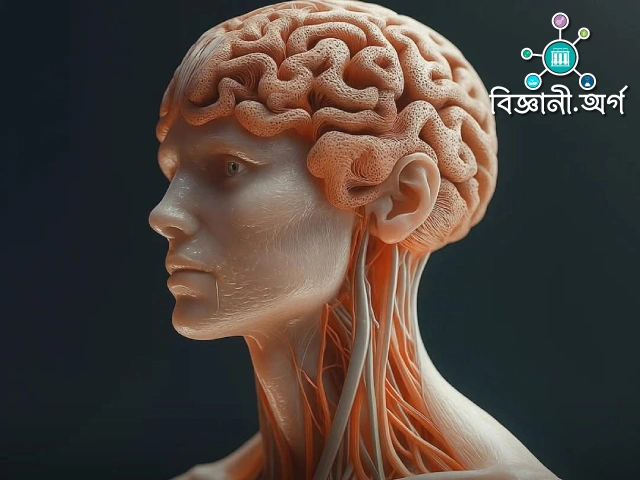
Millions of people around the world today are battling Alzheimer’s disease. This illness leads to memory loss, declining cognitive ability, personality changes, and ultimately, the gradual erosion of self-identity. For a long time, medical scientists believed that the main cause of Alzheimer’s was the abnormal buildup of a protein called “beta-amyloid” in the brain. However, recent long-term research by Dr. Donald Weaver and his colleagues at the University of Toronto calls for a completely new understanding of the disease.
According to these researchers, Alzheimer’s is not “just a disease of the brain”—it is primarily an autoimmune disorder. In other words, the disease originates when our immune system mistakenly attacks its own cells and tissues.
Beta-Amyloid: Not the Enemy, but a Shield
For decades, scientists believed that beta-amyloid protein was the main culprit in Alzheimer’s because it builds up abnormally in the brain and damages the function of neurons. That’s why the main goal of drugs and treatments was to remove this protein or stop it from forming.
But Dr. Weaver’s research indicates that beta-amyloid is by no means an “abnormal” substance. Rather, it is actually a vital component of the brain’s immune defense. When the brain faces infection or injury, beta-amyloid springs into action—mounting a defense against bacteria or viruses.
The problem arises when this defense mechanism becomes confused. Because the structural features of some bacteria are quite similar to those of brain nerve cells, beta-amyloid sometimes mistakenly identifies the brain’s own cells as the “enemy.” As a result, it triggers a devastating autoimmune attack against the brain itself, gradually.
A New Perspective After Three Decades of Research
For nearly 30 years, Dr. Weaver and his team have been studying the nature of Alzheimer’s, protein structures, and immune system behavior. Their observations reveal that the chemical structure and function of beta-amyloid are such that, in normal conditions, it helps fight infection—but if it is activated uncontrollably, it damages the brain’s own tissue.
Seeing Alzheimer’s from this perspective means analyzing the disease in a whole new light. Where scientists had long tried to break down “abnormal protein aggregates,” they are now thinking about how to maintain balance in the immune system—to prevent it from mistakenly attacking itself.
Alzheimer’s: Headed for a New Classification
According to this new idea, Alzheimer’s now aligns with other autoimmune diseases—such as Lupus, Multiple Sclerosis (MS), or Rheumatoid Arthritis. In all of these, the body’s own immune system declares war on its own cells.
This comparison is not just theoretical; it is medically significant, too. Because if Alzheimer’s is indeed an autoimmune disorder, then its treatment approach must focus on immune regulation—just as with other autoimmune diseases.
A New Direction for Treatment Approaches
For many years, countless drugs have been tested in hopes of curing Alzheimer’s, with most designed to remove beta-amyloid or block its production. But in practice, these drugs have not proven to be very effective.
Now, researchers say the problem doesn’t lie in the presence of beta-amyloid, but rather in the immune system’s faulty response. So, future medications may be developed to keep the brain’s immune activity balanced—so the defense system remains active against infections, but does not harm its own neurons.
If such treatment strategies succeed, they could completely change the course of Alzheimer’s. Restoring immune balance in the early stages of the disease could potentially slow down the progression of memory loss significantly.
Why This Discovery Matters
Currently, Alzheimer’s affects more than 55 million people worldwide. In Bangladesh too, as the population grows older, dementia and Alzheimer’s are emerging as major public health issues.
This new research has revealed at least three major possibilities—
- A new framework for understanding the disease: Alzheimer’s is now being viewed not just as a disease of memory or neurons, but as a biologic disorder regulated by the immune system.
- New direction for treatment: Instead of removing beta-amyloid, the aim of treatment will now be to restore immune balance.
- Possibility of prevention: If it’s discovered which elements or infections trigger this autoimmune response, preventive action could be taken at the earliest stages.
Reactions in the Scientific Community
Though this idea is revolutionary, not all scientists are in agreement yet. Many point out that the beta-amyloid theory is not entirely wrong—it remains an important aspect of the disease. Still, Dr. Weaver’s work has undoubtedly brought new energy into the discussion.
According to renowned neurologists, “This is a theory that could break a long-standing stalemate.” The numerous failed clinical trials over the past decades may have been the result of targeting the wrong thing. If Alzheimer’s truly turns out to be an autoimmune disorder, treatment methods must be developed from a completely new perspective.
For General Readers: What Are Autoimmune Diseases?
Our body’s immune system mainly protects us by attacking foreign invaders—like viruses, bacteria, or parasites. But if, for some reason, this system starts viewing its own cells as “enemies,” that’s called an autoimmune response.
As a result, the body begins to destroy its own tissues—for example, the pancreas in type-1 diabetes, the skin and joints in lupus, and the brain and nerves in multiple sclerosis. Now it’s thought that the same kind of immune malfunction occurs in Alzheimer’s as well.
Significance in the Context of Bangladesh
The number of people over 60 in Bangladesh is increasing rapidly. By 2025, the elderly population is projected to reach almost 15.6 million (Source: Bangladesh Bureau of Statistics). With this, the risk of dementia and Alzheimer’s is also rising.
But so far, the availability of diagnosis and treatment is very limited in the country. In most cases, Alzheimer’s is detected quite late, when the patient is already incapacitated in daily activities.
If, based on this new research, it becomes possible to develop immune-regulating treatments or preventive measures, it could be a huge blessing for developing countries like Bangladesh.
Future Directions of Research
Researchers are now trying to uncover how beta-amyloid normally protects the brain, at what point it becomes confused and starts attacking its own neurons, and which genes or environmental factors influence this process.
Additionally, they are investigating whether the microbiome—the balance of microbes in our gut—plays any role in this process. It has already been proven that gut bacteria can affect the body’s immune system.
A New Hope
In Dr. Weaver’s words, “For so long, we have been viewing Alzheimer’s in the wrong way. Now we know that it is the result of a malfunction in the immune system inside the brain. This understanding is opening new horizons for treatment and prevention.”
Alzheimer’s has long been an incomprehensible mystery. Each failed drug, every failed clinical trial, only made the disease more enigmatic. But if this new perspective is proven true, perhaps future generations may one day declare—Alzheimer’s is no longer insurmountable.
Conclusion
Seeing Alzheimer’s not just as a disease of memory loss, but as an autoimmune disorder, sets science on a new path. This theory still awaits conclusive proof, but it has the potential to transform the conceptual framework of medical science.
For older people in Bangladesh and across the world, this is a ray of hope—a future where the core principle of treatment could be protecting, rather than destroying, brain cells.
Source:
Donald Weaver, Professor of Chemistry and Director – Krembil Research Institute, University Health Network, University of Toronto. Published in The Conversation.