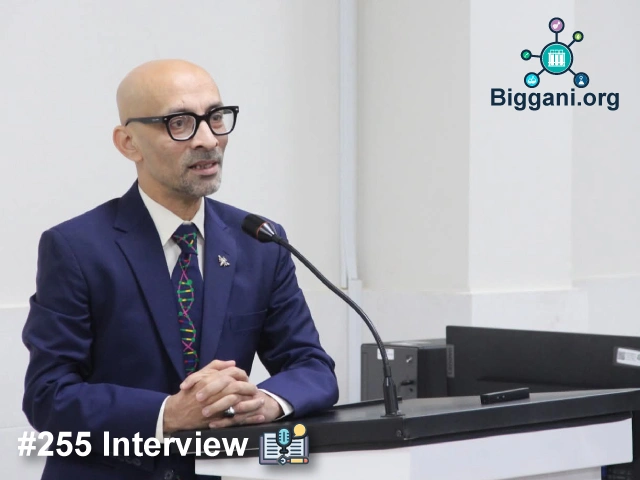


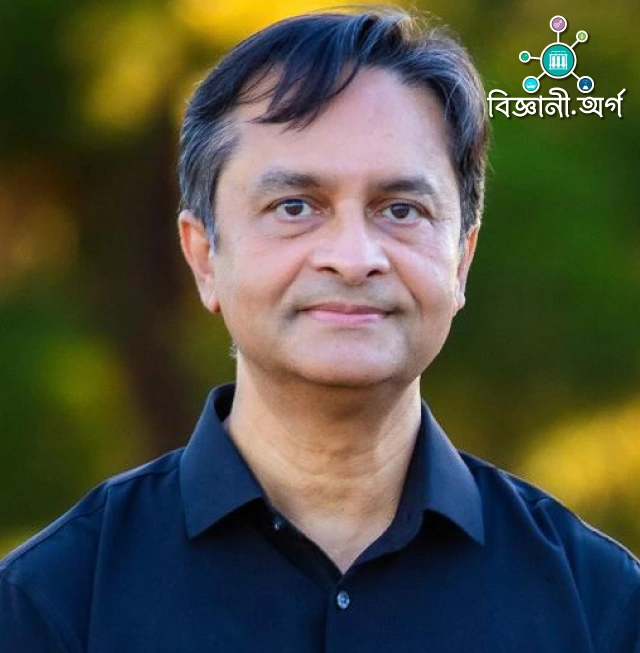
As the world enters a new industrial revolution centered on artificial intelligence, semiconductors, and nanotechnology, this era could become the most transformative age for the youth of Bangladesh. Against this backdrop, Professor Saif Islam, Chair of the Department of Electrical and Computer Engineering at the University of California, Davis, has shared an encouraging message for young people in Bangladesh—“Now is the time to prepare.”
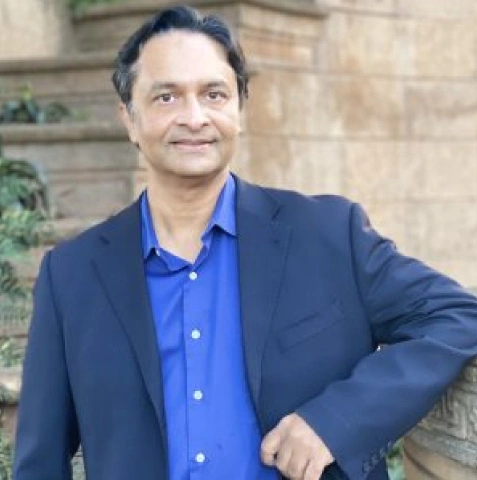
In mid-July this year, he discussed various topics on the ORCA platform with Mehedi Hasan and Tahsin Kaiyum of Rajshahi Cadet College. In that conversation, he presented several important ideas in clear and compelling language. After watching the entire interview, it seemed it should exist in written form—and that’s what I set out to do. Edited by Mashiur Rahman.

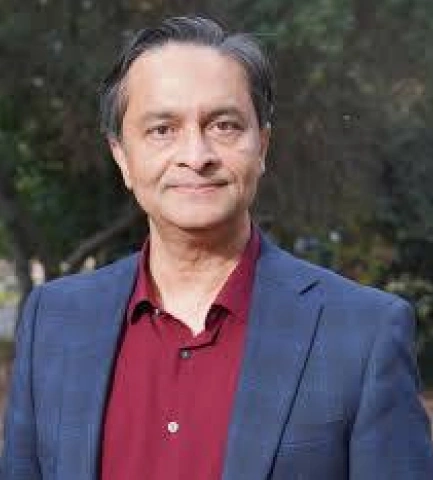
Let’s start by learning about Professor Saif. Professor Saif Islam is the Chair and Professor of Electrical and Computer Engineering at the University of California, Davis. He has served as director of the top US research organization, CITRIS and the Banatao Institute, and has led groundbreaking research in semiconductor nanotechnology for over 21 years. He is a Fellow of IEEE, OSA, SPIE, AAAS, and NAI, holds 42 patents, and has authored more than 300 scientific publications. His fields of research range from nanoengineering, quantum sensing, and optoelectronics to disease prevention and building smart infrastructure. In addition to teaching, he has founded two startups, bridging the gap between research and industry through real-world application.
In this extensive conversation, he spoke openly about the labor shortage in America, Bangladesh’s potential, the need for industrial policy reform, the importance of education and online courses, mental health, and the future of AI innovation. In his words, “Bangladesh’s young people have the potential to become the world leaders of the next generation—if they can adapt their ways of learning and working.”
This interview presents his seven key perspectives—with America’s technological reality on one hand, and a road map for Bangladesh on the other. It’s not just a scientist’s opinion—it’s a call for the future of Bangladesh from a visionary thinker.
(1) Workforce Crisis in America & Bangladesh’s Opportunity
Question: Professor Saif, you recently said that the US is facing a huge workforce crisis. Could you elaborate?
Professor Saif:
Yes, this is now a national issue in the US.
By 2030, there will be a shortage of at least one million trained workers—especially in semiconductors, artificial intelligence, microelectronics, and computer hardware sectors.
According to our calculations, just the semiconductor sector alone requires over 150,000 skilled engineers.
But the way America is currently training students, it would take 140 years to fill this gap, while we only have five years left.
Question: Why has this situation arisen?
Professor Saif:
There are two main reasons.
First, the US is divesting from components made in China and Russia, wanting to bring production back to America—to ensure national security and technological self-reliance.
As part of this, the $282 billion Chips and Science Act has been passed, investing in STEM education from primary school to the PhD level.
Secondly, even if manufacturing is brought back, there’s now a lack of skilled workers. Big companies—Intel, TSMC, NVIDIA—are all struggling to build factories just because of the shortage of trained people.
Question: What kind of opportunities do you think this crisis creates for Bangladesh?
Professor Saif:
I’d call this a “golden window” for Bangladesh.
Now, many students from China, Iran, or India are facing visa issues. But there are still no such barriers for Bangladesh.
In my department, we accept about 60 PhD students annually, but this time, only 9 joined—because there weren’t enough applicants.
American universities are now actively searching for talent from new countries, and Bangladeshi students can step up and lead if they want.
Question: How can Bangladeshi youth prepare for this opportunity?
Professor Saif:
There are limitless learning opportunities now.
Platforms like Coursera, Udemy, edX, and NVIDIA Learning offer cutting-edge courses.
I can tell within five minutes of an interview whether someone has completed these courses.
Bangladeshi students should start earning these certifications now and build proficiency in technical English.
These skills will help them establish themselves as world-class researchers and engineers in the future.
Question: What long-term impact will this shortage have in the US?
Professor Saif:
This will impact not only the US, but the entire global economy.
Semiconductors and AI technology are the backbone of modern industry.
If there’s a shortage of trained human resources, chip manufacturing, AI hardware, and even healthcare technology development will be delayed.
So, countries that can develop technical workforces now—like Bangladesh, Vietnam, and Malaysia—might become the new tech hubs of the next decade.
Question: What steps can the Bangladesh government or institutions take now?
Professor Saif:
We need to build high-tech training institutes and semiconductor training centers right away.
The garments industry will gradually be replaced by robots—so the new generation must be trained in alternative high-tech sectors.
Some $200 billion of production is shifting from China—we could bring a share of this industry to Bangladesh if we try.
Our first goal should be to master assembly, packaging, and testing. That’s how major companies will become interested in investing in Bangladesh.
Question: What’s your final message for young people?
Professor Saif:
I always say—opportunity never knocks; you have to open the door.
Youths need to get ready now.
What you learn and train for today will be your key to global leadership in five years.
If we focus on education, research, and technological advancement now, Bangladesh can be an active player—not just a bystander—in the technology revolution.
(2) Opportunities for Bangladesh
Question: Professor Saif, you said there is a shortage of skilled students in the US, especially at the PhD level. What kind of opportunities does this create for Bangladeshi students?
Professor Saif:
This is truly a “big opportunity” for Bangladesh.
Previously, US universities saw large numbers of Chinese, Indian, and Iranian students. But now, the geopolitical landscape has shifted drastically. US-China relations have cooled to a “cold war” level, visas for Iranians are nearly stopped, and even with India, the relationship is uncertain. As a result, many seats go unfilled.
In my own department—Electrical and Computer Engineering at UC Davis—we typically take about 60 PhD students per year. But this time, we ended up with only nine. This is a serious issue for us too.
This shortage means emerging countries like Bangladesh have the best chance to fill the gap.
Question: So you think there are more opportunities than before for Bangladeshi students in the US?
Professor Saif:
Absolutely. This is a time of global transformation.
There’s a shortage of skilled engineers and researchers everywhere—US, Europe, and East Asia alike.
American universities are now looking at new markets—students who are technologically skilled, proficient in English, and hungry to learn. Bangladeshi youths have all of those qualities.
If they prepare a little—good academic results, interest in research, and staying up-to-date with online courses—they can quickly fill this vacuum.
Question: You recently mentioned the BEARS Summit. What kind of initiative is this?
Professor Saif:
The BEARS Summit (Bangladesh–Electronics–AI–Research Symposium) marks the beginning of a new chapter for Bangladesh.
It’s a platform where the government, universities, and private sector come together to plan for collaboration on semiconductor, bioelectronics, and AI-based research and industrial development.
Executives from companies across the US, Europe, and Asia are also joining this conference.
If Bangladesh plans well and starts training at the university level, in a few years we can take our place on the world map of chip design and high-tech research.
Question: Are Bangladeshi universities or the government already showing interest in this?
Professor Saif:
Yes, there has been a very positive response.
I have given talks at Dhaka University, BUET, and MIST, and noticed a lot of interest among the faculty.
At the government level, BIDA and the Ministry of ICT are involved in this initiative.
They want local universities to directly align their training with industry needs.
This way, the next generation will be more skilled, and foreign investors will also gain confidence.
Question: Do you think Bangladeshi youth can rise to this challenge?
Professor Saif:
I am very optimistic.
The young generation in Bangladesh is far more confident and tech-savvy today than before.
If we can provide proper training, mentorship, and international cooperation, they can lead not just in the US but across Asia’s tech ecosystem.
My message is simple—now is the time to prepare.
(3) Bangladesh’s Industrial Policy & Future Strategy
Question: Professor Saif, you said Bangladesh needs to rethink its economy and industries. Why is this shift necessary now?
Professor Saif:
We’ve been relying on the garments sector for a long time—which has certainly played a key role in Bangladesh’s development. But the reality is, due to robotic automation, the garments industry is gradually declining.
All over the world, large garment factories are now run by robots—not people—working fast, accurately, and with almost zero defects.
As a result, within the next decade, employment in this sector will drop dramatically.
Now is the time for both government and the private sector to plan for alternative industries.
Semiconductors, data centers, bioelectronics, and high-tech manufacturing—these fields can form the next economic backbone for Bangladesh.
If this transition starts now, the country can be part of the global technology supply chain in the next two decades.
Question: You often cite Vietnam as an example. Why do you think Bangladesh should follow the Vietnamese model?
Professor Saif:
Vietnam has used its timing very smartly.
Just one example—Samsung alone exports about $70 billion worth of products from Vietnam annually.
They started out with lower-end work, like packaging and assembly, then gradually moved to design, testing, and research.
Now their biggest challenge is finding highly educated, PhD-level researchers.
Even Samsung is recruiting scientists from abroad because they don’t have enough local skilled workers.
This is a lesson for Bangladesh.
If we invest in training and research from now, Bangladesh can get ahead in filling this gap in the next decade.
Question: How can Bangladesh begin this process?
Professor Saif:
My advice is that our first step should be attaining expertise in “packaging, testing, and verification.”
Entering this stage is relatively easy and less costly.
Once we gain this experience, we can begin to take part in design and production ourselves.
This transition is not just about technology—it’s about policy and leadership.
If the government establishes sound policy and builds bridges between universities, the private sector, and foreign companies, Bangladesh can quickly enter this ecosystem.
Question: Where does Bangladesh fit in the global supply chain?
Professor Saif:
Bangladesh’s potential is immense.
Approximately $200 billion in production is moving out of China—Vietnam, Malaysia, and Mexico are seizing that opportunity.
But the market is not yet full.
If Bangladesh prepares in earnest, we could easily become a new node in the global supply chain.
Just as Vietnam grew with Samsung, Bangladesh can also be a partner in next-generation high-tech manufacturing.
What we need are skilled human resources, modern training, and forward-thinking policy-making.
Question: What is the single most important thing for Bangladesh to do right now?
Professor Saif:
More than anything, we must align our education and training system with industry.
Universities need to develop courses that equip students with the exact skills industry demands.
The government must increase investment in infrastructure and research funding.
And young people need to shift their mindset—it’s not garments, but technology, that is the future of Bangladesh.
(4) Learning Methods and the Importance of Online Courses
Question: Professor Saif, you often talk about new forms of learning and the value of online courses. How are they relevant now?
Professor Saif:
Today, education is no longer restricted to the classroom. Technology has completely changed the way we learn.
Now, platforms like Coursera, Udemy, edX, and NVIDIA Learning give students worldwide the same opportunities.
These courses are designed to not only teach theory, but provide hands-on experience.
This elevates the quality of learning, builds confidence, and most importantly— prepares them to compete in the global workforce.
Question: Do you think online courses truly increase a student’s qualifications?
Professor Saif:
Absolutely they do.
From my experience, I can tell within five minutes in an interview if someone has taken these courses.
Their thinking, their approach to asking questions, their problem-solving methods—everything is different.
These courses don’t just give certificates—they actually make a student “world-class.”
A student who has done a Coursera or NVIDIA course in “Applied AI,” “Semiconductor Fabrication,” or “Data-driven Engineering” needs far less training to get started in research or industry.
Question: What tangible benefits can Bangladeshi students gain from these courses?
Professor Saif:
Many young people in Bangladesh have the interest, but limited opportunities—especially for advanced labs, guidance, or research tools.
These online courses have broken through those limitations.
Anyone can now learn from the world’s best professors from their own laptop, submit projects, and receive international certificates.
These certificates act as proof of skills in the eyes of foreign universities and companies.
I believe that in the coming years, those who excel at these courses will be the quickest to access opportunities for research or jobs abroad.
Question: So can Bangladeshi universities incorporate these online platforms?
Professor Saif:
They absolutely should.
Many developed countries have already adopted a hybrid model—where local faculty teach lectures, and specialized Coursera or edX courses are added on.
If Bangladeshi universities adopt this model, students will get world-class education without having to go abroad.
This would be a huge transformation in higher education in Bangladesh.
Question: What’s your advice to young people on this topic?
Professor Saif:
My advice—start learning whatever you can, right now.
Don’t wait just for a degree.
AI, Data, Semiconductors, Cloud Computing—these are the fields of the future.
You have the whole world at your fingertips—just know how to knock on the right door.
If you start learning now, you’ll be ahead in the global job market in just five years.

(5) Mental Pressure and the Reality of Studying Abroad
Question: Professor Saif, many students face mental stress when studying abroad. You have worked with students in the US for a long time—what have you observed?
Professor Saif:
This is a very real and concerning issue.
Recently, we’ve noticed many young men and women going abroad for higher studies become overwhelmed by mental stress, loneliness, and family expectations.
Some tragic incidents have occurred—some have even taken their own lives.
It’s not the research pressure that’s the main cause; rather it is the lack of mental and social support.
Many who go from Bangladesh are seen as a source of family pride.
This creates an unconscious pressure of “having to always succeed.”
But studying abroad means an entirely different world—managing your own chores, cooking, laundry, research, classes—everything, all at once.
Without counseling and mental preparation, it becomes very difficult to maintain balance.
Question: How can students deal with this pressure?
Professor Saif:
Firstly, take mental preparation before going abroad.
It’s not just about academics—understand the reality of daily life, too.
Many students assume that life in America or Europe means luxury. But life here is all about self-reliance and discipline.
Secondly, make use of counseling services.
Nearly every US university has a student counseling center providing free psychological support.
Bangladeshi students need to be more aware of this—it’s not a weakness, but a smart way to protect one’s mental health.
Question: From your experience, what is the biggest challenge for students when studying abroad?
Professor Saif:
The biggest challenge is time management and loneliness.
Research often means staying in the lab as late as two or three in the morning.
The gentle emotional environment of friends, family, and society that we have in Bangladesh isn’t there abroad.
So, you have to create your own sources of joy—talking with friends, pursuing hobbies, getting involved in the community—all help maintain mental stability.
Another factor is social connection.
Civil society in America is somewhat weaker now, people are used to being alone.
But I believe this country hasn’t lost its democratic and human values.
Youth should learn the positive sides of this society—independence, punctuality, dedication to work—these are what make a person strong.
Question: What’s your message to Bangladeshi students who dream of studying abroad?
Professor Saif:
I would say—having the dream of studying abroad is wonderful, but mental and cultural preparation is even more important.
Life here is very free, but with that freedom comes responsibility and self-control.
If you’re mentally prepared, this experience will change your life.
Also remember—studying abroad isn’t just about your own success, but a chance to gain knowledge and experience for the benefit of your country.
If you learn abroad and then contribute to your country’s progress, your journey will be truly successful.
(6) AI and Tech Innovation Directions for Bangladesh
Question: Professor Saif, you say Bangladesh must advance now in AI and technology innovation. Why is this so urgent at this moment?
Professor Saif:
Because this is what the future depends on.
Just as electricity or the internet once became the foundation of modern civilization, artificial intelligence (AI) is now serving that role.
Every nation is now developing AI solutions tailored to their own needs—health, education, agriculture, transportation, governance—AI is sweeping across every field.
If Bangladesh starts developing localized AI applications now, it can become a tech-driven economy in the next decade.
Question: Many say AI is a field for big countries—that it’s difficult for developing countries like Bangladesh to implement. Do you agree?
Professor Saif:
No, I don’t agree at all.
Bangladesh’s greatest strength is its young population and a unique language- and culture-based market.
In a country of 180 million people, there is a massive user base for AI services tailored to daily life, education, health, and financial needs.
This concept of a “local market” can make Bangladesh attractive to foreign companies.
I often say—if a young person can develop a good Bangla-language AI app that gets a million users, it could become Bangladesh’s own Facebook or Google.
The world is moving toward a “user economy,” where data—not just content—is the greatest asset.
Youths in Bangladesh need to understand this data ecosystem.
Question: Where should Bangladesh start with AI innovation?
Professor Saif:
The first step is local problem identification.
There are countless problems in our society—traffic management, agricultural pricing, corruption monitoring, health data management—AI can be highly effective in all these areas.
Our goal should be to create apps that make daily life easier and government processes more transparent.
The second step is data collection and management.
There is plenty of data scattered throughout Bangladesh, but it’s not consolidated or ready for analysis.
If government and private sectors work together to create a “national data platform,” the country’s AI development will accelerate.
Question: Do you think the government can use AI to increase administrative efficiency?
Professor Saif:
Definitely.
I’d even say—if AI is used properly in governance, corruption, bribery, and irregularities can be greatly reduced.
If every government transaction, file movement, even public service can be tracked by AI-driven systems, transparency will rise.
AI never takes bribes, never plays favorites—this is its greatest strength.
Moreover, AI can play a huge role in healthcare.
Part of my own research involves the use of AI for disease diagnosis.
If AI-driven diagnostic tools are incorporated in Bangladesh’s primary healthcare system, thousands of people can detect diseases early without needing an expert doctor.
Question: What advice do you have for young Bangladeshi developers and entrepreneurs?
Professor Saif:
I’d say—just start if you have an idea.
Bill Gates didn’t know code, but he had an idea—and that’s how he convinced IBM.
You need that confidence, too.
Bangladesh has thousands of problems—whichever one you can solve with technology, that’s your startup idea.
The beauty of AI is—you don’t need a big factory—just brains and focus.
You can start alone; later, you can build a team.
If today’s youth start creating AI solutions for local needs right now, in ten years Bangladesh can lead the technology map of South Asia.
(7) The Human Brain, Consciousness, and the Limits of AI
Question: Professor Saif, you discuss the differences between the “human brain and AI” in your research. Do you think AI will ever be able to think like a human?
Professor Saif:
No matter how advanced AI gets, it’s still an “illusion of thinking”—a kind of imitation.
AI may appear intelligent, can process information quickly, but actually fails when faced with new problems or unknown situations.
Unlike the human brain, AI does not have consciousness or self-awareness.
When humans think, imagination, emotion, experience, and morality all combine.
But AI’s decisions are solely dependent on data and patterns.
So I’d say, AI does not think—it computes.
Question: So what is the scientific explanation of “consciousness”—where does it stand?
Professor Saif:
This is still one of the biggest mysteries in science.
Sir Roger Penrose, a physicist at Oxford, has a theory—he says consciousness actually arises from processes at the quantum level.
That is, something at the quantum level happens during neural signal transmission in the brain—a process science does not yet fully understand.
We know that inside a cell, countless communications occur within a picosecond—such a complex system of communication that no machine can yet emulate.
So I believe, until we fully understand the quantum nature of the human brain, “true intelligence” will remain beyond AI’s grasp.
Question: Still, many researchers say AI will surpass human intelligence. Do you think that’s possible?
Professor Saif:
AI can surpass humans in specific tasks—like chess, data analysis, or searching large databases.
But AI can never completely emulate the full spectrum of human intelligence.
Human intelligence isn’t just logic—it includes empathy, moral judgement, self-awareness, and creativity.
These are the traits that make us human, and they can’t be written in code.
That said, I’d also add—AI isn’t a replacement for humans, but an extension.
If we use it wisely, AI can speed up our work, reduce errors, and deepen our thinking.
Question: Your research deals with “ultra-fast communication.” How is that related to the human brain?
Professor Saif:
A part of my research focuses on ultra-fast communication—measuring communication times between cells and micro-scale electronics.
We have found that two cells can exchange information with each other within a picosecond (a trillionth of a second).
This speed is so fast that no modern computer or processor has caught up to it yet.
This is why I say, the human brain is still the world’s most advanced computing system.
Question: What’s the takeaway from this research for Bangladeshi youth?
Professor Saif:
I would say—never be afraid of the unknown.
AI, quantum computing, neuroscience—these fields are still open, with plenty yet to be discovered.
If young people in Bangladesh dive into research with courage, they too can participate in the next scientific revolution.
Science is not just what you learn from books—science is about having the courage to ask questions.
Those who ask questions are the ones who discover new worlds.
Conclusion
This wide-ranging conversation with Professor Saif Islam is more than just an interview—it’s a blueprint for Bangladesh’s technology-driven future. He has shown how the shifting global tech economy brings both challenges and opportunities for Bangladesh. As skill shortages reach crisis levels in the US, young people from Bangladesh can fill that gap—if they prepare themselves now. In every point, he echoed a core message—“This is the time for youth.” If we want to transition from a garment-dependent economy toward a knowledge- and technology-driven industry, we must invest now in people, education, and innovation. He shared the example of Vietnam, which started from small steps like packaging and assembly and now holds a strong position in the global supply chain. Bangladesh can take the same path if it wants—on one condition: a long-term plan and a commitment to developing skilled human resources.
According to Professor Saif Islam, the key to transformation is changing how we learn. Going beyond university textbooks and embracing online learning, project-based work, and problem-solving-based education is essential now. Only in this way can the new generation achieve “world-class” competence, earning their place in international research and tech markets. However, he also cautioned that no matter how appealing studying or researching abroad may seem, without mental preparation and self-control, the journey becomes much harder.
Success abroad isn’t just about collecting degrees; it also means gaining knowledge and experience to serve one’s homeland. Finally, on the subject of AI and tech innovation, he said Bangladesh’s future depends on the curiosity and creativity of its youth. Whoever can identify their country’s issues and create technological solutions will be the next heroes of Bangladesh.
In his words—
“AI and technology are not a replacement for people, but their extension. The society that understands this will be the one to progress.”
This interview is thus an invitation—a call to every youth in Bangladesh to dream of a new technology-driven Bangladesh, fueled by knowledge, courage, and innovation.