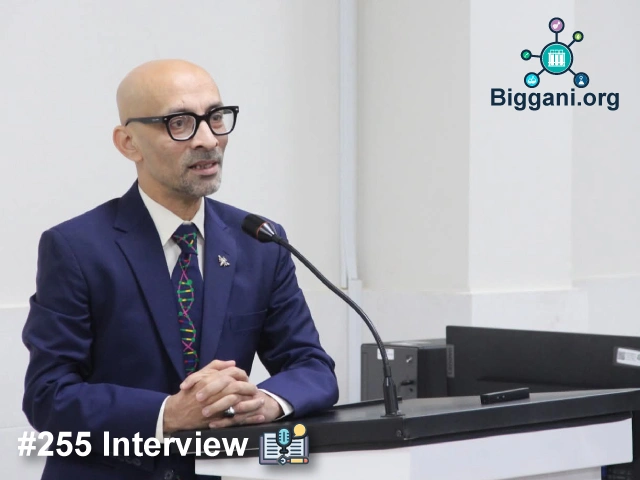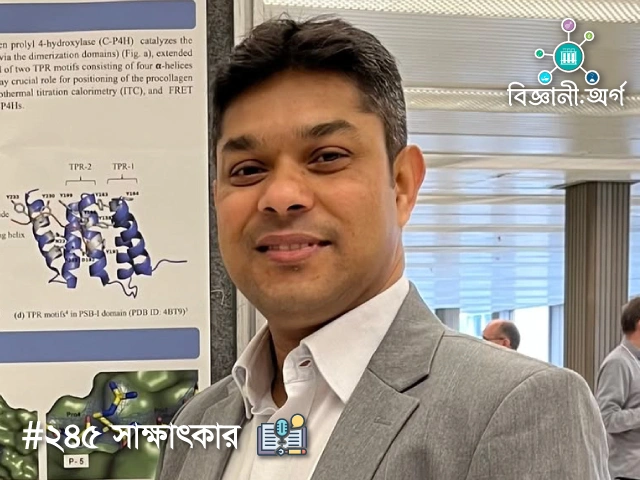
Pulak Maitra is currently working as a Postdoctoral Research Associate at the W.K. Kellogg Biological Station, Michigan State University, USA. His research primarily focuses on soil microbiology, plant–microbe interactions, arbuscular mycorrhizal fungi (AMF), and sustainable agricultural systems. He completed his PhD in Microbiology at the University of Chinese Academy of Sciences, China, where he conducted research on the effects of environmental changes on mycorrhizal communities, drought-affected soils, and plant–microbe symbiosis.
Previously, he worked as a postdoctoral researcher at the Polish Academy of Sciences in Poland and as an Assistant Professor at Yibin University in China. Early in his career in Bangladesh, he gained experience in biofertilizer, biopesticide, endophytic microbes, and Rhizobium-related research as well as roles in industry. His main research goal is to understand how environmental stresses in agriculture—especially drought—affect soil microbes and crop productivity, and how this knowledge can be applied for sustainable agricultural development.
💬 Q&A Session
Question: First, can you tell us about yourself?
Answer: I am currently working as a postdoctoral researcher at the Kellogg Biological Station, Michigan State University. Before this, I worked as a postdoctoral researcher at the Polish Academy of Sciences and as an Assistant Professor at Yibin University in China. I completed my undergraduate and postgraduate studies in Biotechnology and Genetic Engineering at the Islamic University in Bangladesh, and my PhD in Microbiology at the University of Chinese Academy of Sciences, China. My main research interests are soil microbiology, plant–microbe interactions, and sustainable agricultural systems.
Question: What is your research about?
Answer: The main focus of my research is how long-term irrigation and short-term drought affect the characteristics of soil microbial communities and arbuscular mycorrhizal fungi (AMF) in soybean fields. I use DNA-based high-throughput sequencing technology to analyze changes in microbial communities and study their functional roles. I also try to understand how the roles of nitrogen-fixing bacteria (Rhizobium) and endophytic microbes contribute to crop drought tolerance.
Question: How does your research benefit us or will in the future?
Answer: The results of my research can offer sustainable solutions in agriculture. By understanding how soil microbes help plants with water and nutrient uptake during drought or climate change stress, farmers in Bangladesh and other developing countries can improve soil health and increase productivity. This knowledge can also be used to develop microbe-based biofertilizers or inoculants.
Question: Would you share any memorable experience from your research work?
Answer: One notable experience was analyzing the microbial changes in long-term irrigated versus rainfed soybean soils at the field level. I observed that even during drought, soil microorganisms such as arbuscular mycorrhizal fungi (AMF) and Rhizobium bacteria play a vital role in providing water and nutrients to crops. In addition, during my PhD research in China, I explored how nitrogen and phosphorus fertilization affect microbial communities in forest soils.
Question: What qualities do you think are necessary for a scientist?
Answer: In my opinion, a few qualities are essential for a scientist:
1. Curiosity – A desire to understand the mysteries of nature.
2. Perseverance – The mentality to keep trying despite failure in research.
3. Integrity and Responsibility – Respect for scientific truth and a sense of responsibility to apply knowledge for social good.
4. Collaboration – Willingness to work as a team with researchers from various fields.
Question: Do you have any message for young students in Bangladesh?
Answer: My message to young students in Bangladesh is—not to view science as just a subject for exams, but as a tool for changing life and society. Learn to ask questions and stay curious to find answers. Although scientific research is challenging, it is a path toward a more sustainable world. If you move forward with hard work, honesty, and a team spirit, you will be the scientific leaders of tomorrow.
🔗 Profile Links
ResearchGate: https://www.researchgate.net/profile/Pulak-Maitra
LinkedIn: https://www.linkedin.com/in/pulak-maitra-b1095678/
Email: [email protected]
Pulak Maitra’s research on soil microbiology and plant–microbe interactions is deeply related to the future sustainability of agricultural systems. His findings play a significant role in policymaking and the development of new technologies in agriculture to face challenges such as climate change-induced drought, water scarcity, and soil degradation. The biggani.org team wishes him success in his ongoing research. We hope his research becomes a source of inspiration for young scientists in Bangladesh.
Drought Tolerance and Soil Microorganisms: Research Experiences of Pulak Maitra
Pulak Maitra is currently a Postdoctoral Research Associate at the W.K. Kellogg Biological Station, Michigan State University, USA. His research focuses on soil microbiology, plant–microbe interactions, arbuscular mycorrhizal fungi (AMF), and sustainable agricultural systems. He earned his PhD in Microbiology from the University of Chinese Academy of Sciences, China, where he studied the effects of environmental changes on mycorrhizal communities, drought-affected soils, and plant–microbe symbiosis.
Previously, he served as a postdoctoral researcher at the Polish Academy of Sciences, Poland, and as an assistant professor at Yibin University, China. Early in his career, he gained experience in Bangladesh in biofertilizers, biopesticides, endophytic microbes, and Rhizobium-related research and industrial applications. His primary research goal is to understand how environmental stresses, especially drought, affect soil microbes and crop productivity, and how this knowledge can be applied to sustainable agriculture.
💬 Q&A Session
Q: Can you tell us a bit about yourself?
A: I am currently a postdoctoral researcher at the W.K. Kellogg Biological Station, Michigan State University. Previously, I worked at the Polish Academy of Sciences and Yibin University in China. I completed my PhD in Microbiology at the University of Chinese Academy of Sciences. My research focuses on soil microbiology, plant–microbe interactions, and sustainable agricultural practices.
Q: What is the focus of your research?
A: My research investigates how long-term irrigation and short-term drought influence soil microbial communities, particularly arbuscular mycorrhizal fungi (AMF), in soybean fields. I use DNA-based high-throughput sequencing to analyze microbial community shifts and their functional roles. I also study the contributions of nitrogen-fixing bacteria (Rhizobium) and endophytic microbes to crop drought tolerance.
Q: How does your research benefit agriculture?
A: Understanding how soil microbes help plants access water and nutrients under drought or climate stress can guide farmers in Bangladesh and other developing countries to improve soil health and crop productivity. This knowledge can also aid in developing microbe-based biofertilizers and inoculants for sustainable farming.
Q: Can you share any memorable experiences from your research?
A: One significant experience was analyzing microbial changes in irrigated versus rainfed soybean fields. I observed that even during drought, microbes like AMF and Rhizobium play a crucial role in supporting plant water and nutrient uptake. During my PhD in China, I also studied how nitrogen and phosphorus fertilizers affect microbial communities in forest soils.
Q: What qualities do you think a scientist should have?
A: Key qualities include:
- Curiosity – A desire to explore the mysteries of nature.
- Perseverance – Continuing experiments despite setbacks.
- Integrity and Responsibility – Respecting scientific truth and applying knowledge for societal benefit.
- Collaboration – Ability to work with researchers from diverse fields.
Q: Any message for young students in Bangladesh?
A: Approach science not just as an exam subject but as a tool to improve life and society. Ask questions, seek answers, and embrace research challenges. Hard work, integrity, and teamwork will prepare you to become the scientific leaders of tomorrow.
🔗 Profile Links
ResearchGate: https://www.researchgate.net/profile/Pulak-Maitra
LinkedIn: https://www.linkedin.com/in/pulak-maitra-b1095678/
Email: [email protected]
Pulak Maitra’s research on soil microbiology and plant–microbe interactions is closely linked to making agricultural systems more sustainable. His findings have the potential to guide policy and develop new agricultural technologies to address challenges such as climate change-induced drought, water scarcity, and soil degradation. Biggani.org wishes him success in his ongoing research and hopes his work inspires young scientists in Bangladesh.