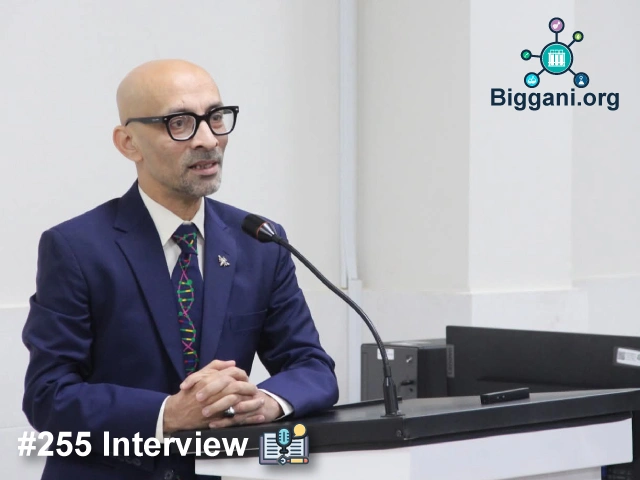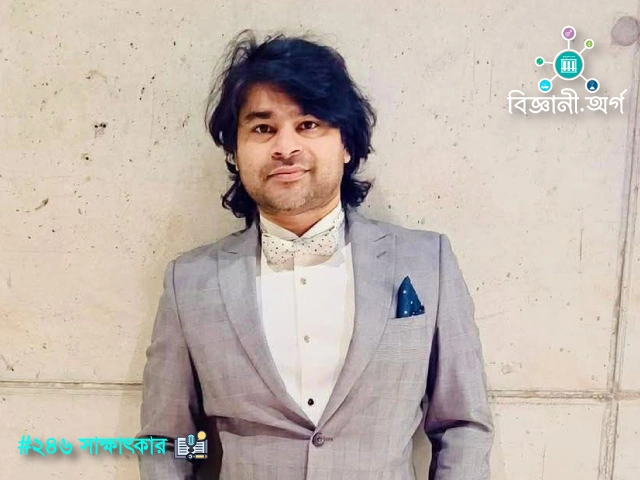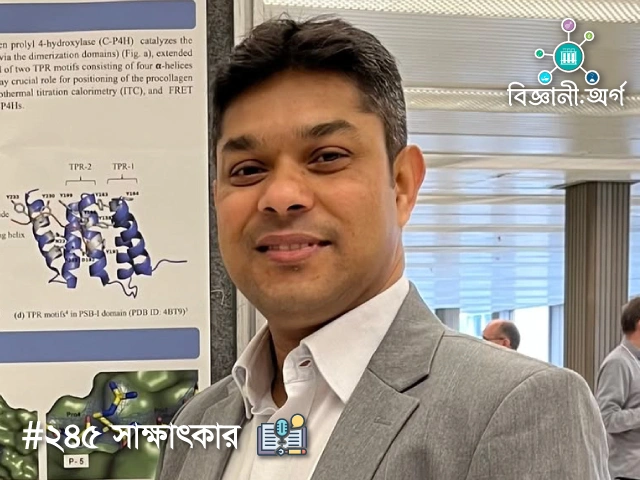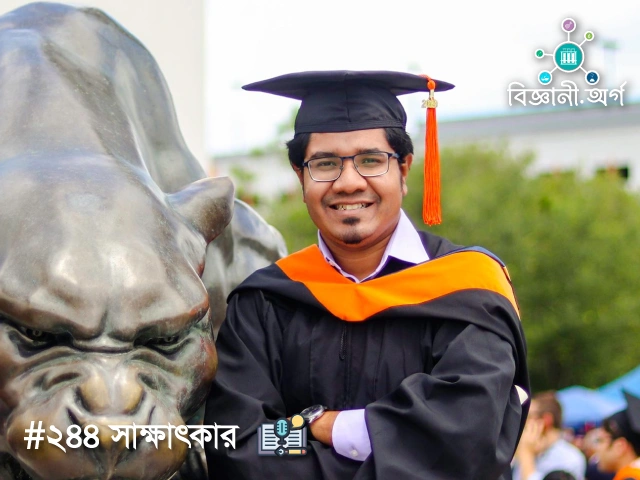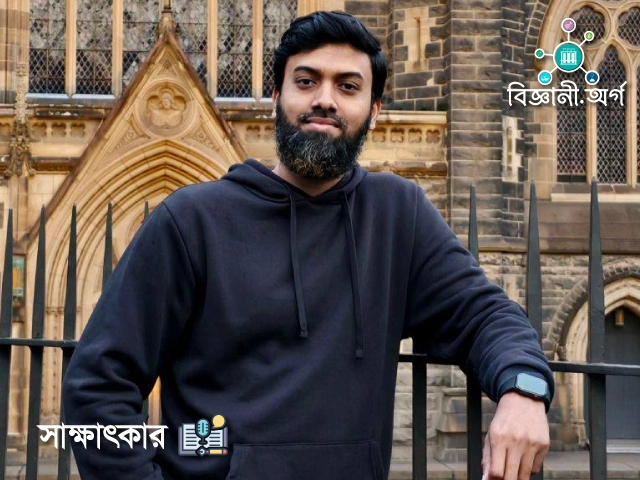
Recently, in a discussion organized by Scientist.org, young researcher and PhD student at RMIT University (Melbourne, Australia), Md. Monjurul Islam Partho, shared valuable insights about his research and experiences. The conversation highlighted issues such as plastic pollution and its environmental impacts, research on the use of bioplastics and wastewater recycling, increasing scientific awareness in the context of Bangladesh, and preparation for pursuing higher education abroad. This discussion holds particular inspiration for university and college students, as Monjurul shares vital messages for future generations drawn from his academic journey and research experience.
Academic Journey and Research Path
Md. Monjurul Islam began his academic life in Bangladesh, completing his undergraduate and postgraduate studies in the Department of Applied Chemistry and Chemical Engineering at Islamic University, Kushtia. Towards the end of his student life, he was eager to conduct research on polymers. However, the thesis project he started ended up being in the field of environmental engineering—mainly because his chosen supervisor had shifted focus from polymer research to environmental subjects at that time. Initially, Monjurul found this change somewhat disappointing, but he later realized that it turned out to be a blessing. Environmental research—especially wastewater treatment—is a highly significant and in-demand field globally, and the knowledge he gained here would prove invaluable in the future.
In the next phase of his education, Monjurul set out abroad. From 2019, he began seeking research opportunities overseas. Right from the start, he concentrated on the IELTS exam and made every effort to publish as many research papers as possible. He shared that to receive his first recognition, he had to send over 450 emails to various professors. Even after receiving positive responses from professors in Australia, he was initially unable to secure a scholarship from universities. Eventually, in 2020, he earned a fully funded PhD research opportunity in Environmental Engineering at Hanyang University in South Korea; however, due to the pandemic, visas were halted, and he had to complete one semester online before finally traveling to Korea in 2022. Yet, after six months there, he faced several issues—language and cultural barriers, as well as a stringent lab atmosphere, left him uncomfortable. Monjurul always preferred Australia for research, and while in Korea, he took IELTS anew and began, with renewed vigor, applying to various countries, including the USA, Australia, and Europe. He also increased his list of publications, enhancing his chances for a scholarship. Finally, in 2023, he secured the chance to research in Australia and enrolled as a PhD student at the Royal Melbourne Institute of Technology (RMIT). He noted that it is difficult to explain his project or department to someone in a single sentence: while his department falls under Civil Engineering, his work is in Environmental Engineering, and his prior studies were in Chemical Engineering; this blend makes it a multifaceted research area. Jokingly, he refers to this situation as “something like a delicious mishmash.”
Plastic Pollution and Environmental Challenges
In the discussion, Monjurul raised important observations about the current state of plastic pollution. Plastics are nearly omnipresent in daily life; he pointed out that around 75-80% of everyday items are, in some way, plastic-based. After such massive usage, the lack of proper waste management in developing countries creates serious problems. Most used plastics are carelessly discarded, inevitably ending up back in the environment. As plastics are highly durable and non-biodegradable, they remain unaltered in the soil for many years. Even though they do not fully decompose, over time, plastics break down into microplastics and nanoplastics. He cautioned that these tiny plastic particles are now spreading not only in soil and water, but also into the air—recent studies have identified microplastics even in the atmosphere. Micro- and nanoplastics originating from plastic waste are posing a new and dangerous threat to human health and ecosystems.
Managing plastic waste has become a huge challenge under current circumstances. Finding ways to replace conventional plastics with alternative materials is now urgent. Monjurul noted that, during the COVID-19 pandemic, the use of single-use plastics (such as masks and PPE) skyrocketed, leading to a mountain of plastic waste after the pandemic. He even has a review paper published in a high-impact journal on this topic. In search of solutions to this pervasive problem, global research efforts are exploring less harmful alternatives for the environment.
Bioplastics: Promise and Reality
A primary area of Monjurul’s research is bioplastics and their life cycle assessment. The discussion revealed that while using environmentally friendly bioplastics in place of conventional plastics is promising, their real-world application and long-term effects require careful consideration. For instance, polylactic acid (PLA), a much-discussed biopolymer, is made from renewable materials, making it much less harmful than traditional plastics. Given proper conditions, PLA can biodegrade in soil, and the raw materials for its production come from renewable sources (such as sugar extracted from corn or sugarcane)—thus reducing dependence on limited fossil fuels. On the other hand, PLA is quite robust and heat-resistant, making it suitable for reuse and a comparatively durable alternative. For these reasons, PLA is touted as both “sustainable” and “environmentally friendly.”
However, Monjurul cautioned that, like any technology, bioplastics also have limitations and side effects, and uncritically labeling them as “green” can amount to greenwashing. For example, if massive tracts of land are used for cultivating corn or sugarcane to make PLA, it may reduce land available for food crops; excessive use of fertilizers and pesticides can cause environmental pollution (e.g., reduced soil fertility, eutrophication of water bodies due to nutrient runoff). In such cases, while attempting to do environmental good by making PLA, other types of harm may be introduced indirectly. This is why scientists are turning to agricultural residues and waste, rather than food crops, as raw materials for bioplastics. Monjurul explained that biopolymer production sources are now categorized into three generations: first generation uses food crops (corn, sugarcane, etc.), second generation uses agricultural wastes (bagasse, rice husks, etc.), and third generation uses unconventional sources such as microalgae. The new research trend is to produce bioplastics from second and third generation sources to ensure food security is not compromised, preventing excessive land use or disruption to the food chain.
Thus, a truly “sustainable solution” means an alternative that is reusable (Recycle), safe for the environment (eco-friendly), and, when considering its full life cycle, delivers net positive benefits. He emphasized that when evaluating any new invention as truly sustainable, it is essential to assess the environmental impact at every step from beginning to end. In his opinion, decision-makers must consider the complete picture to determine if the proposed solution is genuinely environmentally friendly and practical. For bioplastics, the encouraging fact is that—despite many limitations—there is extensive research worldwide, and improved methods are continually emerging, so that one day we may have effective, environmentally friendly alternatives to conventional plastics.
Wastewater Treatment and Resource Recovery
Another notable topic in Monjurul’s talk was the improved management of industrial and urban wastewater. He stated that conventionally, wastewater treatment means purifying contaminated water so it can be safely released into the environment. However, modern research has taken this concept a step further: now, wastewater is not just treated but seen as a potential source for recovering valuable materials. For example, if industrial wastewater contains valuable metals (such as chromium or platinum), suitable technology can be used to extract and reuse these metals during treatment—a process called resource recovery.
Practically, however, resource recovery still faces many challenges. He explained that the efficiency of technologies used to extract materials from wastewater is crucial. For instance, suppose 1 kg of pond ash contains just 1 gram of titanium, and even with advanced technologies, only 80% can be recovered. That would yield just 0.8 grams (800 mg) of titanium—hardly economical to extract, making it easier and cheaper to obtain titanium from other sources. In many cases, the cost and results of recovery efforts show a net loss rather than a profit. Therefore, researchers are working tirelessly to improve recovery methods, so that low-concentration materials can be economically extracted.
In Bangladesh, the greatest obstacle to wastewater management is the shortage of basic treatment plants. Monjurul noted that many industries still lack effective ETPs (Effluent Treatment Plants), and even though laws exist, enforcement is weak. As a result, directly discharged, untreated wastewater pollutes our rivers and water bodies. While developed countries are making wastewater treatment mandatory and progressing toward resource recovery, in our country, establishing treatment infrastructure everywhere is the first priority. He advised that the government and policymakers in Bangladesh should strictly enforce wastewater treatment in industry and invest more in related research. Once basic treatment facilities are in place, more advanced technologies for resource recovery can be gradually adopted.
Promoting Scientific Awareness and Enthusiasm
Md. Monjurul Islam expressed strong enthusiasm about sharing his knowledge and experience with students and young researchers in Bangladesh. Praising Scientist.org and similar platforms for raising science awareness among the public, he emphasized that while many perceive higher study or research as extremely challenging or rigid, it is actually possible to make research topics understandable to the general public when explained the right way. He said, “Higher education or research isn’t some magical thing; if you explain it well, it’s just like getting admitted somewhere new.” He believes that spreading this mindset will encourage many more students to take an interest in science.
Monjurul suggested that universities in Bangladesh should organize more research-related workshops and seminars. He noted that almost every major university now has a student research society or science club; jointly organizing regular local events with such groups would help spread the message of research to even more students. Organizing hands-on workshops within the country, alongside online discussions, would provide students with opportunities to ask questions directly, learn practically, and become inspired for research. Assuring his ongoing support, Monjurul and other Bangladeshi researchers at home and abroad are always ready to help in these initiatives.
Advice on Overseas Higher Education and Building a Career
Monjurul also offered practical advice for students aspiring to pursue higher education abroad. Drawing on his personal example, he explained that there is no substitute for perseverance and patience on this path. Even after sending hundreds of emails, immediate responses may not come, but it is vital to maintain determination. Understanding the differences between education systems in different countries is crucial: for instance, in many European universities, you can often apply directly to programs without prior engagement with professors; but in the US, Australia, or many Asian countries, building a good relationship with a professor and securing a position in their lab is the main key. Accordingly, one must use the strategy suitable for their target country. He further mentioned that it is nearly impossible to get a scholarship for Masters by Research in Australia, so those interested in research there should apply directly for a PhD or else complete a Master’s degree elsewhere before applying for a PhD in Australia. Also, even if a professor expresses interest, the actual offer and funding depend on the university’s decision—so you should apply whenever there’s a chance, regardless of the outcome. He said, “Just getting a position doesn’t mean everything is set, nor is it the end of the world if you don’t get it—you should keep applying where opportunities exist; if it works, great; if not, other routes will open.”
For those wishing to build a career in research, Monjurul’s advice is to seek hands-on work experience and aim for publications (paper publications) in their field. If someone starts working after their studies, publishing papers while staying connected to research will be a substantial advantage for later higher education applications. Experience in industry also brings practical knowledge, which is useful for future research and innovation. Of course, if one’s goal is academic research, publications and academic experience are most valued—so he advises maintaining a balance between both whenever possible.
Watch Md. Monjurul Islam’s interview video on YouTube at the following link: 👇👇👇
Contact Information:
Email: [email protected]
Conclusion
Several key messages emerge from the interview with Md. Monjurul Islam, which are highly relevant for Bangladeshi students and young researchers. First, scientific perspective and ingenuity are essential for identifying environmentally friendly and sustainable solutions. New-generation scientists must step forward with innovative ideas to tackle complex issues like plastic pollution—but before lauding any alternative, it is also vital to develop the mindset to assess its overall impacts. Secondly, perseverance, hard work, and patience are indispensable on the journey of research or higher education—success rarely comes overnight, yet persistent effort eventually leads to the right opportunity, as his own life clearly illustrates.
Thirdly, knowledge must be gained with the development of one’s country and society in mind. Our research sector is still lagging; so, while acquiring skills through higher education abroad, we must also dream of using that knowledge and experience to enrich our homeland.
According to Monjurul, Bangladeshi youth should make their mark on the world stage, and the experience and insights they gain can be brought back to help advance the nation. With their scientific mindset and innovative thinking, this generation is well-equipped to take on the challenges of environmental protection and sustainable development. His hard-won advice and inspirational words serve as an invaluable guide for students seeking to advance in higher studies and research.