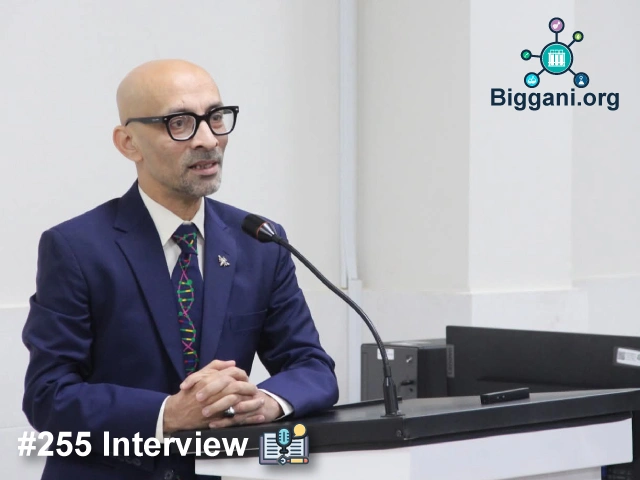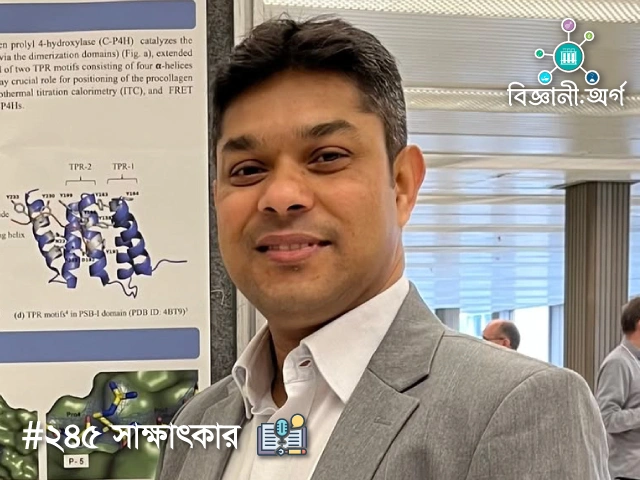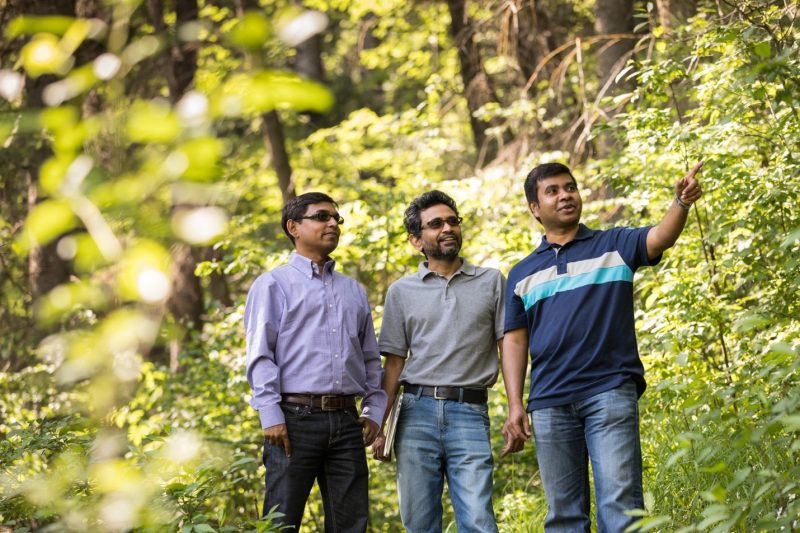
Professor Quazi K. Hassan is working as a Professor of Earth Observation for the Environment at the Department of Geomatics Engineering and the Centre for Environmental Engineering Research and Education, University of Calgary, Canada. He obtained his B.Sc. in Electrical and Electronics Engineering from Bangladesh Institute of Technology, Khulna in 1994. Later, in 1998, he completed his M.Sc. in Remote Sensing from University Putra Malaysia. In 2008, he earned his doctoral degree in Remote Sensing and Ecological Modelling from the University of New Brunswick, Canada.
Professor Hassan’s primary research focus is on the use of Remote Sensing, Geographic Information System (GIS), and modeling technologies for natural disaster monitoring and natural resource management. He has made significant contributions to research in the fields of agriculture, flood and drought management, and climate change. In addition, he serves on the editorial boards of the journals Remote Sensing (MDPI) and Scientific Reports (Nature).
Currently, he is based in Canada and his research is playing an important role in food security and disaster management in Bangladesh.
💬 Interview Section:
Question: Please tell us a bit about yourself.
Answer: Sincere thanks to Biggani.org. I obtained my B.Sc. in Electrical and Electronics Engineering from Bangladesh Institute of Technology, Khulna in 1994. In 1998, I completed my M.Sc. in Remote Sensing from University Putra Malaysia, and in 2008, I earned my doctoral degree in Remote Sensing and Ecological Modelling from the University of New Brunswick, Canada. Afterwards, I joined the Department of Geomatics Engineering at the University of Calgary, Canada as an Assistant Professor. I was promoted to Associate Professor in 2014 and to Full Professor in 2017.
During this time, I have successfully supervised 1 postdoctoral fellow, 5 Ph.D., and 6 M.Sc. researchers. Currently, there are 4 Ph.D. researchers under my supervision. My research topics involve the integration of Remote Sensing, GIS, and modeling techniques for disaster and resource management.
Question: What is Geomatics Engineering?
Answer: Geomatics Engineering is a branch of engineering and information technology that deals with the collection, analysis, and management of spatial data. It includes technologies such as land surveying, remote sensing, GIS, GPS, photogrammetry, and various mapping techniques.
Question: How is Remote Sensing being used in agriculture?
Answer: Recently, I have conducted work on Bangladeshi agriculture using Remote Sensing. The key examples include:
- Forecasting the area and production of Boro rice cultivation across Bangladesh.
- Estimating Boro rice losses caused by the sudden 2017 floods in northeastern Bangladesh.
- Estimating Aman rice losses due to the 2000 floods in southwestern Bangladesh.
- Introducing a new drought monitoring method and applying it in agriculture in Jordan.
These are important for Bangladesh’s food security. My research is also applicable for flood management.
Question: What are you currently working on and what do you want to work on in the future?
Answer: Currently, I am working on:
- Forecasting wildfire risk in Canada using Remote Sensing.
- Land use analysis in the Athabasca Oil Sands Region.
- Developing a spatial weather data archive for Alberta Province.
In the future, I would like to develop effective techniques for climate change and sustainable mitigation technology, as well as practical systems for disaster and resource management using Remote Sensing.
Question: Can you share some information about the University of Calgary? Can Bangladeshis apply?
Answer: The University of Calgary is one of Canada’s leading higher education institutions. It has more than 30,000 students, over 1,800 faculty members, and 14 faculties. Bangladeshis can apply. I recommend visiting the relevant faculty and the Graduate Studies website for more information.
Question: What advice would you give to young students?
Answer: I always want to remain a student at heart. My advice is to maintain originality in your work and not to mimic others. Even though such practices are not widespread in our country, it is still very important.
🔗 Profile Link:
https://www.ucalgary.ca/qhassan/
Professor Quazi K. Hassan’s research is making significant contributions to natural disaster management, agricultural analysis, and climate change technologies. The Biggani.org team wishes him continued success in his research. May his work inspire young Bangladeshi scientists.
Professor Quazi K. Hassan: University of Calgary, Canada, is one of the most important higher education institutes. At present, it has over 30,000 students, more than 1,800 faculty members, and 14 faculties/schools. These faculties are:
- Cumming School of Medicine
- Faculty of Arts
- Faculty of Environmental Design
- Faculty of Graduate Studies
- Haskayne School of Business
- Faculty of Kinesiology
- Faculty of Law
- Faculty of Nursing
- Faculty of Nursing (Qatar)
- Schulich School of Engineering
- Faculty of Science
- Faculty of Social Work
- Faculty of Veterinary Medicine
- Werklund School of Education
Bangladeshis are certainly eligible to apply to this university. Interested applicants are encouraged to visit the relevant faculty website and the Faculty of Graduate Studies website for admission information.